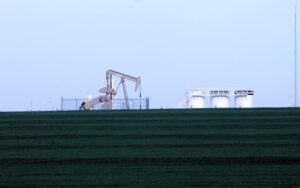

The global energy landscape is fracturing into two competing camps: one led by the United States, doubling down on fossil fuel dominance, and the other spearheaded by China, racing toward renewables and electrification. This clash will not only determine the future of energy but also shape geopolitical and economic leadership in the age of artificial intelligence.
The explosive growth of artificial intelligence has created unprecedented energy needs, forcing nations to urgently reevaluate their energy security and competitiveness. As one Wood Mackenzie analysis put it, “AI has become the central arena for great-power competition,” with victory partly hinging on which energy model can most efficiently power the technologies of tomorrow.
The split turned unmistakably public at last year’s UN COP30 climate conference in Brazil. While over 80 nations backed a formal roadmap to phase out fossil fuels, an alliance of petrostates—including the U.S., Saudi Arabia, and Russia—resisted. Notably, the U.S. did not send high-level representation but has actively pressured other countries behind the scenes to reconsider clean energy transitions.
For America and its allies, sticking with fossil fuels offers short-term advantages: protecting existing energy profits, preserving jobs, and leveraging traditional infrastructure and geopolitical influence. Yet many oil-dependent economies—such as Nigeria, which relies on oil for 80–90% of its revenue—are also among the most vulnerable to climate disruptions, with African nations on the front lines.
China, leveraging its full supply-chain strength in solar, wind, storage, and grid technology, continues to drive down renewable costs. According to Yale Insights, advances over the past three decades have made clean energy “more economical, less risky, and increasingly rewarding.” In developing economies like Pakistan, distributed solar has become a critical solution for affordable, off-grid electricity.
Still, the clean energy transition faces geopolitical and institutional headwinds. What began as a technology race is now a contest over global influence and domestic interests. As The National Interest noted in a 2025 analysis: “The global energy order is in the midst of a profound realignment.” While the U.S., Saudi Arabia, and Russia solidify their fossil fuel influence, China—as an emerging “ElectroState”—is aligning with Europe’s green ambitions, carving out a competing technological path. “The result may be a volatile, asymmetric contest for energy dominance,” the publication observed, “pitting hydrocarbons against electrons.”
In the near term, the petro-bloc retains resilience through existing infrastructure and entrenched financial interests. Long-term, however, the electric-bloc holds advantages in innovation speed, supply-chain control, and climate crisis response. Ironically, AI’s skyrocketing energy demand could act as an unexpected accelerator for scaling renewables.
The ultimate victor may be determined by which camp can best balance energy security, affordability, and strategic influence. For now, time appears to be on electricity’s side.