After removing Venezuelan President Nicolás Maduro through military action and extraditing him to the United States for trial, U.S. President Trump has paved the way for a new oil boom in this South American nation. Trump is now actively pushing American oil companies to return to the country, which holds the world’s largest crude oil reserves, aiming to revive its crippled petroleum industry. However, behind the attractive resource prospects, the need for infrastructure investment amounting to hundreds of billions of dollars and complex political risks cast a heavy shadow over this potential “oil bonanza.”
Massive Investment Required
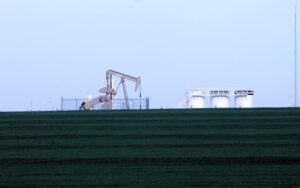
Despite boasting staggering reserves of approximately 300 billion barrels (about 18% of the world’s proven reserves), Venezuela’s current oil infrastructure is severely aged and in disrepair. This is the result of long-term government mismanagement and the mass exodus of international capital following the nationalization of oil assets by former President Hugo Chávez in 2007. Currently, the country’s daily production lingers between 800,000 and 1 million barrels, less than 1% of global output.
Substantial capital investment is indispensable for a production recovery. Wall Street analysts predict that raising output to 2.5 million barrels per day would require $100 to $200 billion in investment over the next decade. According to Hart Research, comprehensively modernizing the industry while developing upstream projects and maintaining high growth could cost as much as $180 to $200 billion. In contrast, Chevron (NYSE: CVX), the only major U.S. oil company currently operating in Venezuela, has a total capital expenditure budget of just $19 billion for 2026, highlighting the pressure a single company faces with investments of this scale.
Political and Geopolitical Risks Pose Challenges
Oil companies need to weigh risks at U.S., Venezuelan, and global levels. Domestically in the U.S., oil companies may worry about policy shifts if Trump leaves office or Democrats gain ground in midterm elections. Democrats are less likely to share the Trump administration’s enthusiasm for intervening in Venezuela or providing guarantees for oil company investments there. The Senate has already passed legislation requiring Trump to seek congressional approval before taking any further military action in Venezuela.
The internal situation in Venezuela is equally complex. Trump chose to retain Maduro’s party, with Vice President Delcy Rodríguez serving as interim president. The calculation may be that the existing party can maintain stability while cooperating with the Trump administration to advance its agenda. However, the future remains unpredictable. Rodríguez must walk a tightrope between accommodating the Trump administration and proving to the Venezuelan people that she prioritizes national interests. There is also the possibility that Rodríguez loses control, leading to another leader or party taking power.
Furthermore, reactions from other countries, including Venezuela’s oil clients such as China, Iran, Russia, and Cuba, must be considered. Trump has demanded that Rodríguez sever economic ties with all these nations. Oil companies will have to navigate multiple possible outcomes, many of which are difficult to foresee.
Risks and Opportunities Coexist
Should oil companies invest tens of billions of dollars in Venezuela’s oil operations and infrastructure, only to see a subsequent change in government obstruct their activities—this is a primary reason many oil companies view entering the country as highly risky. This is especially true in the current environment of low oil prices and the availability of numerous alternative investment opportunities, such as the U.S. Permian Basin or Guyana, Venezuela’s neighbor and an emerging international oil hub.
The stock most likely to benefit from a revitalization of Venezuela’s oil industry remains Chevron. The company already has approximately 3,000 employees in Venezuela, accounting for about one-fifth of the country’s total production. Its existing foundation and partnerships may offer some buffer amidst the uncertainty.
Overall, the Trump administration has opened the door for U.S. oil companies to return to Venezuela, painting an alluring picture of resource potential. However, the formidable capital requirements, a fragile political transition, and a complex geopolitical landscape involving multiple players mean that this potential oil feast is far from a smooth path.