U.S. Secures Strategic Foothold in Congo to Diversify Critical Mineral Supply
In a significant move to reduce reliance on China for critical minerals, the United States has gained tangible ground in the Democratic Republic of Congo, a resource-rich African nation pivotal to the global supply of cobalt and copper.
The Congolese government has handed U.S. officials a vetted list of mining and processing projects open to American investment, marking a concrete step in Washington’s global strategy to diversify its sources of key minerals. This follows a mineral access agreement signed by the two countries in December.
According to exclusive information obtained by Reuters, the curated shortlist features high-value projects, including manganese, gold, and cassiterite licenses in Kisenge; the Mutoshi copper-cobalt project owned by state miner Gecamines; a germanium processing joint venture; and multiple licenses covering lithium, coltan (tantalum ore), wolframite, and other strategic resources. Sources indicate this list represents Kinshasa’s first formal opening of core mining assets specifically to U.S. capital under a bilateral framework.
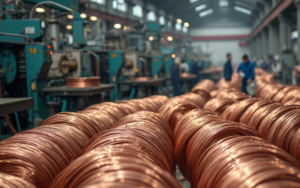
Congo is the world’s largest cobalt producer and the second-largest copper supplier. However, its mining sector has long been dominated by Chinese companies such as CMOC, Zijin Mining, and Huayou Cobalt, which control a majority of copper and cobalt production. U.S. firms have historically been absent, deterred by security risks, governance challenges, and logistical hurdles. The newly offered list is seen as a deliberate effort by Congo to rebalance foreign investment and dilute China’s overwhelming influence in its strategic mining industry.
This development aligns with Washington’s broader push to secure supplies of 60 minerals deemed critical for technology and defense—many of which are currently sourced predominantly from China. Reinforcing this shift, the Trump administration has reemphasized the Monroe Doctrine within its National Security Strategy, underscoring the priority of securing overseas resources.
Analysts at BMO described U.S. metals policy as at a “turning point,” noting that progress in Congo could influence future global flows and pricing of key battery and high-tech metals.
The mineral partnership is also embedded within the U.S.-brokered Washington Accords, a peace framework between Congo and neighboring Rwanda aimed at stabilizing the conflict-ridden eastern Congo. In what observers call an “investment for peace” approach, the U.S. has pledged to support regional stability in exchange for facilitated access to Congolese resources, thereby extending its geopolitical influence in Central Africa.
Despite this strategic advance, significant challenges remain before any projects reach production. U.S. investors will need to navigate Congo’s complex operating environment, persistent security issues in some regions, and infrastructural bottlenecks.
Nevertheless, the submission of a reviewed project shortlist signals that the U.S. critical minerals strategy has secured a meaningful entry point in the heart of Africa. Whether this foothold can transform into operational mines, reshape supply chains, and meaningfully reduce China’s longstanding grip on critical minerals will depend on the speed and scale of execution in the coming years.
China News
Cobalt
Copper
Manganese