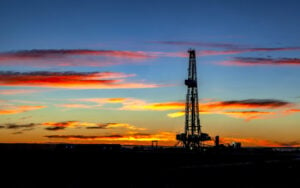
US natural gas ripped above 6 per MMBtu for the first time since 2022 as an Arctic blast tightened balances across the grid and the wellhead. Front-month futures spiked as much as 19 percent in early Asian trading Monday after a 70 percent weekly surge, the largest on record back to 1990. Spot prices followed, freeze-offs cut output, and retail money piled into the United States Natural Gas Fund, putting the market on a collision course with a fragile winter supply chain.
February futures briefly touched 6.288 per MMBtu in thin pre-dawn trade, a move that extends a vertiginous rally fueled by a nationwide cold snap. Henry Hub spot benchmarks jumped more than 8 percent to settle around 5.27, signaling tight physical conditions as utilities and industrials scrambled to cover short-term needs. The shift to a six-handle is psychologically important for a market that spent much of the past two years below 3, pressuring producers and encouraging gas-fired power burn. Volatility exploded with the move. The rapid repricing is forcing risk managers to reassess margin, and it is driving a scramble into short-dated hedges. For traders who bet on a mild January, the worst scenario materialized quickly: a deep freeze, a supply hiccup, and a futures curve that now implies tighter balances through the heart of winter.
The supply shock is real. Freeze-offs across producing regions have knocked roughly 2 billion cubic feet per day offline in the past 48 hours, pulling estimated dry gas output down to about 110 Bcf per day from 112. When temperatures plunge, water and liquids at the wellhead and in gathering lines freeze, choking off flow. Processing plants can slow or halt, and pipeline operators typically implement operational flow orders that restrict flexibility. The US gas system can absorb brief disruptions, but at peak winter demand, even modest production hits matter. Basis differentials widen, storage withdrawals accelerate, and any incremental molecule has to be bid away from another use. The result is a classic winter squeeze: colder-than-normal weather on the demand side, and mechanical constraints on the supply side, converging at the same time.
The storage calculus has shifted in days. After entering the season with comfortable inventories, the market is now staring at steeper draws as residential and commercial heating demand spikes. The risk is not an absolute shortage but a faster-than-expected burn of working gas, which can flip storage back toward or below five-year norms if the cold lingers. That matters for late-winter price risk, when marginal deliverability becomes the market’s worry. In the Northeast, constraints remain acute despite incremental capacity expansions in recent years, leaving the region vulnerable to price blowouts whenever a polar wave collides with limited pipeline headroom. The futures curve is responding: winter-month contracts are leading gains, and prompt spreads are widening, a signal that buyers are paying up for near-term security of supply. If forecasts add another burst of Arctic air into early February, traders will start modeling tighter end-of-March carryout scenarios.
Global pull is another floor under prices. US LNG export demand now represents a double-digit share of domestic consumption, and while feedgas flows can ebb during severe cold snaps, the baseline call on Gulf Coast volumes remains strong. Cheniere Energy and peers have long-term contracts to fill, tying Henry Hub-linked cargoes to overseas buyers that still prefer US supply for reliability and pricing. International gas prices are calmer than in 2022, but Europe and Asia continue to lean on US cargoes to balance. That global link can blunt the impact of domestic demand shocks only to a point. If Gulf Coast temperatures disrupt plant or pipeline operations, feedgas could dip temporarily; if not, LNG will continue to compete with heating and power demand for gas. Either way, export steadiness narrows the cushion for the domestic market when inland production stumbles.
Equities caught the signal fast. Gas-focused producers and LNG-linked names typically gain on price spikes, even as freeze-offs clip volumes in the short run. Risk desks will be watching EQT, Coterra, and Chesapeake for leverage to the move, while midstream operators like Kinder Morgan and Williams stand to benefit from higher throughput and storage value if operations remain stable. The power complex is a wild card, with merchant generators such as Vistra and NRG exposed to fuel cost pass-throughs and potential scarcity pricing. Retail traders are already active: the United States Natural Gas Fund is up about 4 percent to 13.97 with heavier volume, a pattern that historically amplifies intraday swings. Options activity is hot, with traders paying up for upside calls and near-term protection against a quick reversal if weather models moderate. The setup is ideal for momentum funds and CTAs, which tend to chase breakouts in liquid commodities.
The grid is back on alert. Gas-fired plants dominate winter generation in many regions. If wellhead freeze-offs expand and local distribution companies prioritize residential heating, generators must either outbid for molecules or lean on storage and fuel oil backups where available. Texas has hardened parts of its system since 2021, but extreme cold still threatens unit availability and gas deliverability at the same time demand spikes. MISO and PJM have improved coordination and reserve margins, yet their risk scenarios look worse when gas markets tighten abruptly. Consumers may see more conservation calls and localized price spikes even if the lights stay on. For industrial users, the calculus is straightforward and painful: pay up or curtail. That demand elasticity is limited in a deep freeze, which is why the market reaction is this sharp.
Weather is driving this tape, and the models matter more than valuations. Another round of Arctic air into the Northeast in early February would likely propel the prompt contract deeper into six territory as shorts cover and end-users lock in volumes. Bigger production hits would compound the pressure, especially if freeze-offs creep beyond 2 Bcf per day or if processing bottlenecks linger. Any unplanned hiccup at an LNG plant or a major pipeline would feed the move, as would new operational restrictions from grid operators or pipeline companies. A nudge from policy headlines around LNG permitting or state-level gas constraints could add fuel, even without immediate physical effects. The speed of the rally widens the cone of outcomes: liquidity can thin, and price gaps get larger when screens are moving this fast.
The same leverage cuts the other way. A quick thaw restores flow just as fast as a freeze chokes it, and production can rebound within days when field crews regain access. If weather models shift warmer, residential and commercial demand falls off, storage looks healthier, and prompt spreads compress. Producers also tend to hedge on spikes, leaning into forward sales that cap upside if the shock fades. LNG feedgas can soften if Gulf Coast plants trim runs during cold snaps or if overseas arbitrage weakens. And the market knows the post-2022 playbook: strong prices incentivize efficiency and substitution on the margin in the power stack. That does not kill a weather rally, but it compresses duration. After a 70 percent weekly gain, even small cracks in the bull case can produce violent pullbacks.
The trade now is about timing and resilience. Winter weather has reasserted its power over a market that had grown complacent on abundant supply and tepid demand. Natural gas has rediscovered a risk premium, and it will not disappear until the forecast does. Traders will live in the hourly model updates; utilities will fight for molecules; producers will try to keep wells flowing. If the cold wave sticks, six will not be a ceiling. If it breaks, today’s headline becomes tomorrow’s whipsaw.