The global mining sector is commanding unprecedented attention as we move through 2026. Following a standout year in 2025—marked by stellar performances from precious metals like gold and silver, alongside robust returns for industrial and strategic metals such as copper and uranium—a critical question is being asked across markets: Are we at the beginning of a multi-year commodities upcycle?
The evidence points to a resounding yes. Mining companies now find themselves at the unique convergence of three powerful global investment themes: the New Industrial Revolution, driven by AI, clean energy, and electrification; the geopolitical and industrial strategy scramble as nations secure resources for energy security, defense, and technological supremacy; and a shift in macroeconomic conditions characterized by persistent inflation and fiscal pressures, which favors hard assets.
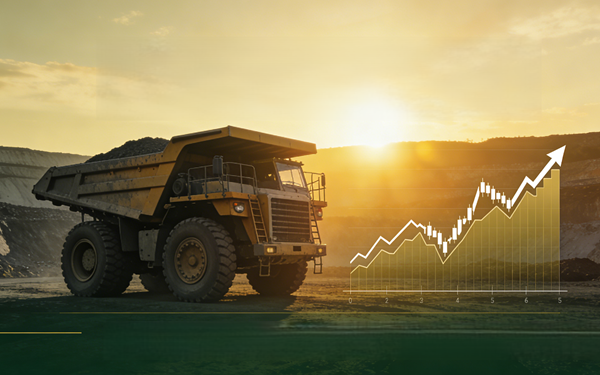
Gold demonstrated remarkable momentum in 2025, with prices surging over 60% and gold mining equity indices skyrocketing more than 160%. For gold producers, a price firmly above $4,000 per ounce against an average industry all-in sustaining cost of approximately $1,800/oz creates significant room for margin expansion. Unlike the previous bull cycle, miners are displaying greater capital discipline, prioritizing shareholder returns via dividends and buybacks over reckless expansion. Valuation multiples remain attractive, with gold equities trading around 8x EV/EBITDA—a discount both to sectors like technology and to their own historical averages.
According to the November 2025 interview in METALS 100, Founders Metals Inc. (TSXV: FDR) is a gold exploration and development company focused on acquiring, exploring, and advancing high-potential mineral properties across the Americas. The Company’s current exploration focus is on the Antino Gold Project, located in Suriname, which has delivered exceptional high-grade drilling results. In 2025, Founders Metals secured a $50 million strategic investment from Gold Fields, enabling the company to accelerate drilling programs and advance the Antino Project toward a potential discovery-scale resource.
The outlook for silver and platinum group metals (PGMs) miners is equally bright. Silver benefits from explosive demand in solar photovoltaics, with the market in a structural deficit for the fifth consecutive year. Platinum sees robust demand from its role in catalytic converters and the hydrogen economy, supported by concentrated and challenged supply.
If the narrative for precious metals is “wealth preservation,” the story for industrial and strategic metals is “building the future.”
Copper stands as the indispensable metal of the new industrial era. Demand from electric vehicles, AI data centers, and grid upgrades is structural. However, supply is constrained by declining ore grades, long lead times for new projects (often exceeding 15 years), and frequent operational disruptions. The market is bracing for its largest supply deficit in over two decades in 2026.
In the battery and energy transition metals space, the landscape is diverse and ripe with opportunity:
As noted by Baker Steel Capital Managers LLP, the mining market in 2026 is unequivocally “a stock picker’s market.” While broad commodity price appreciation (beta) will provide a tailwind, the disparity in fundamentals across different metals and the varying quality of assets, cost control, and capital discipline among companies will create significant opportunities for alpha generation.
From the rekindled monetary allure of gold to the strategic indispensability of copper, REEs, and uranium, the mining sector is transforming from a pure cyclical play into a core asset class central to the global energy transition, technological competition, and macroeconomic hedging. The curtain has risen on a structural bull market.