
Americore Resources (TSXV: AMCO)
Drilling Value in the Silver State
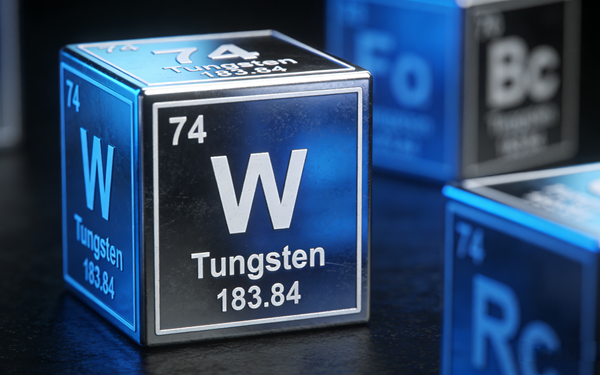
Tungsten, long an obscure industrial metal, is sounding a shrill warning with record-shattering prices. The cost of ammonium paratungstate (APT), a key intermediate, has surged past $1,125 per metric ton unit in China, with European markets also hitting historic highs. This is no ordinary cyclical swing but a “perfect storm” ignited by tight inventories, export controls, and soaring global defense demand.
As a cornerstone of advanced manufacturing and military hardware, tungsten’s steep price curve illuminates a dangerous new reality: global supply chains are being fundamentally reshaped by geopolitics.
During a 2025 interview with “METALS 100”, Ali Haji, Chief Executive Officer of American Tungsten Ltd. (CSE: TUNG | OTCQB: DEMRF | FSE: RK9), elaborated on the company’s recent updates and next steps. American Tungsten is a Canadian exploration company focused on high-potential tungsten and magnetite assets in North America. The company is advancing the Ima Mine Project in Idaho toward commercial production to address critical metal scarcity in North America. It has joined the U.S. Defense Industrial Base Consortium to support the defense sector and completed an oversubscribed C$7 million financing, demonstrating strong market confidence in its critical metals strategy.
The epicenter of this crisis is unequivocally China. As the dominant force in global tungsten mining and processing, China implemented export controls in February 2025, subsequently slashing its list of authorized exporters to just 15 companies. Market analysts view this as a move to centralize control and substantially restrict foreign supply. Data indicates these measures have caused China’s tungsten exports to plummet by nearly 40% year-on-year.
The combined annual output from all major producers outside China amounts to only a few thousand metric tons—a drop in the ocean compared to the massive shortfall created. Compounding the pressure, China has reduced its own mining quotas, while rampant domestic manufacturing demand consumes more resources internally, escalating global tensions further.
This price explosion serves as a belated wake-up call. In the post-Cold War “peace dividend” era, Western strategic stockpiles were steadily depleted without replenishment, and policy attention long overlooked such “unsexy” industrial materials.
The paradigm has now flipped. As modern conflicts drive demand for critical components like armor-piercing munitions, tungsten—prized for its extreme density and hardness—has been catapulted overnight from an industrial workhorse to a frontline strategic commodity. This shift exposes a brutal truth: heavy reliance on a single-source supply chain reveals fatal vulnerabilities when that primary producer decides to turn off the taps.
Rebuilding a diversified supply chain is a daunting, long-term endeavor. Tungsten is notoriously difficult to mine and process, with a density rivaling gold and a brittleness akin to porcelain—technical hurdles that have doomed numerous historical projects. Beyond capital and engineering challenges, new ventures face protracted permitting processes and local community resistance across jurisdictions. While policy tools like tariffs have been attempted, the long-term neglect of strategic stockpiles for critical metals renders any short-term fixes insufficient.
Market consensus holds that, despite potential technical price corrections, the era of cheap tungsten is over. The current crisis marks a fundamental structural shift. In an age where supply chains are instruments of strategic competition, metals like tungsten have transformed from anonymous industrial inputs into a litmus test for national strategic resilience. The record-breaking price is a forced “awakening,” compelling all parties to confront a central question: are they willing to pay the necessary cost for supply chain security before the shelves are bare?