Following China’s implementation of strict antimony export controls in September 2024, global supply chains for this critical mineral are undergoing significant restructuring.
Against this backdrop, Antimony Resources Corp. (CSE: ATMY) (OTCQB: ATMYF) announced this week that it has uncovered “massive” stibnite mineralization at the Marcus West Zone on its Bald Hill project in New Brunswick, Canada, marking a significant step toward diversifying Western supply sources for the strategically important metal.
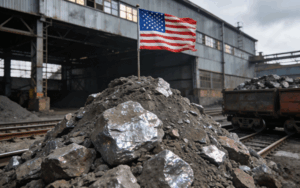
The company reported that its field crew has exposed additional mineralization in bedrock through ongoing trenching, with sampling activities continuing to trace the zone along strike. Jim Atkinson, CEO of Antimony Resources, stated in a press release: “It is very exciting to see the mineralized samples being brought to surface by the excavator for examination by the geologists. It is obvious that this is a highly mineralized area and the ‘bladed’ stibnite is very attractive.”
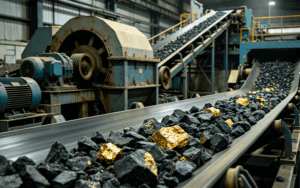
Stibnite is the primary mineral from which antimony is commercially extracted. The new discoveries form part of the 2026 exploration program at Bald Hill, which will be conducted in parallel with 10,000 meters of definition drilling on the Main Zone. The comprehensive exploration program includes soil sampling, prospecting, and evaluation of an airborne survey.
Drilling is scheduled to commence immediately at the Marcus West Zone, with up to six shallow holes planned to test mineralization at depths between 30 and 50 meters.
Beyond the newly identified Marcus West Zone, Antimony Resources plans to further evaluate previously underexplored areas with compelling historical results:
To accelerate project advancement, the company has added a second drill rig to the Main Zone definition drilling program this week.
Antimony, a silvery metalloid processed primarily from stibnite, possesses unique properties that harden and strengthen metals, making it indispensable for defense and high-technology applications.
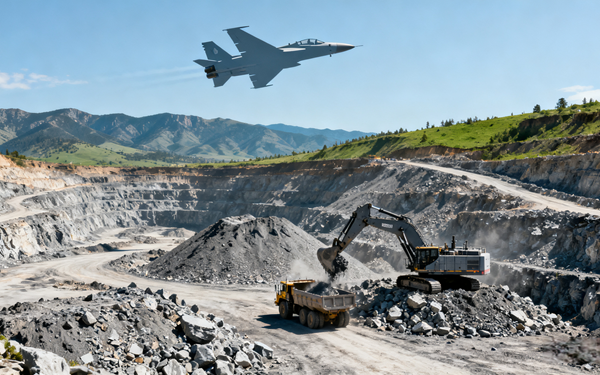
During World War II, antimony was crucial to U.S. production of tungsten steel and hardened lead bullets, with domestic production meeting up to 90 percent of demand. Today, applications have expanded across multiple industrial sectors including flame retardants, lead-acid batteries, and alloy materials. Military applications encompass night vision goggles, explosive formulations, flares, nuclear weapons production, and infrared sensors.
Emerging battery technologies present additional growth potential. Over the past decade, more than one thousand U.S. patents related to electrical applications have involved antimony. Liquid metal batteries (LMBs), an emerging energy storage technology, incorporate antimony in cathode materials. Compared to conventional lithium-ion batteries, LMBs offer longer life cycles, higher current density, non-flammable operation, and potentially lower manufacturing costs, positioning them as promising candidates for grid-scale energy storage applications.
China has dominated global antimony supply for over two decades. Although its share of global mine production has declined from peak levels exceeding 80 percent to approximately 53 percent as of 2020, China retains control over the majority of global antimony processing capacity. This concentration renders global supply chains highly sensitive to Chinese policy shifts.
Following China’s imposition of strict export controls in September 2024, international antimony prices have experienced notable volatility. The United States currently sources approximately 79 percent of its antimony imports from China, a dependency that is accelerating exploration and development efforts in Canada and other allied nations.
While the United States has historical antimony production in states including Idaho, no domestic antimony mines are currently operational since the cessation of production at the Stibnite Gold mine in the mid-1990s. Current U.S. supply relies primarily on recycling from spent lead-acid batteries.
As the United States and Canada intensify efforts to secure domestic supplies of materials critical for defense and high-technology industries, Antimony Resources’ progress at Bald Hill comes at a strategically opportune moment. The company benefits from both historically significant grade data and current exploration confirming the scale potential of the mineralized system.
With the comprehensive 2026 exploration program now underway and two drill rigs operating simultaneously, Antimony Resources is positioning itself to contribute meaningful resource definition toward North American antimony supply chain independence.