
Americore Resources (TSXV: AMCO)
Drilling Value in the Silver State
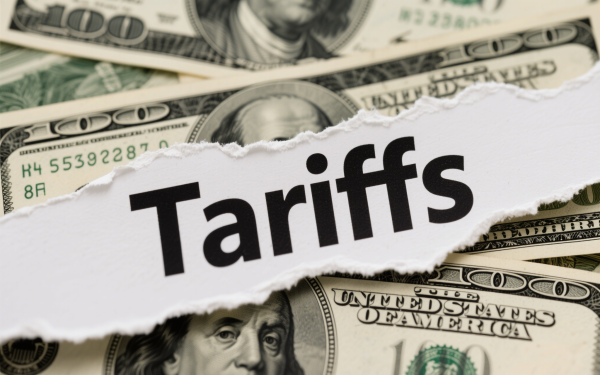
In a landmark escalation of trade tensions, the U.S. Department of Commerce on February 11, 2026, dramatically increased countervailing duties on Chinese graphite anode materials from 11.58% to 66.68%, while maintaining anti-dumping duties at 93.5%. When combined with existing IEEPA, Section 301, and Section 232 tariffs, the total effective rate on Chinese natural graphite anode material now stands at a staggering 220.18%.
That means a $100 Chinese graphite product now faces over $220 in tariffs upon entering the U.S. market—a move that sends shockwaves through the electric vehicle and energy storage supply chains.
The tariff stack breaks down as follows:
The final determination follows a petition filed in December 2024 by the American Active Anode Material Producers (AAAMP), a coalition of North American graphite producers that sought duties as high as 920%. The coalition alleged that Chinese state subsidies and below-market pricing were crippling efforts to build a domestic anode industry.
The duties are subject to a final affirmative injury ruling by the U.S. International Trade Commission (ITC), expected in March 2026. If the ITC finds injury, the tariffs will remain in place for at least five years.
Chinese Exporters: Pain, but Not a Knockout
China is the world’s largest graphite producer and exporter. In 2024, the U.S. imported about 60,000 metric tons of natural graphite, with 43%—roughly 25,800 tons—coming from China. At an average price of $1,070 per ton, even a 10% tariff adds $2.76 million in costs; a full 25% tariff would top $10 million.
But raw material imports tell only part of the story. China’s real chokehold lies in processing—the conversion of raw graphite into spherical and coated spherical graphite, essential for lithium-ion battery anodes. China dominates this high-value segment globally. While the new tariffs raise costs for Chinese exporters, the U.S. has no short-term alternative for these processed materials.
U.S. EV Makers: Caught Between a Rock and a Hard Place
Tesla, Panasonic, and other EV manufacturers have long complained that no U.S. supplier can meet their graphite specifications. But AAAMP spokesperson Erik Olson pushes back: “Tesla and Panasonic kept saying, ‘They’re not qualified,’ but they control the qualification process. They could modify or speed it up if they wanted to, but they choose not to because they want cheaper product from China.”
Now, with tariffs locked in, U.S. automakers face an unpalatable trilemma:
No option is painless.
U.S. Graphite Producers: Opportunity Knocks, but Can They Answer?
The intended beneficiaries are U.S. graphite companies like Westwater Resources, NOVONIX, and Syrah Resources, which are investing heavily in domestic processing plants in Alabama, Tennessee, and Louisiana. Westwater, for instance, is developing the Kellyton graphite processing plant and controls the Coosa Graphite Deposit, the largest natural flake graphite deposit in the contiguous U.S.
But challenges abound:
The opportunity is real, but execution will determine who wins.
Global Ripples: Australia Eyes a Slice
China’s near-monopoly on graphite processing has not gone unnoticed. Australia recently passed the Future Made in Australia (Production Tax Credit and Other Measures) Bill 2024, offering a 10% tax concession for processing and refining critical minerals, including graphite. The move is designed to reduce reliance on Chinese supply and position Australia as an alternative source.
In the short term, the 220% tariff won’t upend the global graphite market overnight—China’s processing dominance remains overwhelming, and U.S. buyers will likely continue paying the premium.
Longer term, however, the duties accelerate a fundamental restructuring of the EV battery supply chain. U.S. domestic capacity must scale up, other nations are circling, and China will fight to maintain its cost and technology edge. As AAAMP’s Olson puts it, U.S. production capacity has long existed; downstream buyers simply refused to qualify it because Chinese graphite was cheaper. “Now, with shifting trade policies, they’re left with no choice—scrambling to catch up after years of inaction.”
The global graphite wars have only just begun. Who will emerge victorious? The answer may take years to unfold, but one thing is clear: the era of cheap Chinese graphite for U.S. battery makers is over.