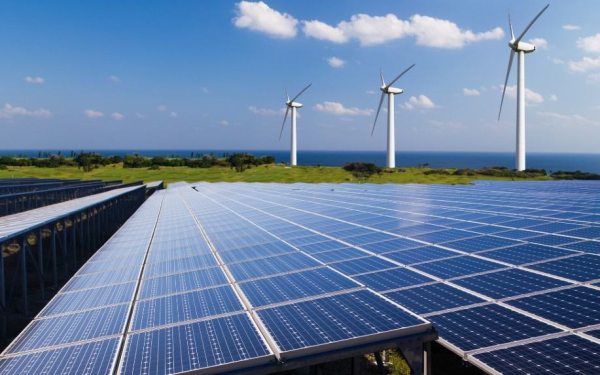
According to market sources, electric vehicle manufacturer Tesla (TSLA) is in discussions with multiple Chinese suppliers to purchase solar equipment worth up to $2.9 billion. If the deal is reached, it would mark a significant step forward for Tesla in achieving its stated goal—the company had previously proposed “establishing 100 gigawatts of solar manufacturing capacity, from raw materials to finished products, within the United States by the end of 2028.”
As a company best known for electric vehicles, Tesla’s large-scale investment in the solar sector may seem unexpected, but the company has actually been involved in the production of solar panels and home batteries. From a long-term strategic perspective, Tesla is committed to transforming from a pure electric vehicle manufacturer into a “full-chain” green energy enterprise.
According to disclosures, the potential order involves three Chinese solar companies: Suzhou Maxwell Technologies Co., Ltd., Shenzhen SC New Energy Technology Corporation, and Laplace Renewable Energy Technology Co., Ltd. For U.S. investors, there are objective limitations to directly investing in these three companies. Among them, Maxwell, a leading enterprise in solar cell screen printing equipment, and SC New Energy, which focuses on the development of crystalline silicon production equipment, both issue A-shares on the Shenzhen Stock Exchange. Meanwhile, Laplace Renewable Energy, which provides photovoltaic cell process equipment and solutions, is listed on the Sci-Tech Innovation Board of the Shanghai Stock Exchange. None of the aforementioned companies issue depositary receipts in the United States or offer over-the-counter trading channels.
Analysts point out that U.S. investors can gain indirect exposure through exchange-traded funds that hold shares in these companies. For example, the iShares Global Clean Energy ETF (ICLN) includes Maxwell Technologies in its portfolio, and some other ETF products also hold shares of SC New Energy and Laplace Renewable Energy. Another approach is to operate through international brokerages with trading access to the Shenzhen Stock Exchange and the Sci-Tech Innovation Board.
From a financial data perspective, the scale of Tesla’s procurement carries significant implications for the three suppliers. According to the latest fiscal year reports, Maxwell Technologies, SC New Energy, and Laplace Renewable Energy reported operating revenues of $1.4 billion, $2.7 billion, and $793 million, respectively. If the $2.9 billion order is allocated among the suppliers, it would substantially enhance their performance. Currently, the Chinese solar market faces oversupply and intense price wars, with profit expectations for related companies generally under pressure. Tesla’s procurement intent may prompt analysts to reassess their earnings prospects.
It is worth noting that this transaction still requires approval from Chinese regulatory authorities for the export of the relevant equipment. Under the current international trade landscape, such cross-border cooperation carries uncertainties. Market observers believe that although Tesla’s potential order brings positive expectations for Chinese solar companies, investors still need to monitor subsequent approval processes and changes in the market environment.