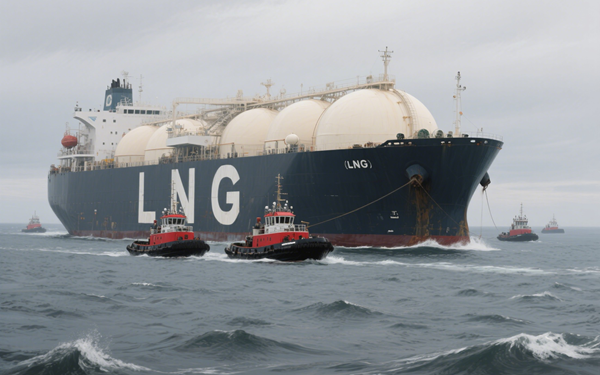
The global liquefied natural gas (LNG) market is standing at the starting line of a new cycle.
According to the newly released 2026 LNG Supply Outlook from consultancy ADI Analytics, the global gas market is entering a phase defined by rapid supply expansion, infrastructure bottlenecks, shifting demand centers, and mounting pressure across pricing, shipping, and power systems. For investors, this translates into significant structural opportunities.
ADI forecasts global LNG supply to grow by approximately 7% in 2026, far outpacing expected global gas demand growth of around 2%. This expansion marks the beginning of what ADI terms a “super cycle”: global LNG capacity is set to increase by more than 150 million tonnes per year (mtpy) by 2030, with Qatar and the United States contributing roughly two-thirds of the new volume.
Demand-side signals are equally encouraging. Asian LNG imports are projected to rebound by about 10% in 2026, driven by infrastructure investments in emerging markets such as India and Vietnam. Europe is expected to see demand grow by roughly 5% in 2026 as the region refills storage and replaces remaining Russian pipeline gas. Perhaps most notably, a wave of AI-driven data center construction across the United States is creating entirely new electricity loads, boosting natural gas-fired power generation and creating direct competition for gas supplies with LNG export facilities.
On the pricing front, while international benchmark LNG prices (such as Asia’s JKM and Europe’s TTF) are likely to soften, this will make LNG more attractive to price-sensitive emerging markets, encouraging fuel switching away from oil and coal and creating a positive demand feedback loop.
Beneath the optimistic supply picture lie significant logistical challenges. The Permian Basin urgently needs new pipeline capacity to transport associated gas to the Gulf Coast—a bottleneck not expected to ease until late 2026. Red Sea security concerns continue to force shipping diversions via the Cape of Good Hope. While a wave of new LNG carriers is entering the fleet through 2027, most of this capacity is already committed under long-term contracts, limiting spot market flexibility. Looking ahead, pending U.S. requirements for a growing share of LNG exports to be carried on U.S.-built vessels will further reshape shipping dynamics.
Against this macro backdrop, the following five publicly traded companies offer investors clear exposure to global LNG growth:
As the first company to achieve large-scale LNG exports from the lower 48 U.S. states, Cheniere has invested over $50 billion to become the leading U.S. LNG producer and the world’s second-largest. The company operates Sabine Pass in Louisiana (approximately 30 mtpy capacity) and Corpus Christi in Texas (approximately 21 mtpy), with the latter currently undergoing Midscale expansion.
Key advantage: Roughly 90% of production is secured under long-term, fixed-fee contracts, generating predictable cash flows. The company plans to deploy over $25 billion through 2030 toward growth initiatives, share repurchases, and dividends, targeting distributable cash flow of more than $30 per share by year-end 2030.
ConocoPhillips is building a significant global LNG position through strategic investments. The company holds interests in LNG facilities across Australia, Qatar, and Equatorial Guinea, and owns a 30% stake in the Port Arthur LNG project, expected to start up in 2027. It also participates in Qatar’s North Field South and North Field East expansions.
Growth catalyst: As three core projects enter service, the company expects to add approximately $1 billion annually to its free cash flow in both 2027 and 2028.
ExxonMobil is a global LNG leader with current equity capacity of approximately 23 mtpy, targeting growth to around 40 mtpy by 2030. Key drivers include the over $10 billion Golden Pass LNG project (expected to begin production in early 2026) and participation in Qatar’s North Field expansion alongside QatarEnergy.
Strategic value: LNG ranks among Exxon’s four strategic investment priorities, and partnerships with QatarEnergy, Shell, and others secure its position in the world’s premier LNG projects.
A true LNG pioneer, Shell operates supply projects across 10 countries with total capacity of approximately 40 mtpy. The company’s integrated model—spanning upstream production, liquefaction operations, and global marketing—enables cost optimization and value maximization throughout the value chain.
Future trajectory: Shell aims to add up to 12 mtpy of capacity by decade’s end, with projects advancing in Canada, Qatar, Nigeria, and the UAE, while its interest in the Gorgon project continues to deliver value.
Chevron operates Australia’s Gorgon and Wheatstone projects, positioning itself as a major LNG supplier to Japan. The company also holds interests in Angola LNG and operates Israel’s Leviathan field. Starting in 2026, third-party offtake agreements on the U.S. Gulf Coast will enable Chevron to export 7 million tonnes of LNG annually.
Regional synergy: By combining operating expertise in Australia with contract positions in the Americas, Chevron has constructed a transcontinental LNG value chain.
2026 will mark a watershed year for global gas markets. New supply will provide crucial energy security and lower prices, but how smoothly these massive volumes move—from Permian pipelines to Asian receiving terminals—will define the market for the rest of the decade.
For investors, these five companies offer differentiated angles on the LNG super cycle: pure-play export exposure (Cheniere), global diversification (ConocoPhillips, Exxon), integrated value capture (Shell), and regional deep-dive strategies (Chevron) . As the cycle unfolds, capacity additions and cash flow generation at these industry leaders warrant close attention.