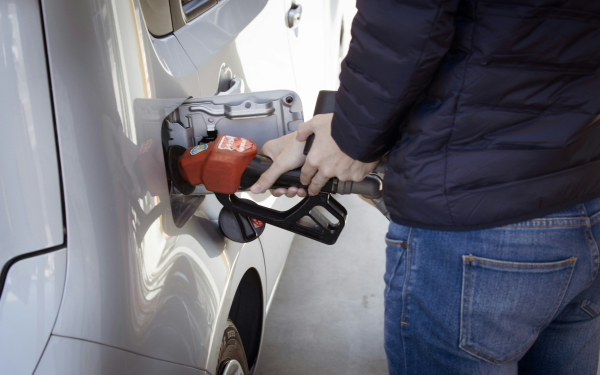
At the gas station, triple-digit oil stings. Inside the financial suites of America’s biggest shale producers, it smells like opportunity — and the question on the table is not whether to return cash to shareholders, but how fast. The answer, according to a growing chorus of analysts and company signals, is that a new buyback wave is gathering speed.
The trigger sits 7,000 miles from the Permian Basin, in the Strait of Hormuz. When a second round of U.S.-Iran negotiations collapsed in late April without a deal, Brent crude vaulted through $102.50 a barrel and briefly tagged $106.80.
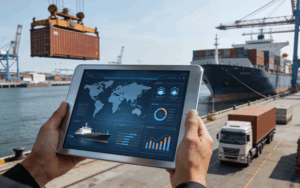
At the center of the breakdown was Tehran’s demand that every tanker threading the choke point pay up to $2 million in what amounts to a security toll. With roughly 20% of the world’s daily oil supply flowing through that waterway, the de facto closure has wiped an estimated 10 million barrels a day from regional exports. IEA chief Fatih Birol called the supply shock “absurd but real” and the worst energy crisis in history.
For U.S. producers, however, that geopolitical wound is pure margin. Permian Basin operators break even at just $45 to $55 a barrel. The Bakken and Eagle Ford are only slightly higher, at $50 to $60. With Brent above $102 and WTI trading at a $4-to-$6 discount, domestic drillers are pocketing $40 to $55 of profit on every barrel they pump — a world apart from the $70 oil environment of late 2025.
The math gets even simpler at the top of the food chain. Exxon Mobil (XOM) has told investors that at $65 Brent, it generates roughly $15 billion in annual free cash flow. Each $10 move higher adds about $4 billion. Run that sensitivity to $100 oil, and annual free cash flow shoots to something between $27 billion and $30 billion — far above what the company needs to fund its capital program. At Chevron (CVX), every $10 upswing in crude delivers around $2 billion in extra cash flow.
What happens next is where Wall Street’s attention is now fixed. Cash-rich and with few better options in a supply-constrained world, the supermajors are dusting off the 2022 playbook. That year, with Brent averaging north of $100, Exxon Mobil bought back $15 billion of its own stock while Chevron returned more than $11.6 billion via repurchases. Today’s firepower is even bigger: Exxon Mobil has $20 billion in buyback authorizations; Chevron’s program runs as high as $75 billion.
Goldman Sachs has already weighed in. In a recent note, the bank said that if prices hold above $95, major producers are likely to accelerate buybacks as soon as the second quarter. Their reasoning is straightforward: most have committed to returning at least 30% of operating cash flow to shareholders, and with capital discipline still a market imperative, buybacks are the path of least resistance.
“We expect repurchase acceleration to dominate second-quarter earnings calls,” a person familiar with the thinking at several large producers said, echoing the pattern that played out in Big Tech during previous cash windfalls.
Any doubt about the durability of these prices runs into a single, stubborn fact: the Strait of Hormuz is nowhere close to reopening. President Trump has ordered the Navy to “shoot and kill” any Iranian vessel caught laying mines and claims “total control” of the waterway. Yet last Wednesday, just eight ships transited the strait, including a mere three oil tankers — 8% of the pre-crisis norm of more than 100 vessels per day. A multinational mine-clearance coalition is forming, but the Pentagon’s own timeline says full clearance could take six months. Even a sudden ceasefire would not quickly refill the supply hole.
With Iran’s tollbooth choking global flows and no near-term exit in sight, $100 oil is not a spike to be traded — it is the baseline being priced into boardroom decisions. Cash is accumulating faster than companies can responsibly reinvest it, and the simplest, most shareholder-friendly valve is a buyback. For the owners of America’s oil giants, the mathematics of this crisis is brutally clear: while the world pays more to fill its tanks, they are getting paid twice.