
1911 Gold Corporation (TSXV: AUMB; OTCQX: AUMBF)
1911 Gold is Manitoba’s Gold Standard - Ready, Permitted and High-Grade 1911 Gold is an Emerging Gold Producer, with Significant Cash Flow Generation and District-Scale Growth Potential
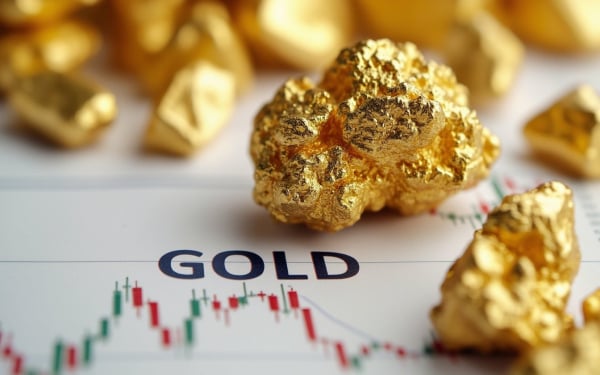
As of the close on April 14, 2026, international spot gold was trading near $4,838 per ounce, having tested the key resistance level of $4,800 during the session. After experiencing sharp volatility since the outbreak of the geopolitical conflict, the gold market now stands at a crossroads. On one hand, a weaker U.S. dollar and temporarily easing inflationary pressures are providing support for gold prices. On the other hand, subtle shifts in geopolitical tensions and monetary policy uncertainty continue to pose notable downside risks.
First, a significant weakening of the U.S. dollar index has become a direct driver of gold’s rebound. On Tuesday, the U.S. dollar index fell to a six-week low, testing the 98 level. Simon-Peter Massabni, Head of Business Development at XS.com, pointed out that rising expectations of a long-term peace agreement between the U.S. and Iran have diminished the dollar’s safe-haven appeal. This decline is not merely a temporary correction but rather reflects a shift in market sentiment.
Second, inflation data coming in below expectations has eased rate-hike anxieties. The U.S. Labor Department reported on Tuesday that the Producer Price Index (PPI) for April rose only 0.5% month-on-month, significantly below market expectations of 1.1%. This data has cooled rate-hike expectations that had been fueled by energy supply shocks. Carsten Fritsch, Commodity Analyst at Commerzbank, noted, “As long as the market does not begin to seriously consider a rate hike by the U.S. Federal Reserve — and there are no signs of this so far — the gold price is unlikely to fall much further.”
Third, investors are returning to gold at lower prices. Data shows that after experiencing outflows of 85 tonnes in March, global gold ETF holdings have increased by 25 tonnes since the beginning of April, indicating that money is quietly flowing back into the market.
However, the path higher for gold is far from smooth. The biggest risk still hangs over geopolitical developments. Christopher Lewis, Market Analyst at FXEmpire.com, warned that peace negotiations remain highly fragile, and even a single negative comment could push gold prices lower again.
Furthermore, although inflation data has temporarily cooled, the standoff between the U.S. and Iran in the Strait of Hormuz continues. Analysts at Standard Chartered pointed out that even if the war were to end, disruptions to energy supplies could persist, as key energy infrastructure in the Gulf region has suffered damage from missile and drone strikes. Should energy prices spike again, rate-hike expectations would re-emerge, putting pressure on non-yielding gold.
Currently, gold prices are caught in a tug-of-war between “safe-haven premium” and “interest rate pressure.” In the short term, a weaker dollar and returning fund flows will continue to provide support. However, the medium-term direction will depend entirely on the substantive progress of U.S.-Iran negotiations and the evolution of U.S. economic data. For investors, the battle between bulls and bears at the $4,800 level will be a key barometer for judging the next phase of the trend.