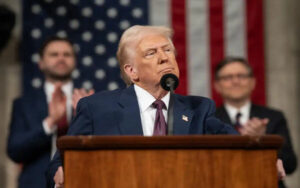

Brent crude jumped more than 5% and S&P 500 futures fell about 1% early Friday after Iran escalated strikes on energy infrastructure in Arab Gulf states, according to people tracking flows. The move came hours after U.S. President Donald Trump threatened to target Iranian infrastructure unless Tehran enters peace talks, intensifying a standoff that is resetting risk across commodities and equities.
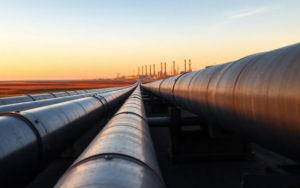
Benchmark Brent and West Texas Intermediate surged as traders priced in renewed disruption risk from a region that ships roughly a fifth of the world’s oil. The immediate question is durability: whether this is a short-term shock that mean-reverts as diplomacy kicks in, or a structural repricing that hardens a fatter risk premium into crude. For now, price action is doing the talking. Physical traders are flagging potential delays and rerouting in and around the Strait of Hormuz if insurers raise war premiums, even as Gulf producers signal they can keep exports flowing. A 5% gap-up in Brent inside one session is the kind of move that forces hedging decisions across the supply chain, from U.S. shale to Asian refiners.
Shares of integrated oil majors and oilfield services look set to catch a bid, with options desks pointing to heavy call buying in Exxon Mobil (XOM), Chevron (CVX), and ConocoPhillips (COP). Services names that benefit from higher upstream capex—Schlumberger (SLB) and Halliburton (HAL)—also screen as near-term beneficiaries. On the flip side, airlines and logistics are bracing for higher fuel costs and potential routing headaches if shipping lanes turn volatile; Delta (DAL), American (AAL), and United (UAL) typically trade inversely to jet fuel spikes. Refiners like Marathon Petroleum (MPC) and Valero (VLO) face a mixed setup, balancing stronger crack spreads against feedstock volatility. In Europe, BP (BP) and Shell (SHEL) have similar exposure, while petrochemicals may feel margin pressure if naphtha tightens.
The volatility was immediate and concentrated. Options volumes in energy names rose as retail traders chased upside calls, a familiar playbook in commodity shocks. Institutional desks were more cautious, leaning on collars and selling covered calls into strength to monetize the spike. That divergence in risk appetite matters if the move extends. Retail momentum can lift the complex into resistance, but sustained repricing of supply risk requires follow-through from hedgers and macro funds. Look for skew to stay elevated in oil ETF options and for implied vol to bleed only if headlines cool. If vol-of-vol keeps climbing, it will force CTAs and risk-parity funds to cut exposure, adding to equity pressure.
Trump’s escalation threat raises the stakes ahead of any back-channel talks. Tehran holds leverage through asymmetry: pinpoint strikes that unsettle markets without full-scale confrontation. Washington’s leverage is deterrence and secondary sanctions that squeeze exports and financing. Energy markets care less about rhetoric and more about two practical questions: can Gulf producers keep output and shipments steady, and will Iran test red lines around Hormuz or critical Saudi infrastructure reminiscent of the 2019 Abqaiq attack? Any sign of meaningful impairment to processing or loading capacity stretches spare capacity and pushes term structures deeper into backwardation.
OPEC+ has the tools to stabilize prices on paper, with Saudi Arabia holding the bulk of effective spare capacity. But tapping that buffer during a security scare carries messaging risk and physical constraints, and it does nothing to mitigate attacks on downstream assets. If Saudi and UAE barrels continue to load smoothly, the cartel can justify holding steady while monitoring inventories. If disruptions mount, a coordinated signal to add supply could cap the upside, though geopolitics would still command a premium. Watch prompt spreads in Brent and Dubai; wider backwardation would confirm acute near-term tightness and complicate procurement strategies for refiners tied to Middle East grades.
Even without direct blockages, perceived risk in the Strait of Hormuz can drive costs higher. War risk insurance premia can jump within hours, charter rates can reprice, and some shippers may temporarily avoid certain routes. That cascades into longer voyage times, higher freight costs, and uneven regional price moves, with U.S. exports potentially advantaged versus Middle East grades if Asia seeks to diversify intake. LNG flows are also in focus, given Qatar’s export footprint through the Gulf. Any material slowdown would tighten global gas balances into shoulder season and skew European utilities and chemicals. For now, ship-tracking shows traffic moving, but pricing in derivatives markets will be the early tell if risk aversion builds.
Beyond energy, the first-order macro read is classic risk-off. U.S. equity futures slipped, led by cyclicals that are sensitive to fuel costs and geopolitical uncertainty. Treasury demand and gold buying typically firm in this tape, though the size of flows will track the cadence of headlines. The dollar can catch a bid on safe-haven demand even as higher oil complicates inflation relief. If crude holds near session highs, central-bank path debates will resurface: an oil-led inflation bump is not the same as a broad demand surge, but it still muddies the timing for rate cuts traders had penciled in. That dynamic matters for tech multiples, housing-linked plays, and high-duration assets that have led the market all year.
CFOs in energy-intensive sectors should reassess hedges and draw up contingency plans for shipping and insurance. Energy producers can selectively lock in higher realizations while keeping upside via collars, given elevated implied vol. Airlines may revisit fuel surcharges if the move persists beyond a few sessions. Investors should map exposures: energy overweights can act as a partial hedge for broader equity risk, but concentration risk is real if the conflict narrative fades. Transactionally, be wary of chasing gap moves in illiquid small caps tied loosely to the theme. Liquidity and balance-sheet strength matter in choppy tapes. In options, rich skew argues for spreads over outright premium buys unless you are expressing a view on ongoing headline risk.
Keep eyes on official statements from Riyadh and Abu Dhabi about facility integrity and export continuity. Any confirmation of damage to processing hubs or loading terminals would extend the rally and steepen prompt spreads. Monitor OPEC+ chatter for contingency supply plans. Track insurer guidance on war risk premia and ship-tracking data through Hormuz for signs of rerouting. From Washington, clarity on thresholds for additional action will shape risk appetite. If back channels open and strikes pause, oil could retrace part of the shock move, taking pressure off equities. If attacks continue into the weekend, a broader risk re-rating is on the table, with energy the standout winner and rate-cut optimism the casualty.