Kalo Gold Corp. (TSXV: KALO, OTCQB: KLGDF)
A large, consolidated gold exploration opportunity in one of the Pacific Ring of Fire's most stable and mining-friendly jurisdictions.
The gold market just saw a dramatic end to the week of April 17, 2026. Iran’s announcement of the full reopening of the Strait of Hormuz, combined with the implementation of a ten-day ceasefire between Israel and Hezbollah, completely ignited a risk-on sentiment recovery in the precious metals market.
During early trading on Friday, gold prices first broke through the key resistance level of $4,800 per ounce. Then, at 8:45 AM ET, Iranian Foreign Minister Seyed Abbas Araghchi posted on social media that the Strait of Hormuz would be “open to all commercial vessels for the remainder of the ceasefire.” Five minutes later, gold prices touched an intraday high of $4,890.78, approaching the $4,900 level and reaching a near one-month peak.
Silver also surged more than 5% to $83 per ounce, its highest level in nearly five weeks. However, profit-taking emerged half an hour before the equity close, and gold eventually settled the week at $4,829.31 per ounce. Still, the yellow metal recorded its fourth consecutive weekly gain, up approximately 1.3% on the week. During the six-week-long Middle East conflict that preceded this, gold had fallen nearly 10% due to concerns over energy-driven inflation and a stronger U.S. dollar.
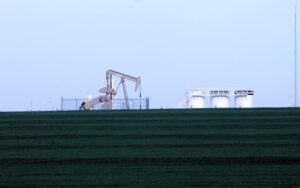
The core driver of this week’s price action is the re-pricing of inflation and interest rate expectations triggered by the status of the Strait of Hormuz. The strait handles about one-fifth of the world’s oil supply. During its closure, WTI crude briefly surged above $117 per barrel, and the market’s core logic was locked into “stagflation” – higher oil prices fueling inflation expectations, forcing the Federal Reserve to maintain tight policy, which in turn weighed on gold as a traditional safe haven. With Iran’s announcement of the full reopening, WTI crude plunged more than 14% in a single day. This directly eased inflation anxieties, and the market began to reprice Fed rate cut expectations, re-establishing the inverse relationship between gold and oil. A State Street Global Advisors analyst noted that normalising oil prices to $80-85 per barrel “could quickly push gold back above $5,000.”
Looking ahead to next week, mainstream Wall Street institutions believe gold still has upward momentum, though technical pullbacks warrant caution. The latest Kitco News Weekly Gold Survey showed that 80% of Wall Street analysts expect gold prices to rise next week, with none calling for a sideways move. Adam Button, head of currency strategy at Forexlive, pointed out that the continuation of the “peace trade” will push gold toward $5,000. Next week’s Senate confirmation hearing for Kevin Warsh, nominee for Federal Reserve chair, is a key catalyst, as markets broadly expect Warsh to strike a dovish tone. On the technical front, $4,870 is seen as a critical short term resistance level; a decisive break above it would open the door toward the $5,000 mark.
Compared with gold’s relatively clear logic, the outlook for oil prices remains highly divergent. Following the Strait reopening news, oil prices tumbled more than 10%. However, some institutions warn that downside room is limited. UBS believes that even with the strait reopened, energy prices could remain elevated for longer, and in an extreme scenario oil could rise to $130 per barrel. Goldman Sachs, meanwhile, maintains its forecast of a $83 per barrel average for Brent crude in 2026, but stresses that the recovery of flows will take time, and both supply and demand sides face significant uncertainties.
In summary, the positive evolution of the Strait of Hormuz’s status is reshaping gold’s pricing framework – shifting it from an “interest rate sensitive asset under stagflation fears” back toward a “risk on recovery trade,” with upside room now open. Nevertheless, the fragility of the geopolitical landscape cannot be overlooked: core U.S.-Iran differences remain unresolved, and the Israel Lebanon ceasefire is only ten days long. Any renewed tensions could once again roil global asset prices.