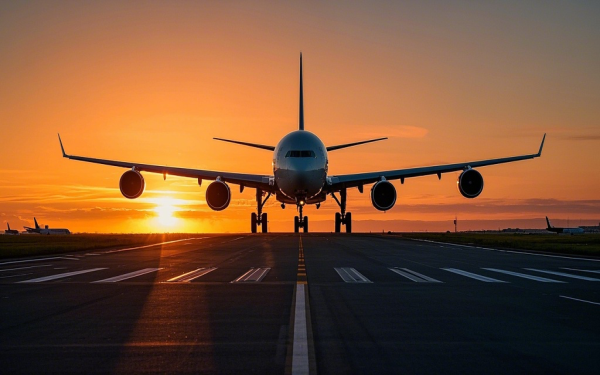
Boeing Co. (BA) shares plunged as much as 5.4% to $227.50 in intraday trading Thursday, defying what should have been a landmark victory: the U.S. announced China has agreed to purchase 200 Boeing commercial jets, marking the first large-scale acquisition of U.S.-made aircraft by Beijing in nearly a decade. The counterintuitive market reaction has left investors dissecting the gap between headline optimism and underlying realities.
The deal, unveiled during high-level Sino-U.S. economic talks, ends a years-long order drought for Boeing in the world’s second-largest aviation market. Since 2017, trade tensions and the global grounding of the 737 MAX following two fatal crashes had frozen major Chinese purchases, with Beijing ordering just 39 Boeing planes this decade. Airbus SE has steadily captured market share in the interim, with Chinese carriers committing to roughly 700 Airbus jets since July 2022.
Yet the long-awaited breakthrough failed to lift Boeing’s stock, driven by three core factors.
First and foremost, the order size fell drastically short of market expectations. Investors had priced in a potential landmark deal for up to 500 aircraft, including 737 MAX narrowbodies and widebody jets, which would have materially reshaped Boeing’s near-term revenue outlook. The final 200-plane figure was a significant disappointment.
“The market was looking for 300 or more and details around type,” said George Ferguson, an analyst at Bloomberg Intelligence. “Two hundred is just a stabilization signal, not enough to support a meaningful valuation uplift.”
Second, significant execution uncertainty hangs over the agreement. The deal remains a government-level commitment, not a firm order from Chinese airlines, and cannot yet be added to Boeing’s official backlog. Historically, some government-announced aircraft sales to China have not been fully consummated. The specific models included in the 200-plane purchase also remain undisclosed, leaving investors unable to quantify the exact revenue and profit impact.
Third, Boeing’s own operational and financial headwinds have offset any positive sentiment from the China deal. The company is facing a high-stakes lawsuit from Polish Airlines, which alleges Boeing concealed safety defects in the 737 MAX when the carrier leased 15 jets in 2016. A negative verdict could trigger similar litigation from airlines worldwide, exposing Boeing to massive liability.
Additionally, Boeing delivered just 47 aircraft in April, missing analyst expectations of more than 50 deliveries, highlighting persistent production bottlenecks. Financially, while Boeing’s first-quarter revenue rose 14% year-over-year to $22.21 billion, the company still posted a net loss of $7 million, with negative operating cash flow and a $1.4 billion free cash flow deficit. Its profitability turnaround remains incomplete.
Industry analysts note that even with the new order, Airbus’s dominant position in China is unlikely to be challenged. The 200-plane purchase is widely seen as a move to balance procurement between the two aerospace giants, rather than a fundamental shift in market dynamics.
Looking ahead, the China deal represents a modest long-term positive for Boeing, but investors are taking a wait-and-see approach. Key metrics to monitor include the formal signing of firm orders by Chinese airlines, the resolution of the Polish Airlines lawsuit, and monthly delivery performance. Until these uncertainties are resolved, Boeing’s stock is likely to remain range-bound, with the 200-plane order alone insufficient to drive a sustained rally.