
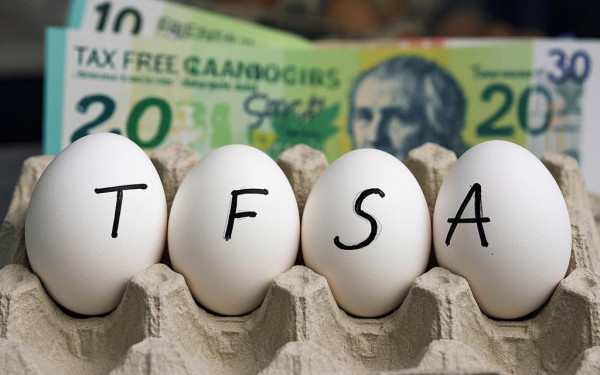
Dividends feel safe. They land in your account like clockwork, tax-free inside a TFSA, and that modest yield can be strangely satisfying. But here’s the uncomfortable math: If a stock hands you a 4% dividend and rises 20% in a year, the dividend accounts for just one-sixth of your total gain. Even so, many Canadian investors stuff their TFSAs with high-yield names, treating the account as a cozy shelter for small, recurring payouts rather than the explosive wealth tool it was designed to be.
The 2025 TSX30 list — the Toronto Stock Exchange’s annual ranking of top performers by three-year share-price growth — makes the case as clearly as numbers can. The 30 stocks on that list averaged a 431% return over three years. Not a single one of them earned its spot because of a generous dividend policy. They earned it through relentless capital appreciation, exactly the kind of gain that a TFSA protects from tax forever.
If you want to see what a “growth-first TFSA” actually looks like, three names stand out: Celestica (CLS), Cameco (CCO), and Firan Technology Group (FTG). They pay minuscule dividends or none at all, and they’ve made a mockery of the idea that you need income to build wealth inside a tax-free account.
Celestica topped the TSX30 in 2025 with a three-year return of +1,599%. That means $10,000 tucked into the stock three years ago would have become roughly $170,000 — entirely tax-free inside a TFSA.
The company, now a $46.5−billion hardware manufacturer for hyperscale data centers, sits at the heart of the AI infrastructure buildout. Its revenue hit $12.4 billion in 2025, up 28%, while adjusted net earnings surged 53% to $703.2 million. Management’s 2026 revenue target of $17 billion suggests the momentum isn’t fading. “We believe the revenue growth trajectory that we anticipate in 2026 will be sustained into 2027,” said President and CEO Rob Mionis.
With shares trading around $401.74 and analyst targets as high as $460, Celestica remains a growth engine that pays zero meaningful dividends — and that’s precisely the point.
Cameco practically waves a sign that says “pure-play capital appreciation.” The $75.3−billion uranium giant, co−owner of Westinghouse Electric alongside Brookfield Renewable Partners, is riding a wave of electrification, decarbonization, and BigTech’s desperate need for clean base load power. In 2025, net earnings exploded 243% to $590 million, and the company paid off a US$200-million term loan.
Its dividend yield? A token 0.14%. Yet the stock delivered a 212% return in a single year. Even as management talks about advancing a dividend growth plan, the real story is that the lion’s share of Cameco’s value creation comes from price appreciation — and inside a TFSA, every percentage point of that gain is yours to keep untaxed.
If Celestica and Cameco are the heavyweights, Firan Technology Group is the small-cap torpedo that most investors have never heard of. The $522.3−million aerospace and defense specialist focuses on high−tech printed circuit boards, with sophisticated circuits driving over 70% of Firan’s revenues. In 2025, total adjusted net earnings increased 31% year over year to $13.5 million, and management has its sights set on dominating North America’s PCB industry.
The stock is up 79.7% year-to-date and has returned roughly +544.4% over three years — a performance that could land it on a future TSX30 list. At just $20.75 per share, it’s also accessible. For a smaller TFSA balance, a position in a high-growth small cap like Firan offers a chance at outsized capital gains with zero tax drag.
The TFSA’s core promise is permanent tax exemption on all gains. But that promise is wasted when the account is filled with slow-moving dividend payers that return single-digit percentages year after year. Dividend income is just one narrow slice of total return; capital gains, especially the multi-hundred-percent kind, deserve the same tax-free treatment.
Celestica, Cameco, and Firan walk entirely different paths — AI hardware, nuclear fuel, and defence electronics — yet they share a common trait: they don’t pay you to wait. They reward you by growing. For investors willing to trade the illusion of dividend safety for genuine capital compounding, shifting a TFSA from a dividend-collection basket to a growth-oriented trio like this isn’t risky thinking. It’s the most logical way to use the account. Tax-free compounding works best where the gains are largest, and right now, those gains aren’t coming from dividends.