1911 Gold Corporation (TSXV: AUMB; OTCQX: AUMBF)
1911 Gold is Manitoba’s Gold Standard - Ready, Permitted and High-Grade 1911 Gold is an Emerging Gold Producer, with Significant Cash Flow Generation and District-Scale Growth Potential
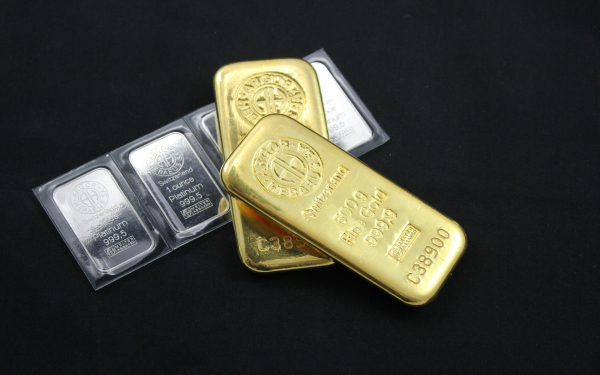
Late Tuesday in New York, spot gold edged slightly lower while spot silver bucked the broader trend to post gains, marking a sharp divergence from their synchronized morning selloff. Spot gold traded at $4,714.40 per ounce, down 0.42% on the session, while spot silver rose 0.54% to $86.440 per ounce. Gold fluctuated between $4,637.90 and $4,774.20 during the day, holding above the key $4,700 threshold but retreating from its intraday high. Silver saw more volatile trading, with a range of $82.940 to $87.320, extending its Monday leadership in the precious metals complex where front-month silver futures surged more than 6%.
A stronger U.S. dollar, rising Treasury yields and a fresh jump in crude oil prices combined to dampen safe-haven demand stemming from U.S.-Iran tensions, though silver’s dual industrial and monetary attributes helped it outperform.
Geopolitical risks remain the central variable for precious metals, with shipping conditions in the Strait of Hormuz serving as the market’s key barometer for energy supply disruptions. As of Tuesday morning, U.S. President Donald Trump rejected Iran’s latest peace overture, putting a potential ceasefire agreement at risk of collapse. Trump said the truce with Iran was “hanging by a thread” and dismissed Tehran’s demands as “garbage.”
The transmission mechanism of geopolitical risks to precious metals has shifted critically. While the conflict persists, the resulting surge in oil prices has instead boosted inflation expectations and nominal yields, pressuring gold rather than lifting it. In energy markets, Nymex WTI crude traded around $102.12 per barrel, while Brent crude was near $107.49. The U.S. dollar index firmed, and the benchmark 10-year U.S. Treasury yield traded near the 4.5% level.
Silver’s counterintuitive strength reflects ongoing market appetite for its unique combination of industrial utility and monetary value, contrasting with gold’s primarily safe-haven appeal. Despite building up significant short-term profit-taking pressure after Monday’s rally, expectations for industrial demand continue to underpin silver prices.
The hotter-than-expected April U.S. CPI report has further rattled Federal Reserve policy expectations. Consumer prices rose 0.6% month-over-month in April, down from 0.9% in March, but the annual rate accelerated to 3.8% from 3.3%, beating consensus forecasts of 3.7%. Core CPI, which excludes volatile food and energy prices, increased 0.4% on the month and 2.8% year-over-year.
Energy prices remained the biggest driver of inflation, with the energy index rising 3.8% in April, led by a 5.4% jump in gasoline prices. Energy costs accounted for more than 40% of the overall price increase last month and have surged 17.9% so far this year. Analysts note that current U.S. inflation is primarily driven by supply-side constraints, which monetary policy cannot effectively address.
The inflation data sent conflicting signals to precious metals markets: persistent price pressures support the investment case for hard assets, but higher yields and a stronger dollar have capped gold’s upside. The hotter-than-expected print has completely reversed Fed policy expectations, with market pricing for a rate hike by the end of the year rising to its highest level in 2026.
“The Fed can at best hold rates steady for the remainder of this year, and a near-term rate cut is extremely unlikely,” said Chris Zaccarelli, Chief Investment Officer at Northlight Asset Management. “Markets may even start pricing in rate hikes for next year.”
However, further rate hikes would pose additional threats to an already fragile U.S. economy. Gold’s relative resilience following the CPI release reflects renewed stagflation concerns, as investors widely believe the Fed has been caught in a policy dilemma.
Adding to the complex policy backdrop, the U.S. Senate confirmed Kevin Warsh to the Federal Reserve Board by a 51-45 vote on Tuesday, a development that has added a policy independence risk premium to gold. Analysts say the immediate impact is likely limited unless markets begin pricing in a faster path for Warsh to become Fed Chair and a subsequent decline in real interest rates.
For broader markets, the vote will sharpen focus on Fed credibility, the U.S. dollar and long-end Treasury yields. A path to Warsh as Fed Chair could marginally support equities if rate-cut expectations build, but gold would benefit most if the move erodes market confidence in the Fed’s independence in fighting inflation.
Looking ahead, Fed policy expectations and energy price movements will remain the dominant drivers of gold and silver prices in the near term. The next key U.S. data risk is the April PPI report due Wednesday at 8:30 a.m. ET, followed by import and export price data on Thursday. These releases will give traders a second read on whether April’s energy price shock is feeding through to producer margins and tradable goods prices.