1911 Gold Corporation (TSXV: AUMB; OTCQX: AUMBF)
1911 Gold is Manitoba’s Gold Standard - Ready, Permitted and High-Grade 1911 Gold is an Emerging Gold Producer, with Significant Cash Flow Generation and District-Scale Growth Potential
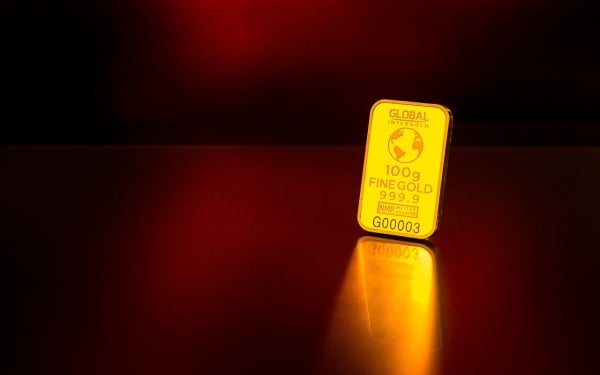
Gold vaulted more than 3% on Wednesday, smashing through the $4,700-a-ounce barrier as a sudden wave of optimism over U.S.-Iran peace talks triggered a sharp sell-off in the dollar and crude oil, cooling inflation fears and rekindling bets on Federal Reserve rate cuts.
Spot gold jumped 3.2% to $4,703.09 per ounce, its highest since April 27. Silver surged 5.7%, platinum added 3.4% and palladium climbed 3.3%, as precious metals rallied in unison.
The move caught some traders off guard. Progress toward a ceasefire would normally undercut gold by dulling safe-haven demand. Instead, the twin forces of a plunging dollar and tumbling energy costs overwhelmed that logic, breathing fresh life into bullion.
The trigger was a flurry of diplomatic signals. President Trump said “great progress” had been made toward a “complete and final agreement with the representatives of Iran” and paused military escort operations through the Strait of Hormuz. Iran’s foreign minister said his country would accept only “a fair and comprehensive agreement.” With the prospect of a normalised shipping corridor through the world’s most critical oil chokepoint, crude prices sank, dragging the dollar index to a 10-week low as global equities rallied.
Cheaper oil directly eased the energy-driven inflation anxiety that had kept central banks in hawkish mode — and gold responded sharply.
“A timely peace deal allowing the normalisation of shipping through the Strait of Hormuz would alleviate inflationary pressures and create the conditions for the Federal Reserve to cut rates in 2026,” said ActivTrades analyst Ricardo Evangelista. “In a scenario of normalisation in the Persian Gulf, gold prices may regain some bullish momentum as the dollar weakens and yields soften. Such a scenario could allow the precious metal to revisit levels above $5,000 and approach $5,500 by year-end.”
A softer-than-expected U.S. labor market reading added fuel to the rally. ADP reported that private payrolls rose by 109,000 in April, missing the consensus estimate of 118,000. ADP chief economist Dr. Nela Richardson flagged the weakness: “Small and large employers are hiring, but we’re seeing softness in the middle. Large companies have resources to deploy, and small ones are the most nimble, both important advantages in a complex labor environment.” The report also showed relatively contained annual pay gains — 4.4% for job stayers and 6.6% for job changers — reinforcing a benign inflation picture.
“This type of de-escalation, even if temporary, creates a dual-impact environment; on one hand, it supports risk assets, and on the other, it reinforces safe-haven demand for gold due to the fragility of stability, which explains the current delicate balance in price action,” said Simon-Peter Massabni, Head of Business Development at XS.com.
Looking ahead, Massabni pointed to the nonfarm payrolls report as a near-term pivot: “The upcoming Nonfarm Payrolls report, I believe it represents a potential turning point for market direction in the short term. If the data comes in weaker than expected, it would strengthen expectations of rate cuts and directly support gold. Conversely, if the data is strong, we may see some corrective pressure on the precious meta.”
David Morrison, Senior Market Analyst at Trade Nation, urged caution, noting the conflict’s enduring economic imprint. “It’s unclear what may be in the agreement, especially concerning the reopening of the Strait of Hormuz. But investors seem confident that, ten weeks into the war, an end to hostilities may be in sight,” he said. Still, “It’s worth noting that investors see a 20% probability of a Federal Reserve rate hike by year-end. This could limit the upside in gold should the dollar resume its rally.”
For all the near-term cross-currents, Massabni maintained that gold’s longer-term appeal is intact: “Investing in gold at this stage requires a deep understanding of the balance between short-term and long-term factors. Markets do not move based on a single event, but rather through a complex interaction between politics, economics, and investor psychology. From this standpoint, I see gold as maintaining its appeal as a key hedging instrument, and any current volatility should be viewed within a broader context reflecting structural shifts in the global financial system, rather than merely short-term reactions to news.”
As attention now pivots to the nonfarm payrolls data, Wednesday’s surge above $4,700 stands as a powerful reminder: a collision of geopolitical repricing, a softening labor market and a sliding dollar can rapidly reignite gold’s structural bid.