How the Tungsten Supply Crisis Is Forcing the U.S. to Revive Its Domestic Industrial Chain
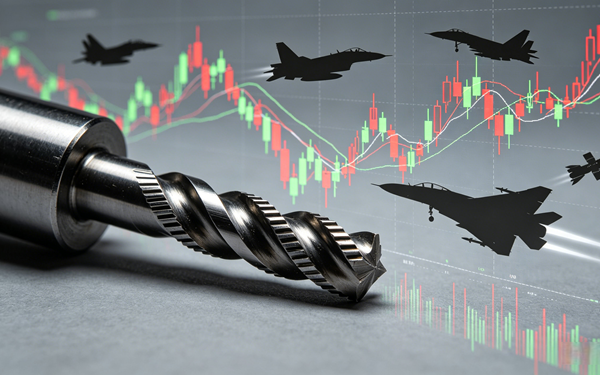
The stockpiles of advanced ammunition in the United States and its allies are being depleted at an unprecedented rate. Tungsten metal has rapidly become a core strategic resource in the global military-industrial and technology supply chains, compelling the U.S. to urgently search for this strategic material worldwide. Industry insiders point out that against the backdrop of frequent geopolitical conflicts and rapidly growing military demand, the tightening tungsten supply is gradually escalating from an industrial issue to a matter of national security.
Heavy Reliance on Imports, Long-Standing Stagnation of Domestic Mines
Since the outbreak of the war between the U.S. and Israel against Iran at the end of February, the pressure on the global tungsten supply has further intensified. The U.S. think tank Center for Strategic and International Studies warned last month that the current high-intensity military consumption could lead to recovery periods of several years for some key ammunition stockpiles of the U.S. military, implying that demand for critical raw materials like tungsten will remain high for the long term. According to data from the U.S. Geological Survey, the U.S. needs to import over 6,000 metric tons of processed tungsten products annually. Notably, commercial tungsten mining in the U.S. has been almost stagnant since 2015, and the related industrial chain has shrunk for years, resulting in a heavy dependence on overseas supply and recycling systems. Now, with the surge in global military demand, the U.S. is accelerating the reconstruction of its tungsten supply chain within domestic and allied networks.
Reopening an Old Mine in South Korea, Accelerating Global Layout
An old mine in the mountainous region of eastern South Korea has recently re-entered the market spotlight. In March of this year, the U.S. company Almonty Industries (TSX:AII) restarted the Sangdong tungsten mine, a key resource base during South Korea’s industrialization period that had lain dormant for decades, now imbued once again with strategic significance. Almonty CEO Lewis Black stated that there are not many tungsten mines worldwide with true large-scale production capacity, and future demand for tungsten will come not only from military industries but will also continue to benefit from the expansion of the technology sector.
Overlapping Tech Demand, a Long Road Ahead for Supply Chain Reconstruction
In fact, tungsten is also widely used in semiconductors, batteries, smartphones, and high-performance electronic devices. With the rapid development of artificial intelligence, data centers, and advanced manufacturing, the “strategic attribute” of tungsten is expanding from the sole domain of military industries to that of technology infrastructure. Almonty COO Steve Allen pointed out that over the next 10 to 20 years, demand for tungsten will only increase, and establishing a stable and resilient tungsten supply chain will become a crucial component of future industrial competitiveness.
Analysts believe that the global tungsten industry may enter a long-term high-prosperity cycle. Against the backdrop of supply-demand mismatch, tungsten prices may continue to have upward momentum over the medium to long term. However, industry insiders generally agree that supply chain reconstruction will be a lengthy process. Even as major economies continue to promote localization, it may still take decades to truly form a complete and independent tungsten industrial system. During this period, the competition for critical mineral resources is likely to become a major focal point in future global industrial competition and geopolitical struggles.
Base Metals
Energy Metals
Mining
Tungsten