
Against the backdrop of record highs in US stocks, strategists at JPMorgan (JPM) have concluded that the share of retail trading, which fell to a four-year low at the end of the first quarter, is expected to rebound, potentially providing a new driving force for the stock market. A team of JPMorgan strategists led by Nikolaos Panigirtzoglou wrote in a report that although retail investors’ share of US stock trading volume further declined to 17% in the first quarter, a rebound is expected in the second quarter. This aligns with trends observed in retail demand in the options market—namely, the volume of call options purchased by small options traders decreased between October 2025 and March 2026 but rose sharply between April and May 2026.
The performance of the S&P 500 in 2025 and 2026 has been quite similar, with lower returns in the first quarter followed by a strong rebound in the second quarter. The remainder of 2025 ultimately delivered substantial returns for US investors. JPMorgan strategists believe that a recovery in retail trading could provide new momentum for the broader market.
JPMorgan strategists noted that retail investors actively participated in individual stock trading in the second quarter of 2025, driving the stock market higher. However, since then, except for October 2025, retail investors have slowed the pace of individual stock trading. Nevertheless, retail investors remain an important driver of the US stock market’s ascent. The report shows that during the downturn from the second half of 2025 to the first quarter of 2026, retail investors still accounted for nearly 20% of US stock trading volume and nearly 50% of zero-day-to-expiration options trading volume.
During periods of declining overall retail participation, another group of traditional retail investors—those more inclined to invest in stock funds—provided strong support to the market. The team added that for the stock market, the frequency of retail trading in stocks and options is not what matters most; what truly matters is their share of total end-investor fund flows.
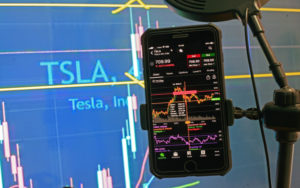
In recent years, the rise of low-cost, zero-commission brokers such as Robinhood and Interactive Brokers has significantly lowered the barriers to market entry and trading costs for ordinary Americans, fueling enthusiasm among retail investors to participate in the stock market. This trend drew attention in 2021, when many Americans stuck at home during the pandemic with ample cash engaged heavily in stock speculation through online trading platforms. By 2025, AI-related stocks such as Nvidia (NVDA) and Palantir (PLTR) became retail favorites, while another hot stock, Tesla (TSLA), also delivered strong performance.
Earlier, on Tuesday, Goldman Sachs (GS) raised its year-end 2026 target for the S&P 500 from 7,600 to 8,000, citing continued strength in corporate earnings. That target is 6.4% above the S&P 500’s previous closing price of 7,519.12. Goldman Sachs stated that all of the S&P 500’s returns so far this year have been driven by earnings growth, and it expects this trend to continue in the coming months. The firm also raised its earnings per share (EPS) forecasts for the S&P 500: to $340 for 2026, representing 24% year-over-year growth, and to $385 for 2027, another 13% year-over-year increase. Goldman Sachs pointed out that companies benefiting from AI infrastructure will contribute about half of the S&P 500’s earnings growth this year, and although weak consumer spending and high costs pose risks, robust AI investment will help hedge against these pressures.