
Nebius Group (NBIS), the AI-native cloud provider, saw its shares jump approximately 18% in midday trading Thursday after delivering a blowout quarterly earnings report that trounced Wall Street expectations, fueled by insatiable global demand for artificial intelligence computing power. The stock has now surged nearly 134% year-to-date, leaving investors debating whether the remarkable rally has further room to run.
The company reported quarterly revenue of $399 million, representing a staggering 684% increase from the same period last year. This figure easily surpassed the Wall Street consensus estimate of $375 million. Meanwhile, Nebius posted an adjusted net loss of roughly $100 million, significantly narrower than the $174 million loss analysts had projected.
Building on this strong performance, Nebius raised its full-year 2026 revenue guidance to a range of $3.0 billion to $3.4 billion. The company also expects to achieve an annual recurring revenue (ARR) run rate of $7 billion to $9 billion by year-end.
“We continue to see unprecedented demand across the market,” said Arkady Volozh, Founder and CEO of Nebius, in a letter to shareholders. “Compute and cloud needs are vastly exceeding capacity as more industries embrace AI and companies move beyond experimentation to real-world applications.”
In addition to its stellar financial results, Nebius announced a major expansion of its global data center footprint. The company has secured a new site in Pennsylvania capable of supporting up to 1.2 gigawatts (GW) of power capacity.
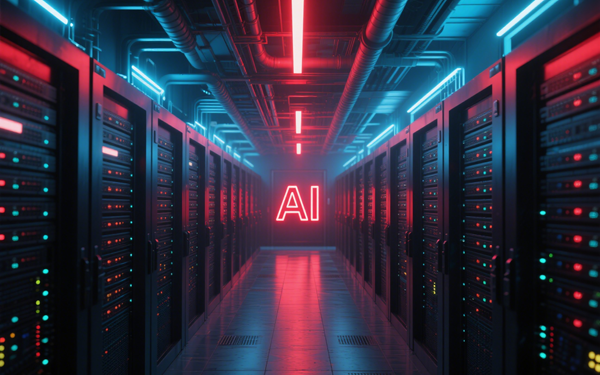
This addition will bring Nebius’s portfolio to two data centers with over 1 GW of power and seven facilities with more than 100 megawatts (MW) of capacity. The company also raised its total power capacity guidance to over 4 GW by the end of 2026. Nebius currently operates data centers across Finland, the United Kingdom, Israel, and Vineland, New Jersey, forming a robust network spanning three continents.
Nebius’s explosive growth is underpinned by deep partnerships with the world’s leading technology companies. The company has signed a multiyear agreement with Microsoft worth up to $19.4 billion for dedicated GPU capacity. In March 2026, Meta Platforms followed with a five-year contract valued at $12 billion, with an option to extend the total value to $27 billion.
Notably, Nvidia itself made a $2 billion strategic investment in Nebius in March, further cementing the company’s central position in the AI compute supply chain. Nebius now boasts a contract backlog exceeding $20 billion. Importantly, over 60% of its planned $16 billion to $20 billion in 2026 capital expenditures will be funded through customer prepayments, significantly reducing equity dilution risk.
Nebius’s current valuation has become a topic of intense market discussion. At the time of writing, shares trade above $211, giving the company a market capitalization of over $52 billion and a forward price-to-sales ratio of approximately 16 times—well above traditional cloud computing providers. However, analysts note that Nebius’s value extends beyond its core AI data center business. The company holds stakes in several high-growth AI firms, including ClickHouse, Avride, and Toloka, with these non-core assets valued at roughly $5.8 billion, a value not yet fully reflected in the stock price.
Unlike legacy cloud providers such as Amazon Web Services and Microsoft Azure, which were built for general-purpose computing, Nebius was designed from the ground up exclusively for AI workloads. Its entire technology stack is optimized for AI training and inference, featuring denser GPU configurations, lower node-to-node latency, and a software layer engineered specifically for large language models. This AI-native architecture gives Nebius a unique competitive advantage in the rapidly growing market.
Despite its strong prospects, investors should be mindful of three key risks. First, customer concentration is significant, with Microsoft and Meta accounting for the majority of Nebius’s contracted revenue. Second, executing on its ambitious sixfold ARR growth target requires flawless coordination of GPU procurement, power delivery, and data center construction across three continents simultaneously. Finally, Nebius has not yet achieved operating profitability and has stated it may pursue additional capital raising opportunistically if needed, a factor that carries weight in the current volatile interest rate environment.
In conclusion, Nebius’s long-term growth narrative remains compelling, driven by persistent AI compute supply shortages and its unmatched position as a pure-play AI infrastructure provider. However, with the stock having doubled year-to-date and trading at a premium valuation, short-term volatility is likely. Investors should carefully consider these risks and size their positions accordingly.