

District Metals Corp. (TSXV:V.DMX. Nasdaq: DMXSE SDB)
Advancing the Largest Undeveloped Uranium Deposit in the World
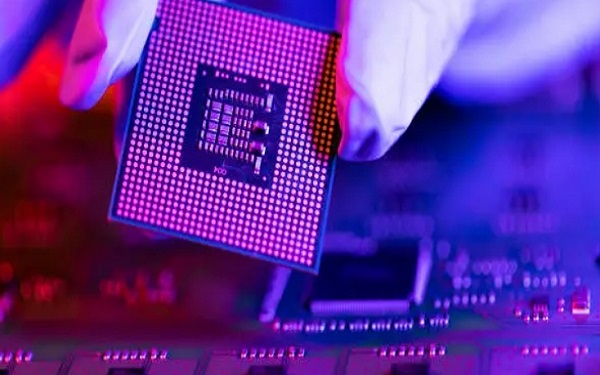
A “blowout” earnings report met with a slight pullback in share price – this has become a recurring script for Nvidia (NVDA). After the market closed on May 20th, the AI chip giant released its report for the first quarter of fiscal year 2027, showing that its revenue exceeded $81 billion, an increase of 85% year-on-year. Net profit soared by 211% to 58 billion US dollars. The gross profit margin has remained consistently above 74%. All three core metrics beat analysts’ expectations.
Meanwhile, demand for the Blackwell system remains strong, and the next-generation Rubin platform is off to a tremendous start. The company even expressed “full confidence” in achieving a combined $1 trillion in platform revenue from 2025 through calendar 2027.
However, during the trading session on May 21, Nvidia’s stock fell about 2%. Why is the market voting with its feet? After a 1,400% surge over five years, is Nvidia still the top AI stock to buy?
The market has changed: from “sole focus” to “one of many choices”
Over the past three years, Nvidia has been virtually synonymous with the AI trade. But now, investor attention is diversifying. Since the beginning of this year, memory chip maker SanDisk’s stock is up 500%, Intel has tripled, and AMD has doubled. Even soon-to-IPO AI stars like SpaceX and OpenAI are diverting capital interest.
Some strategists point out that the AI trade is evolving from a straight-line momentum move into a more tactical trade. In other words, the market is no longer content to cling solely to Nvidia but is starting to look for the next batch of stocks with excess return potential.
A clear signal from history: prone to short-term dips, but strong over the long term
But does this mean Nvidia has lost its investment value? Historical data offers another perspective. According to statistics, Nvidia’s stock fell within five trading days after seven of its past 12 quarterly reports. However, when extending the horizon to six months, the stock rose after eight of the past 11 quarterly reports, many times with gains exceeding 50%. For example, after the Q3 fiscal 2024 report, the stock rose 90% in six months; after Q4 fiscal 2024, up 90%; after Q1 fiscal 2025, up 49%.
This pattern suggests that short-term pullbacks after earnings may actually present good opportunities for long-term positioning. Nvidia’s current forward P/E ratio is about 26 times. If the stock price falls further, valuation appeal would become even more pronounced.
Conclusion: Long-term logic remains intact; timing depends on one’s own horizon
Nvidia’s core competitiveness remains solid – it holds a dominant position in the AI training and inference chip market, the Rubin platform opens new space by entering the CPU market, and gross margins remain healthy. Even as competition intensifies, its first-mover advantage and ecosystem moat are unlikely to be disrupted in the short term.
For long-term investors, a small post-earnings dip should not be a cause for concern, but rather a potential window for phased position building. For traders seeking short-term gains, however, caution is warranted regarding sentiment fatigue and capital rotation.