Baidu’s finance chief just put a fine point on what savvy investors already see: China’s AI winners are not point-solution vendors, they are full-stack operators fusing chips, large models, cloud, and applications with real distribution. That is why the country’s AI flywheel is accelerating while others debate unit economics. The capital markets response is predictable—follow the vertical integration and the data gravity. Here is where the next leg of returns should accrue.
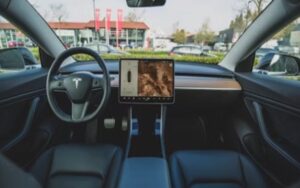
The through-line from internet search to self-driving fleets is not a brand stretch—it is an engineering logic. Train the model where the data lives. Put the inference where the latency demands. Control the silicon stack where bandwidth is scarce or sanctioned. Baidu’s path from ERNIE foundation models to Kunlun accelerators, from Baidu Cloud to Apollo Go robotaxis, shows how to compress cost curves and time-to-market at once. In mobility, owning both the autonomy stack and the ride-hailing front end compounds learning cycles, monetization formats, and regulatory trust. In advertising and cloud, embedding LLMs into retrieval, ranking, content safety, and enterprise copilots pulls spend from legacy tools into AI-native services. This is not just defensive verticalization; it is how you turn model ops and data ops into product moats.
China’s innovation posture gives this model long runway. The share of China-produced science underpinning Chinese patents rose from 1 percent in 2000 to 26 percent in 2025, surpassing the U.S. share in 2021. That matters in AI, semiconductors, batteries, and power electronics where know-how compounds. Outbound direct investment reached 174.38 billion dollars in 2025, up 7.1 percent year over year, with a clear tilt toward high-tech and green assets. Capital follows capability: Tencent at 546.4 billion dollars in market cap, Alibaba at 328.9 billion, and CATL at 295.4 billion anchor a market whose leaders now monetize at global scale. European industry’s recent alarm over China’s advances in AI, defense-adjacent tech, and clean energy is telling—competition is reacting because the product is winning. For investors, that is a signal to analyze flows, not fears.
1) Baidu (BIDU) – Full-stack AI operator from chips to apps. Milestone: secured permits for fully driverless robotaxi service in major Chinese cities, converting years of autonomy R&D into paid rides. Global impact note: the integrated ERNIE plus Apollo plus Baidu Cloud stack is becoming a reference architecture for emerging markets aiming to localize AI while scaling mobility and public services.
2) Tencent (TCEHY) – Hunyuan LLM infused across WeChat, cloud, ads, and gaming ops. Stat: 546.4 billion dollar market cap underscores monetization breadth across social, fintech, and content. Global impact note: cross-border mini-programs and payments give Tencent a channel to export AI-enhanced services into Southeast Asia without heavy capex.
3) Alibaba (BABA) – Tongyi large models sit at the core of Alibaba Cloud and the group’s commerce engines. Stat: 328.9 billion dollar market cap; restructuring has sharpened focus on cloud profitability and GPU-as-a-service. Global impact note: Lazada and AliExpress give Alibaba the merchant graph to roll out AI retail tools across Asia and beyond.
4) CATL (300750.SZ) – The world’s EV battery leader is also an AI beneficiary as cell design, BMS software, and grid-scale storage optimization become model-heavy. Stat: 295.4 billion dollar market cap. Milestone: Qilin architecture improved pack-level efficiency and enabled faster time-to-market for automakers. Global impact note: lower pack costs accelerate EV uptake in emerging markets, pushing AI-enabled energy management into the mainstream.
5) BYD (1211.HK) – Vertically integrated EV and battery champion with Blade Battery for safety and cost. Milestone: announced and progressed European manufacturing in Hungary while expanding production footprints in Latin America. Global impact note: exporting affordable EVs at scale changes the unit economics of electrification for developing countries and expands the addressable market for autonomy-ready platforms.
6) SMIC (0981.HK; 688981.SH) – China’s top foundry executing under constraint. Milestone: demonstrated production of advanced, DUV-based 7 nm–class chips, supporting domestic application processors. Global impact note: a more resilient design-to-fab pathway reduces supply chain risk for China’s AI model inference and edge computing buildouts.
7) Xiaomi (1810.HK) – Converging AIoT, smartphones, and EVs. Milestone: launched the SU7 EV with strong early bookings and rapid software iteration cadence, leveraging a vast device ecosystem for data and services. Global impact note: a consumer-electronics approach to vehicles lowers entry barriers for AI cockpit, vision, and cloud-connected services outside China.
8) SenseTime (0020.HK) – Foundation models and computer vision scaled into smart cities, retail, and industry. Milestone: rolled out multi-modal model upgrades to enable digital humans and city-level perception systems. Global impact note: provides a turnkey path for municipalities to deploy AI in traffic, safety, and public service, a template many Asian markets are adopting.
9) NIO (NIO) – Premium EVs with a networked battery-swap backbone. Milestone: thousands of swap stations built, cutting charge downtime and enabling right-sized batteries. Global impact note: battery-as-a-service aligns with grid stability goals and unlocks new financing models for electrification partners.
10) JD.com (JD) – Logistics automation meets AI forecasting. Milestone: nationwide next-day delivery standard in China built on smart warehouses and autonomous delivery pilots. Global impact note: cross-border fulfillment and AI-driven inventory tools lift Chinese brands’ export readiness, feeding a broader rerouting of global retail supply chains.
A full-stack AI strategy is not PR. It is capex discipline and margin defense. Owning silicon avoids vendor pricing shocks. Owning models enables compression and distillation tuned to proprietary data. Owning distribution creates recurring, high-attach revenue in ads, cloud services, mobility, maps, and enterprise software. Baidu has shown that a search-scale data engine can seed an autonomy network; that an ads-quality stack also boosts content safety and generation; and that a cloud with AI-first primitives becomes the default for domestic enterprises navigating compliance and latency. In a world of export controls and GPU scarcity, China’s approach solves with engineering and policy instead of waiting on imports.
Expect a faster diffusion of Chinese AI across emerging markets. Outbound direct investment, up 7.1 percent in 2025 to 174.38 billion dollars, is already skewing toward tech infrastructure, energy storage, and digital public goods. This is not just deal volume; it is standard setting. Payment rails, smart-city platforms, battery-swapping protocols, and autonomous transit pilots are being shaped by Chinese vendors. For European and U.S. investors, the competitive picture may look uncomfortable, but the alpha is in mapping where Chinese platforms become systemic suppliers—ASEAN mobility corridors, Middle East logistics, Latin American EV supply chains. If incumbents call it a threat, the market labels it a pipeline.
Watch Baidu’s monetization of ERNIE across marketing, cloud APIs, and enterprise verticals; the speed of robotaxi commercialization as city pilots expand; Tencent’s rollout of Hunyuan into SMB tools and ad targeting; Alibaba Cloud’s GPU utilization and price-per-token dynamics as generative workloads ramp; CATL’s sodium-ion and storage deployments as grid operators chase LCOE gains; BYD’s European and Latin American capacity ramps; SMIC’s yield and node progress under DUV constraints; Xiaomi’s SU7 delivery scale and software monetization; SenseTime’s city deals and model efficiency; NIO’s swap partnership footprint with other OEMs. The through-line is the same: integration yields both resilience and operating leverage.
Policy support is durable, but investors should still underwrite regulatory cadence, export policy shifts, and currency. The counterweight is domestic science depth—Chinese-produced science now underpins more than a quarter of the country’s patents—and the breadth of capex across power, transport, and compute. Balance sheets at the top tier are strong, and market caps signal institutional confidence: Tencent at 546.4 billion dollars, Alibaba at 328.9 billion, CATL at 295.4 billion. Entry points will vary, but the direction of travel is clear.
Baidu’s full-stack execution is not an outlier; it is the blueprint. China’s leaders are marrying world-class engineering with policy tailwinds and global channels. For portfolios positioned to harvest that, the next AI leg is not a single-model story—it is a systems story. Own the operators who build, train, ship, and scale, at home and increasingly abroad.