
Shares of Apple (AAPL) rebounded on Friday after tumbling roughly 12% since early June, catching the attention of traders and long-term investors alike. Technical indicators now hint that the selling pressure may be exhausted, with the stock hovering at a critical juncture that has historically preceded sharp reversals.
Oversold signals, a key support level, and $851 billion in buybacks suggest the recent 12% slide could be over.
The current bounce finds its footing at exactly $275—a level that acted as stubborn resistance in both February and April. Back then, sellers who unloaded at that price felt vindicated when the stock pulled back. But once the breakout finally occurred, those same sellers grew uneasy, concluding they had jumped off too early. Determined to re-enter, they placed buy orders at the very price they had sold—$275—transforming what was once a ceiling into a solid floor of demand.
At the same time, the Relative Strength Index (RSI) has dipped into oversold territory. Historically, when the RSI line breaches the lower threshold, it signals that the downside has been overdone, often tempting value hunters and short-term traders to step in ahead of a potential rebound. The convergence of these two technical factors provides a powerful near-term foundation for the stock.
As buyers who parked their orders at $275 watch the price hold, anxiety begins to build. They know that once a reversal gains traction, later entrants will have to pay progressively higher prices. To secure their positions, they start raising bids—and other impatient investors quickly follow suit. This feedback loop can ignite a bidding war, creating a snowball effect that forces short-sellers to cover and accelerates the upward move.
While technicals grab the spotlight, Apple’s underlying business strength remains the ultimate backstop. In its fiscal second quarter ended March 28, the company posted a stunning net income margin of 26.6%—a testament to its pricing power and nearly unrivalled brand loyalty.
Yet what truly dazzles Wall Street is Apple’s capital-return machine. Since launching its buyback program in 2012, the tech giant has repurchased an astonishing $851 billion worth of its own stock—a figure that exceeds the entire market capitalisation of all but 18 publicly traded companies worldwide. On April 30, the board authorised an additional $100 billion in repurchase capacity, adding to the $64 billion still available under the previous programme. That puts Apple on the cusp of crossing **$1 trillion** in cumulative buybacks—a milestone no other company has ever approached.
The arithmetic is compelling: by steadily shrinking its share count, Apple has boosted diluted earnings per share at a compound annual rate of 15.5% over the past decade, while the number of diluted shares outstanding fell by about 33%. As of June 23, the stock has soared 1,140% over that same period—and much of that outperformance can be credited to the leadership team’s disciplined capital allocation.
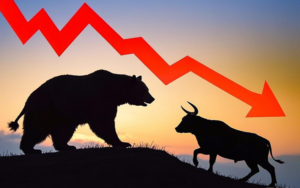
Despite lingering macroeconomic uncertainties, Apple is flashing a rare combination of oversold conditions, a newly minted support level, short-covering potential, and unmatched buyback firepower. Together, these elements form a “quadruple bottom” that could mark the end of the recent correction. For investors, $275 is no longer just a line on a chart—it has become the decisive battleground between bears and bulls, and the outcome of that fight may well set the tone for the next major move.