
District Metals Corp. (TSXV:V.DMX. Nasdaq: DMXSE SDB)
Advancing the Largest Undeveloped Uranium Deposit in the World
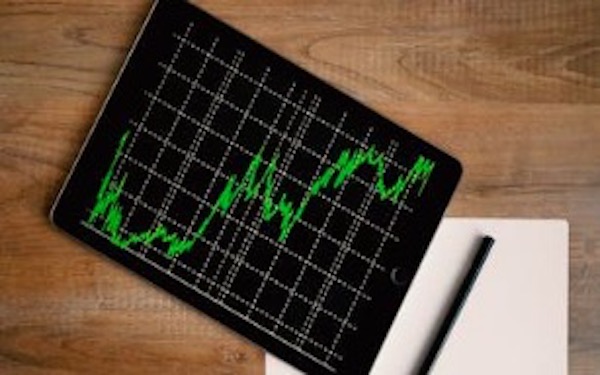
As of June 30, 2026, the Buffett Indicator—which the famed investor once called “probably the best single measure of where valuations stand at any given moment”—has climbed to approximately 232.5%, the highest level since records began in 1970. The indicator, calculated as total U.S. stock market capitalization divided by GDP, currently implies that U.S. equities are worth more than 2.3 times the country’s annual economic output—far exceeding the S&P 500’s roughly 140% peak at the height of the 2000 dot-com bubble.
At the same time, the Shiller cyclically adjusted price-to-earnings (CAPE) ratio stood at 41.02 in June, marking only the second time since 1929 that this gauge has breached the 40 threshold. The previous instance was during the 1999–2000 dot-com bubble. For both valuation metrics to flash extreme signals simultaneously is exceptionally rare in U.S. stock market history.
But history also reveals another truth: extreme valuations signal long-term return compression, not an imminent crash. Historical experience with CAPE above 40 suggests that annualized real returns over the next decade tend to approach zero or register only marginally positive figures. Yet markets can persist in an “overvalued” state for years. Since 2010, the S&P 500 has accumulated a total return of more than 560%, while the “sell signal” triggered by CAPE exceeding 20 has never produced an effective exit point throughout that entire period.
A key explanation for today’s extreme valuation lies in market concentration. The top ten components of the S&P 500 now account for more than 40% of the index’s total market cap—far exceeding the roughly 23% seen during the 2000 dot-com era. The combined market capitalization of the “Magnificent Seven” has reached $22.7 trillion, with Nvidia alone contributing approximately 20% of the S&P 500’s total gains in 2026. This “structural concentration” is underpinned by genuine earnings growth from AI giants, marking a fundamental difference from the purely speculative bubble of 2000.
Warren Buffett’s own response says it all: his company has recently amassed nearly $400 billion in cash reserves, refraining from making any major moves precisely because the current risk-reward profile is extremely unattractive. For the average investor, tempering long-term return expectations and avoiding the chase of blatantly overvalued individual stocks may be the most pragmatic strategy at hand.