
For years, investors and automotive analysts worldwide obsessed over one critical question: which automaker could emerge as “the next Tesla (TSLA)”? The industry’s long-sought answer has arrived in BYD (BYDDY), a Chinese new-energy vehicle giant that has outgrown every growth benchmark, overtaking Tesla in global EV deliveries and leaving legacy automaker Ford Motor (F) far behind to reshape the competitive landscape of the global auto sector.
BYD pivoted its entire product lineup to battery electric vehicles and plug-in hybrids in 2022, halting all internal combustion engine production, and has since posted explosive, consistent expansion. Its global vehicle sales hit 4.6 million units in 2025, a milestone that pushed it past Ford to claim sixth place in the world’s top automaker rankings. Boasting a 7.7% year-over-year sales increase last year, BYD delivered stronger growth than every OEM ranked above it. During the firm’s recent annual shareholder meeting, Chairman Wang Chuanfu laid out an ambitious long-range roadmap: powered by next-generation battery and ultra-fast charging innovations, BYD aims to become the world’s largest automaker by sales volume within five years.
Toyota Motor (TM) still holds the global No.1 spot with 11.3 million vehicles sold in 2025, more than double BYD’s annual volume. Even so, the Chinese EV leader is rapidly chipping away at the gap by capturing market share across Europe, Southeast Asia, Australia, Mexico and Brazil, steadily eroding territory long dominated by traditional automotive incumbents.
Cutting-edge technological upgrades form the backbone of BYD’s relentless sales surge. The firm rolled out its second-generation Blade Battery and megawatt-level Flash Charging system this March, immediately driving a sharp uptick in customer orders. Several flagship models equipped with the new tech have accumulated more than 100,000 pre-orders each, straining the company’s battery production capacity to keep up with rampant consumer demand. These proprietary breakthroughs not only solidify BYD’s dominant domestic position in China but also serve as its core competitive weapon for overseas market expansion.
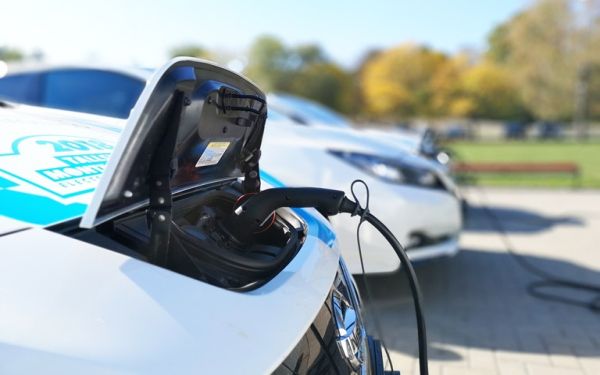
Tesla built an unrivaled moat in the early EV era with its Supercharger network, which eliminated range anxiety and accelerated mass consumer adoption of electric cars. Now BYD is replicating and vastly upgrading that playbook with an aggressive charging infrastructure rollout. Its Flash Charging stations deliver a peak output of 1,500kW — roughly three times the power of Tesla’s latest V4 Superchargers. In just a matter of months, BYD has installed 5,700 Flash Charging stalls across mainland China, with a target of scaling that figure to 20,000 by the end of 2026. The company has also deployed its first overseas charging hubs in Europe, while a strategic partnership with Sinopec, China’s largest fuel retail operator with over 30,000 retail sites nationwide, will further speed up network construction.
Industry forecasts paint a transformative outlook for global charging competition. Should both firms maintain their current expansion trajectories — Tesla’s Supercharger network growing around 18% annually, and BYD hitting its stated 2026 infrastructure targets — BYD’s global charging stall capacity could surpass Tesla’s as soon as 2029 to 2030, in approximately four years’ time. Still, Tesla retains tangible structural advantages. It possesses over a decade of proprietary route-planning data, a proven 99% network uptime rate, and control of the NACS charging standard that has become the de facto North American industry benchmark, luring rival automakers to access its Superchargers. Heightened tariff and trade restrictions bar BYD from meaningful competition in the U.S. market for now, securing Tesla’s unchallenged lead across the region.
What truly separates BYD from Tesla and other EV players is its fully vertically integrated supply chain. Unlike most automakers that rely on third-party suppliers for core components, BYD independently develops and manufactures nearly every part of its vehicles in-house: power batteries, drive motors, electric control units, infotainment hardware and full vehicle software suites. Batteries represent the single costliest component of an electric car, and full self-sufficiency in battery manufacturing lets BYD tightly control production costs and sustain robust profitability amid brutal industry price wars — a key enabler of its simultaneous volume expansion and stable margins.
For Wall Street and global equity investors, BYD is no longer framed as a mere Tesla copycat; it stands as an independent global EV powerhouse with a distinct, self-sustaining growth narrative. Its combination of soaring sales momentum, continuous technological iteration and built-in cost efficiencies makes it one of the most closely watched automotive stocks worldwide.
Significant headwinds persist on its international journey, including cross-border geopolitical tensions and steep barriers to localized overseas operations. Yet judging by its consistent market share gains, technical breakthrough pipeline and unbroken growth streak, BYD’s global expansion spree shows no signs of slowing down anytime soon.