What if the next oil shock is cheap oil in a world at war. The paradox is simple. As cartel discipline erodes, price control weakens. As conflict blocks exports, barrels back up and then flood out when lanes reopen. Volatility does the rest. The United Arab Emirates has already walked away from OPEC and Iraq is now testing the same door. A market that long relied on managed scarcity is shifting toward unmanaged competition. That does not mean a straight line to higher prices. It increases the odds of brief, violent dips below 50 dollars a barrel, even as risk headlines multiply.
For half a century, the OPEC script was coordination, quotas, and spare capacity designed to smooth shocks. That model depends on member discipline. The UAE’s departure in late April after nearly six decades cut the cartel’s share of global capacity from about 30 percent to roughly 26 percent. It also set a precedent. Iraq, OPEC’s second largest producer, now threatens to leave if its higher quota request is denied. OPEC plus will keep meeting, but the credible threat of exit raises the cost of enforcement. In game theory terms, the club moved closer to a repeated prisoners dilemma with weakening punishment. Defection becomes rational when national budgets are strained and barrels can move outside the cartel’s shadow.
Oil history is a pendulum between cooperation and price war. In 1986, Saudi Arabia flooded the market to punish quota cheaters and regain share; prices collapsed. In 2020, a Saudi Russia spat during a demand crash sent prices into free fall. A smaller, looser cartel is not a monopoly. It is a sketchy truce among rivals with asymmetric needs. A member facing lost revenue from war or sanctions has a stronger incentive to pump. The loss of just two or three enforcers turns coordination into hollow signaling. Markets will price that erosion. The premium for managed scarcity shrinks, while volatility in both directions rises.
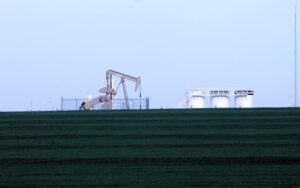
War is supposed to mean shortage. But logistics can turn war into gluts. Iraq is a case study. The closure of the Strait of Hormuz choked off exports, forcing the shutdown of giant fields like Rumaila and West Qurna 2 as storage filled. Shut-ins today become inventory tomorrow. When a choke point reopens, you do not get a tidy ramp. You get a rush. Traders call it the slingshot. We saw this dynamic in April 2020 when landlocked US crude went negative because storage maxed out. That was not geology. It was pipes, tanks, and timing. The same mechanics apply to seaborne crude. Export disruptions create deferred supply. When deferred supply returns to a market with limited buffer, it can depress spot prices far more than the headlines suggest.
Investors like to talk about oil price floors as if geology or geopolitics sets them. In practice, balance sheets do. A producer with deep reserves and low debt can hold back supply. A budget-constrained state cannot. Many OPEC and non-OPEC governments rely on oil revenues to fund payrolls and subsidies. Their fiscal breakevens, not their lifting costs, drive output choices. On the private side, high-cost operators hedge and sell forward when prices pop, capping rallies. Low-cost operators add incremental volumes at modest capital outlays. Strategic reserves and policies matter at the margin, but they are episodic. What sets a tradable floor is the point at which the marginal seller must sell to survive. If exit contagion increases the number of must-sell producers, the market can trade through levels that models deem unsustainably low.
Oil is a moving inventory problem. Storage, shipping routes, and freight rates often determine price more than production targets do. Close Hormuz and you create a tightness in delivered barrels for some buyers, but you also strand crude behind the strait, building a latent glut. Tanker markets react first. Rates spike. Contango widens. Traders charter floating storage. When the bottleneck eases, stored barrels hit the water. That wave collides with demand that is rarely growing fast enough to absorb it. The International Energy Agency sees a 3.9 million barrel per day drop in global supply in 2026 with a gradual rebound in 2027. That does not preclude price air pockets. If inventories swell in the wrong places while demand wobbles, the release phase can overwhelm spot markets and crack prices for a quarter or two.
Oil demand is notoriously inelastic in the short run, but small shifts still swing prices. A one to two million barrel per day drop during a growth scare can erase a year of supply discipline. Efficiency gains, fuel substitution, and a steady creep of EV penetration lower the ceiling for long-run demand growth. On the supply side, shale adds a kink in the curve. It is not as fast as it was in 2018, but it remains far more responsive than offshore megaprojects. That responsiveness is a form of supply elasticity that emerges just when price spikes invite it. The trap is simple. Price pops invite new barrels. Quota drift invites even more. Then a minor demand miss, or a logistics unclogging, sends the stack toppling. Investors who confuse trend with regime find themselves long procyclical risk at the moment elasticity flips against them.
Map a plausible path. OPEC cohesion weakens further as exits or quasi-exits multiply. Iraq and the UAE prioritize revenue recovery and market share, pumping above old caps. A cease-fire or naval deal reopens key lanes, unleashing stranded Iraqi and other Gulf barrels. US shale adds opportunistic volumes as service costs soften. Meanwhile, a global growth wobble clips one percent from oil demand, not dramatic but enough. Inventories that built during disruptions leak back at once. Futures curves flip from backwardation to contango. Spot tests the high 40s. The market does not live there, because sub-50 destroys cash flow for higher-cost barrels and triggers cuts. But futures and physical markets care about the path, not the narrative. Brief price air pockets are how a thinner cartel and a thicker logistics chain clear mismatches.
Markets are systems. They resist control and punish linear thinking. The UAE’s exit cut OPEC’s capacity share to the mid-20s. Iraq’s conditional threat to leave after policy talks in Washington only sharpens the defection incentive. OPEC plus will still coordinate on paper, but coordination without credible enforcement is theater. Add in choke point politics, storage math, and the IEA’s forecast for a supply dip followed by a rebound, and the risk set is clear. Expect more variance and faster regime shifts. The right mental model is antifragility. Favor balance sheets over slogans. Prefer optionality over forecasts. Stress test portfolios for both 100 dollar oil and 45 dollar oil within the same twelve months. The unseen fragility today is not that oil must go higher because the world is on fire. It is that chaos often breeds gluts before it breeds scarcity.