A renewed slide in AI hyperscalers pulled Wall Street’s major benchmarks lower at Monday, with the S&P 500 and Nasdaq 100 swinging into the red even as the Dow Jones Industrial Average and small caps pushed higher. The divergence is sharpening a question on every investor’s mind: Is the great rotation from growth to defensives finally underway?
The Nasdaq 100 fell about 0.6% to 30,238 as the megacap complex cracked. The Magnificent Seven were nearly all in the red, led by Alphabet Inc. (GOOGL), which tumbled more than 6% after Nobel laureate John Jumper announced he was leaving Google DeepMind for AI startup Anthropic — the latest sign of how fiercely the war for AI talent is being waged.
Amazon.com Inc. (AMZN) dropped about 4.5%, while Meta Platforms Inc. (META) and Microsoft Corp. (MSFT) each fell around 2.6%, as investors fretted over soaring AI capital spending and whether the returns will justify the outlays.
But it was Space Exploration Technologies Corp. (SPCX) that suffered the steepest decline, sliding 10% following a new $20 billion bond offering. The stock has now fallen 26% from its high last week. Since going public on June 12 at an IPO price of $135 per share, SpaceX has been on a roller coaster — zooming within days to above $225, only to pull back to the $180–$185 range where it now trades.
Worse yet, unlike typical IPO stocks that see a lockup expiration six months after listing, SpaceX’s staggered lockup provisions mean insiders will be able to sell shares as early as later this summer, following the company’s first quarterly earnings release. With SpaceX’s float currently representing less than 5% of outstanding shares, a flood of new stock hitting the market could put serious pressure on the price.
As FOMO — fear of missing out — in AI stocks cools, defensive high-dividend names are creeping back into favor. Two stand out: Coca-Cola Co. (KO) and Procter & Gamble Co. (PG). They won’t give you the thrill of a SpaceX moonshot, but in a market that’s suddenly looking shaky, they offer something arguably more valuable: predictability.
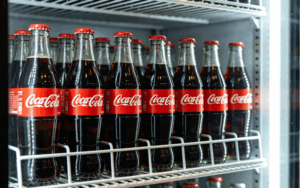
There’s a good reason Warren Buffett made Coca-Cola one of Berkshire Hathaway’s long-term core holdings, and why his successor Greg Abel has yet to pare down the position.
Coca-Cola’s competitive advantage lies in what may look like a boring but remarkably reliable long-term total return curve. The company has raised its dividend for 65 consecutive years, placing it firmly in Dividend King territory — the exclusive club of stocks with 50 or more years of uninterrupted dividend growth.
Over the past 20 years, dividend growth has averaged around 6.7% annually — a pace that means payouts roughly double every decade.
With a forward dividend yield of about 2.7%, the yield alone may not turn heads. But combined with steady price appreciation, it delivers low-volatility, predictable compound returns. For investors targeting long-term, dependable gains, Coca-Cola isn’t a tool for chasing excess returns — it’s the ballast in a portfolio, the position that keeps overall volatility in check when tech stocks are whipsawing.
If Coca-Cola is the dividend king of beverages, Procter & Gamble is the elder statesman of consumer staples.
Tide laundry detergent, Gillette razors, Pampers diapers — these household names form P&G’s moat. The company has 71 consecutive years of dividend growth under its belt, a longer streak than Coca-Cola and one of the longest in the entire U.S. market.
P&G’s defensive character is baked into its business model: people need to wash clothes, shave and buy diapers regardless of the economy. That recession-resistant quality means the shares hold relatively steady when more speculative names are wobbling.
Currently yielding nearly 3%, P&G has delivered average annual dividend growth of around 5% over the past decade. Much like Coca-Cola, the longer you hold it, the bigger a share of total returns come from those quarterly cash payouts — and the more powerful the compounding effect from reinvesting them.
None of this means investors should flee the market entirely out of short-term fear. But as the AI rally matures and valuations look stretched, tilting at least part of a portfolio toward low-volatility, high-certainty defensive names is a rational move.
When the market mood shifts from “fear of missing out” to “fear of getting caught,” the dividend kings — the companies that have kept raising payouts through recessions, bubbles and bear markets — are often the calmest place to be.