Trident Resources posted more high-grade assays from the Contact Lake Gold Project in Saskatchewan, extending the BK3 Zone with intercepts that combine grade and thickness, plus a shallow hit that improves optionality. The company has restarted drilling with a 20,000-metre summer-fall campaign and holds about 26 million dollars in cash, positioning it to test continuity and scale. The question now is whether BK3’s shoots stitch together into a mineable geometry or remain isolated spikes in a nuggety system.
The headline results at BK3 are material by underground standards. Hole CL26045 returned 5.43 g/t over 16.0 metres from 206 metres downhole, including 12.70 g/t over 6.25 metres. Hole CL26047 cut 10.05 g/t over 9.30 metres from 221 metres, including 156.50 g/t over 0.50 metres. The standout CL26033 delivered 41.46 g/t over 3.42 metres from 207.58 metres, with a sub-interval of 179.5 g/t over 0.73 metres. Importantly for development flexibility, CL26048 intersected 6.78 g/t over 10.25 metres starting at 42 metres, including 17.10 g/t over 3.40 metres, a depth range that can materially lower early capital if continuity supports an open-pit starter or a shallow decline. These intercepts sit within splays of the Bakos Shear Zone at the BK3 Zone, consistent with orogenic shear-hosted gold systems in the La Ronge Gold Belt. The winter program totalled 10,127 metres across 29 holes, with reported holes consistently cutting mineralization and the zone open along strike and at depth. Eleven holes from the nearby Preview Lake area remain pending.
The market often keys in on the highest grade sub-intervals, but mine economics hinge on grade times thickness across continuous, mineable widths. CL26045’s 5.43 g/t over 16.0 metres and CL26047’s 10.05 g/t over 9.30 metres each produce grade-thickness products of roughly 87 and 94 gram-metres, respectively—robust for underground stoping in Archean orogenic systems where economic cutoffs commonly run 3 to 5 g/t depending on costs and mining method. CL26033’s ultra-high-grade 0.73-metre slice at 179.5 g/t suggests coarse gold and strong vein character, but continuity across multiple sections is what converts intercepts into reserves. Investors should watch how these widths translate to true thickness, and whether step-outs replicate similar grade-tenor across the shear both laterally and down-plunge. Cross-sections released alongside the data suggest multiple parallel splays and hanging wall or footwall mineralization, which, if continuous, can add tonnage and operational flexibility.
BK3’s mineralization is described within variably sheared and altered splays of the Bakos Shear Zone, a structural corridor typical of the La Ronge belt’s orogenic gold architecture. In these systems, gold is concentrated in zones of brittle-ductile deformation, often forming multiple high-grade shoots plunging along shear intersections or fold hinges. The presence of mineralization in both the shear core and adjacent wall rocks increases the chance for stacked lodes, but also raises the complexity of modelling. The former Contact Lake mine produced roughly 190,000 ounces at an average head grade of 6.16 g/t in the 1990s, when gold traded near 300 dollars per ounce. That history confirms a fertile system, and Cameco’s historic disclosure that resources were left unmined provides geological precedent for remnant and step-out potential. The technical task now is to define the orientation of high-grade shoots in BK3, pin down plunge, and test for repeat lodes along strike—work that Trident plans to undertake with the current 20,000-metre campaign.
The CL26048 intercept from 42 metres depth stands out. Shallow mineralization at multi-gram grades opens paths to earlier cash flow via small-scale open pit or portal-and-ramp access, provided strip ratios and true widths support it. In orogenic settings, near-surface splays can provide starter sources, de-risking mill commissioning or funding a decline. The geometry will be decisive: if true widths of 6 to 12 metres at 3 to 7 g/t repeat across multiple sections, scoping-level economics can move quickly. If widths tighten to 1 to 3 metres on a true-width basis with high internal grade volatility, conventional narrow-vein underground mining remains viable but depends on dilution control and mining selectivity. Metallurgy for shear-hosted gold is usually straightforward with free-milling behavior and gravity-recoverable coarse gold, but coarse gold also creates grade variability between 30-gram fire assays and bulk samples. Metallic screen assays and variability tests will be useful to bridge that gap.
Exploration moves at the speed of cash, and a 26 million dollar treasury should cover the staged 20,000-metre drill plan plus field logistics in a northern Saskatchewan setting. The company holds additional deposits in the same belt—Preview SW, Preview North, North Lake, and Greywacke North—with current mineral resource estimates as of late 2025, none of which include ounces from the Contact Lake target area. That optionality matters: a portfolio approach can support a centralized processing concept if satellite deposits can feed a hub, subject to metallurgy and permitting. For Contact Lake, realistic near-term milestones include continued step-out drilling at BK3, assays from the Preview Lake area three kilometres away, refinement of the structural model, and ultimately a maiden mineral resource if drilling demonstrates sufficient continuity. With winter drilling on lake ice now completed and summer drilling underway on land, expect faster pad turnarounds and bolder step-outs.
High-grade headlines are not isolated this week. Emperor Metals reported 15.0 metres at 61.5 g/t gold at Duquesne West in Quebec, Hycroft returned silver grades up to 1,545 g/t in Nevada’s Vortex system, and Contango Silver & Gold cut 972.10 g/t gold at Lucky Shot in Alaska. On the base and energy side, Intrepid Metals delivered 42.5 metres at 0.96 percent copper in Arizona, while enCore Energy’s South Texas program reported 0.199 percent U3O8 over 8.5 feet at Alta Mesa East against a backdrop of a 35 percent share price slide and lingering valuation debates. The pattern is clear: the tape rewards scale and continuity more than isolated ultra-high grades. Projects showing long runs of multi-gram gold or multi-percent base metals across multiple sections tend to hold gains; those with short, spiky intervals often give them back unless follow-up drilling proves continuity. Trident’s current mix—several multi-metre, multi-gram hits with both depth and near-surface components—lands in the more constructive camp, provided pending step-outs confirm the geometry.
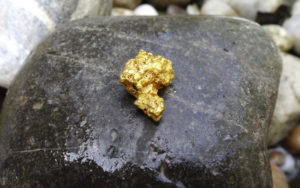
The assays include sub-metre intervals above 100 g/t, a signature of coarse gold. That brings standard risks: sampling bias at the core-saw, under-calling high-grade shoots with small sample sizes, and potential divergence between 30-gram fire assays and bulk mill reconciliations. Transparent QAQC is essential. The company reports standard core handling and 30-gram fire assay workflows at ALS, which is appropriate early on; however, metallic screen assays on high-grade intervals and routine insertion of certified standards and blanks should be disclosed with failure rates to build confidence. True width estimates are also needed; downhole intervals in sheared zones can materially overstate mineable widths if intercept angles are acute. On processing, shear-hosted orogenic gold typically benefits from gravity plus cyanidation, often achieving high recoveries, but site-specific mineralogy and any sulfide or arsenic associations should be tested early to avoid surprises at scoping.
The near-term catalyst stack is straightforward. First, assays from the 11 holes at the nearby Preview Lake area will indicate whether Contact Lake’s broader trend supports multiple centers of mineralization. Second, step-out holes bracketing CL26045 and CL26047 should tighten spacing along the interpreted plunge; repeating 5 to 10 g/t over 8 to 16 metres across several sections would meaningfully de-risk continuity. Third, release of true width estimates, a preliminary 3D model tying the BK3 splays together, and any metallic screen reassays of ultra-high-grade intervals would address standard orogenic gold risk factors. Finally, clarity on how Contact Lake might integrate with existing La Ronge deposits—whether as a standalone underground mine or as part of a hub-and-spoke concept—will frame capital intensity and pathway to cash flow. The geology is doing the talking so far; the next 20,000 metres will determine whether this becomes a resource story or remains an exploration headline.