
District Metals Corp. (TSXV:V.DMX. Nasdaq: DMXSE SDB)
Advancing the Largest Undeveloped Uranium Deposit in the World
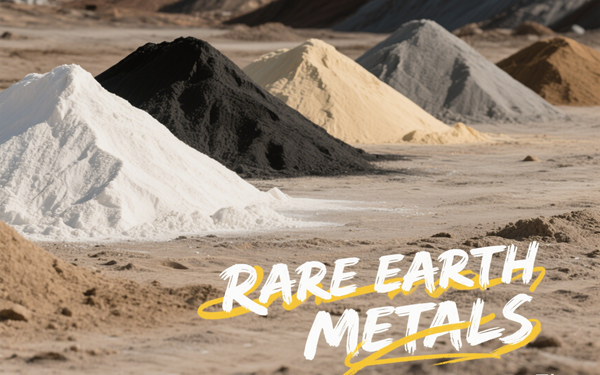
Despite reports that the United States had asked China to lift its rare earth export restrictions on Japan, the Chinese government made clear on Tuesday that the export ban on rare earths and related “dual-use items” intended for Japanese military purposes remains in effect and will not be changed due to external pressure.
In January of this year, amid escalating tensions over Taiwan, China’s Ministry of Commerce officially announced export controls on dual-use items (including rare earth products) that could be used for Japanese military purposes. On Tuesday (June 9), Foreign Ministry Spokesperson Lin Jian reiterated at a regular press conference that, under Chinese law, rare earths continue to be classified as “dual-use materials” and their export to the Japanese government for military purposes is prohibited. Lin also stated that this move is aimed not only at curbing Japan’s remilitarization but also at slowing Japan’s attempts to acquire nuclear weapons.
Lin’s remarks came in response to an earlier report by Nikkei, which claimed that the US government, citing concerns over the stability of global supply chains related to Japan’s technology sector, had asked China to allow the resumption of rare earth metal sales to Japan. China’s clear rejection indicates that this diplomatic effort has so far achieved no results.
Overall exports rebound, but supply to Japan remains cut off
Interestingly, despite the halt in exports for Japanese military use, China’s overall rare earth exports have been recovering in recent months. Data released by the General Administration of Customs on Tuesday showed that China’s rare earth exports reached 5,490 metric tons in May 2026, a 3.4% increase from the previous month and a four-month high. This growth was mainly driven by overseas customers restocking in advance of the traditional summer lull.
However, compared to the same period last year, May exports were still down about 6.4% (from 5,864 tons to 5,490 tons). Cumulative exports for the first five months of this year totaled 25,378 tons, a modest 2.2% year-on-year increase. This indicates that while China’s overall rare earth exports have not contracted, the “targeted controls” on Japan-specific uses have created a structural impact.
Japan accelerates efforts to “bypass” supply chain
Facing pressure from China’s export ban, the Japanese government is accelerating efforts to build a rare earth supply chain independent of China. On one hand, Japan is actively cooperating with its G7 partners, having formed a “buyers’ club” with France and Canada to share procurement and resources to diversify risk. On the other hand, Japan has reached a cooperation agreement worth 1.6 billion Australian dollars with Australia to strengthen its access to Australian rare earth resources and reduce its reliance on a single source from China.
Analysts point out that China’s reaffirmation of the ban comes at a time when global competition for critical minerals is intensifying. Rare earths, as indispensable raw materials for electric vehicles, wind turbines, and defense technology, have had their supply chain security elevated to a strategic level by major economies. By implementing “targeted controls” rather than a full cut-off, China has sent a geopolitical signal while avoiding disruption to global markets, and at the same time forced countries like Japan to bear higher supply chain costs.
In the short term, Japan’s cooperation with other countries may help partially alleviate supply pressures. However, the production capacity for rare earth separation and refining remains highly concentrated in China, and building alternative supply chains cannot be accomplished overnight. The actual impact of China’s rare earth export controls on Japan will gradually become apparent in prices and trade flows over the coming quarters.