
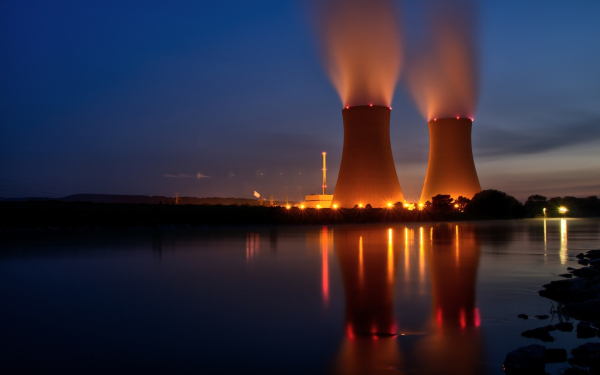
Walmart Inc. (NYSE: WMT) and Constellation Energy Corp. (Nasdaq: CEG) don’t usually share a headline. But on Tuesday, the retail giant and the nation’s largest nuclear operator announced a power purchase agreement that’s historic in more ways than one. It’s Walmart’s first-ever nuclear PPA. And it’s among the first deals of its kind between a major U.S. retailer and a nuclear energy facility.
When the world’s biggest retailer starts buying nuclear power, the signal matters more than the megawatts.
Under the agreement, Constellation will supply roughly 176 megawatts of electricity from its Dresden Clean Energy Center in Illinois — including 30 MW of expanded generating capacity from planned uprates. Dresden is one of six nuclear plants Constellation operates in the state. It just received license renewals last December extending operations through 2049 and 2051, and supports more than 1,100 jobs in the region.
The PPA is structured in two staggered 15-year terms, beginning in 2029 and 2030 respectively. The power will feed Walmart’s high-tech perishable distribution center currently under development in Belvidere, Illinois. Like most nuclear PPAs, the package includes three components: the energy itself, environmental attributes in the form of zero-emission credits, and capacity — essentially a reservation fee that locks in a block of the plant’s output.
Financial terms weren’t disclosed, which is standard for PPA transactions. But the language from both sides tells you what you need to know.
“Working with Constellation allows us to support new operations in Illinois while advancing our strategy in a way that prioritizes affordable, reliable, and clean energy for our business and the communities we serve,” said Shayne Wahlmeier, Walmart’s SVP of Energy. For a company built on “everyday low prices,” affordability isn’t a buzzword — it’s a requirement. If Walmart is signing on for 15 years, the economics work.
For Constellation, the deal delivers more than just a household-name customer. The agreement also supports planned uprates at Dresden — efficiency upgrades that boost output from existing units without building new capacity. For the nation’s largest nuclear operator, landing a marquee client like Walmart is another validation point for the nuclear business model.
Walmart didn’t pick nuclear because it’s trendy. It picked it because it checks three boxes that matter for a logistics-heavy retailer: reliability, cost certainty, and scale.
First, reliability. Nuclear is baseload power — 24/7, weather-independent, no storage required. For a perishable distribution center running cold chains around the clock, power reliability isn’t a nice-to-have. It’s table stakes.
Second, cost certainty. A 15-year contract locks in power prices for more than a decade, hedging against energy price volatility. In an inflationary environment where cost control separates winners from losers, that kind of predictability is valuable.
Third, scale. At 176 MW, this isn’t a token sustainability purchase. It’s enough to power a major logistics facility. Nuclear is one of the few energy sources that can deliver large-scale, stable, zero-carbon power from a single site.
What makes this deal notable is who’s doing the buying. Nuclear has been gaining traction with tech companies and data center operators, especially as AI-driven power demand explodes. But Walmart’s entry into the nuclear PPA market crosses a threshold. It means nuclear is no longer just a tech industry thing. It’s becoming a mainstream corporate infrastructure choice — the kind of decision a Fortune 1 company makes for hard-nosed business reasons, not just ESG optics.
“This agreement reflects long-term stewardship of critical infrastructure, the communities it serves, and the energy system that powers American growth,” said Jim McHugh, Constellation’s Senior EVP and Chief Commercial Officer.
Read between the lines: nuclear isn’t just energy. It’s infrastructure. It’s the foundation of economic activity.
The real takeaway from this deal isn’t about Walmart or Constellation individually. It’s about where nuclear is heading as a commercial product.
Not long ago, nuclear energy was driven primarily by policy and regulation. Companies bought it because they had to, or because governments made it attractive with subsidies. Now, more and more companies are choosing nuclear for straightforward business reasons: it’s reliable, it’s predictable, and over long horizons, it’s cost-competitive. The customer base is diversifying too — from hyperscalers and AI data centers to retail distribution networks. When Walmart commits to a 15-year nuclear contract, it’s a safe bet other large energy users are paying attention.
For operators like Constellation, that shifts the growth narrative from policy-driven to demand-driven. Customers walking through the door voluntarily is a stronger story than government incentives. None of this means nuclear’s challenges have disappeared. Construction timelines are long, regulation is complex, and upfront capital costs remain high. The fleet needs sustained investment and favorable policy to keep expanding.
But on the demand side, the direction is clear.
Walmart’s first nuclear PPA isn’t an endpoint. It’s a data point — and a meaningful one — in nuclear’s journey from niche clean energy option to standard infrastructure choice. If the world’s largest retailer is buying nuclear power, the mainstreaming of nuclear energy may be happening faster than most people realize.