Shares of Coca-Cola (KO) surged roughly 5% to an all-time high after the beverage giant posted second-quarter results that blended defensive reliability with sudden offensive firepower. Adjusted earnings per share came in at $0.97, four cents above consensus estimates, while revenue of $13.38 billion also exceeded Wall Street forecasts. Year to date, the stock has climbed nearly 28%, outpacing most major benchmarks and even a cluster of high-flying artificial intelligence plays — a clear message that a consumer staples name can mount an aggressive rally.
Organic growth across every geographic segment laid the foundation for the beat. Asia Pacific delivered a 2% increase and North America accelerated to 7%, pushing total organic revenue growth to 6%. The breadth of the advance underscored the global pull of the company’s brand portfolio, even as consumers navigate stubborn inflation.
Management followed the results with a more confident full-year outlook. Organic revenue growth for 2026 is now projected at roughly 5%, tightened from a previous range of 4% to 5%, while adjusted earnings per share growth guidance climbed to 9%–10%, up from 8%–9%. Raising the core forecasts against a backdrop of lingering price pressures and strained household budgets speaks to an operating foundation of unusual certainty.
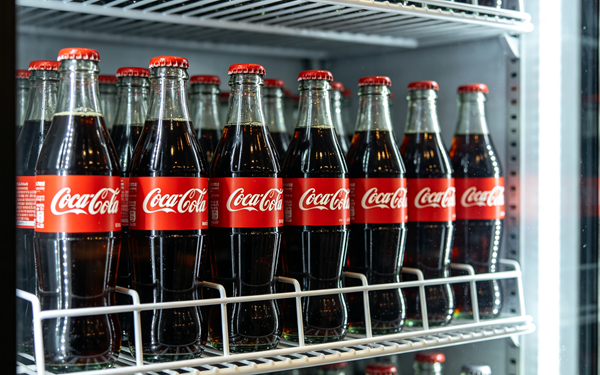
The World Cup marketing campaign functioned as the quarter’s loudest growth amplifier. Trademark Coca-Cola volume rose 5%, the fastest pace in seventeen years outside the post-pandemic recovery phase. CEO Henrique Braun described the approach as a long-term capability built around insights, innovation, intimacy, and integration. On the ground, Powerade seized the hydration breaks to drive an 8% global volume gain. Coca-Cola Zero Sugar shot up 16%, Diet Coke grew 7%, and the water, sports, coffee, and tea portfolio collectively expanded 6%.
Brand ambition extended well beyond the tournament. The company recently repositioned Coca-Cola Zero Sugar as a zero-sugar, caffeine-free nighttime relaxation drink, a move Braun labelled an untapped opportunity. That willingness to carve out overlooked consumption occasions lends a nimble, new-economy feel to a legacy operation.
The cost story proved equally sturdy. Despite steel and aluminum tariffs that remain in effect, along with broad raw-material pressure, operating income rose 9% to $4.7 billion and operating margin improved to 34.9% from 34.1%. Braun acknowledged that shoppers are feeling the strain, yet noted that Coca-Cola products are increasingly becoming an affordable little luxury — a value anchoring that gives demand uncommon resilience.
For shareholders, the dividend record added another layer of steadiness. The company has raised its annual payout for 64 consecutive years, a Dividend King streak that translates to a trailing yield of about 2.4%. Couple that multi-cycle commitment with accelerating business momentum, and the investment narrative becomes a blend of defense and attack.
From its consumer-staple stability to the World Cup-fuelled brand sprint, the quarter painted the full “steady and sharp” portrait. While the market still debates growth versus value, Coca-Cola delivered an across-the-board report card that shows a true moat is never standing still.