
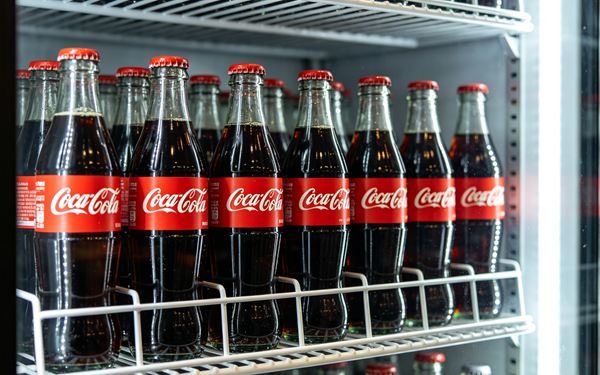
On the surface, Coca-Cola (KO) appears to be a slow-growing sugary beverage company, vulnerable to health trends and emerging brands. But this year’s data tells a different story. In the second quarter of 2026, Coca-Cola’s global unit case volume grew 5%, net revenues grew 7%, and operating income grew 9%, after which the company raised its full-year guidance. This shows that the business has not stagnated.
At the brand level, Coca-Cola launched a completely new global visual identity system in July, covering more than 200 markets, aiming to give every can, every cooler, and every digital advertisement an unmistakable brand recognition. At the same time, the company committed to investing approximately $10 billion by 2030 in U.S. production and distribution infrastructure. In the company’s own words, it is providing shared resources to its marketing and agency networks through new “brand centers” and technology-driven design intelligence tools to manage and execute brand visual identity at scale.
This is a forward-looking move. While tightening its global brand presence, Coca-Cola is also deepening the physical network that delivers beverages to coolers and restaurants. From a seven-year perspective, this kind of investment in brand and logistics is precisely the key to the company maintaining relevance amid evolving tastes. Combined with dividends, this is a safe stock with the potential to continue rising.
Costco’s (COST) dividend yield does not look attractive, especially after the strong gains of recent years. But the way management approaches cash and growth deserves a fresh look. In the June 2026 retail month, Costco’s net sales reached $29.24 billion, up 10.6% year over year.
At the same time, Costco continues to open and renovate warehouse stores, investing approximately $6.5 billion annually to expand capacity and improve the membership experience, according to company management. New stores attract considerable attention, but investors may not yet fully appreciate how much revenue and membership growth each new location can bring, which provides yet another growth runway for Costco’s expanding footprint. The regular dividend was recently raised to $1.47 per share, but that is only part of the story. Costco also returns excess cash to shareholders through special dividends while continuing to prioritize investment in the warehouse model.
Therefore, although Costco appears “too expensive with a meager dividend,” it is more like a membership machine that keeps gaining scale effects, with management viewing growth and cash returns as two sides of the same coin. Holding for seven years means betting that more households will make Costco their default place to save money and will share in its profits as well as the occasional large payouts when cash accumulates.
Coca-Cola and Costco are both widely followed consumer stocks, but both still have details that the market overlooks. Coca-Cola consolidates its distribution moat amid health trends through global brand visual unification and U.S. production capacity investment; Costco drives membership and revenue growth with billions of dollars in annual store investment and supplements regular returns with special dividends. What they have in common is that management in both cases uses long-term capital allocation to strengthen the core business rather than pursuing short-term narratives. For investors willing to hold for seven years, companies like these do not offer explosive stories, but rather sustained compounding supported jointly by brand, scale, and cash flow.