
Kirkland Lake Discoveries Corp (TSXV:KLDC, OTC:KLKLF)
District-Scale Exploration in World-Famous Gold Camp
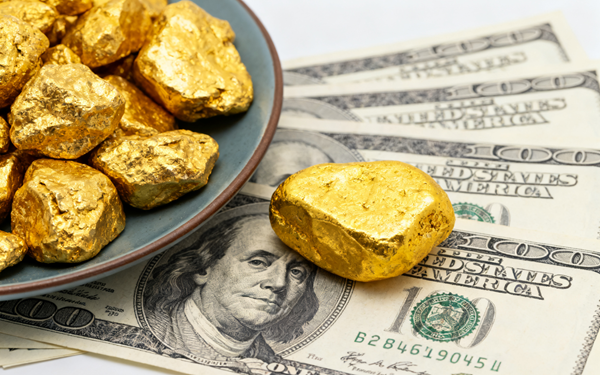
Spot gold is locked in a tug-of-war around $4,000 an ounce, with rising real yields and a periodic rebound in the dollar continuing to cap prices. Having fallen roughly 30% from its first-quarter peak, bullion has left many investors questioning the case for gold-linked assets. Yet a wave of second-quarter earnings reveals a sharp divergence: while the metal itself has stalled, gold mining companies are delivering a far more compelling narrative.
Despite the correction, gold still averaged above $4,400 an ounce in the second quarter, providing ample margins for producers. Free cash flow at the industry’s leading names has reached record levels. Agnico Eagle generated $1.335 billion in free cash flow during the quarter and returned a record $625 million to shareholders. Kinross posted free cash flow of more than $725 million, boosted its net cash position to $1.9 billion, and channeled roughly 40% of that free cash flow back to investors. Even Alamos Gold, which trimmed production guidance following seismic issues, produced $143.5 million in free cash flow while funding its Island Gold District expansion entirely from internal sources. The performance underscores a structural shift: gold miners are no longer simple leveraged bets on the gold price. Through cost discipline and capital efficiency, they have evolved into consistent cash-generating businesses.
Haywood Securities recently lowered its 2026 gold price forecast to $4,345 per ounce and its 2027 estimate to $4,000, yet the firm maintained a constructive stance on gold equities. It described the recent selloff as consolidation within an ongoing bull market, with structural drivers such as central bank buying, de-dollarization trends, and elevated global debt levels remaining firmly in place. Notably, large-cap producers now trade at 7.83 times next-12-month cash flow, a discount to the five-year average of 8.86 times. Ongoing merger and acquisition activity is providing additional support for value discovery across the sector.
On the demand side, resilience is equally evident. World Gold Council data show that global central banks made net purchases of 289 tonnes in the second quarter, a 62% year-on-year increase and the highest ever recorded for a June quarter. Poland added 51 tonnes and China added 33 tonnes. Mine production climbed to a record 966 tonnes for a second quarter, while first-quarter all-in sustaining costs rose to an all-time high of $1,785 an ounce. Set against an average quarterly price of $4,872.90, however, producers still enjoyed margins approaching $3,100 an ounce. That deep cash accumulation has allowed miners to balance growth capital spending with steadily rising shareholder returns.
While much of the market remains fixated on high-valuation themes such as artificial intelligence, gold miners are quietly offering a combination of strong cash generation, rigorous capital discipline, and improving investor payouts — a value proposition that has become relatively rare in today’s environment. Bullion’s short-term momentum may have faded, but the earnings engine inside mining companies has already ignited, potentially opening a window for a fresh look at gold equities.