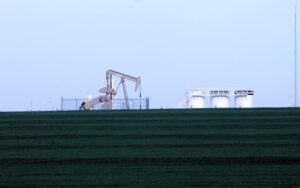
Oil is tumbling as the market gets a rare breather from a fast-escalating conflict that had pushed Brent back above $100 a barrel only days ago. Brent crude fell more than 7% intraday early Monday, briefly slipping below $90 a barrel, after the US paused strikes on Iran over the weekend and Tehran said it had halted retaliatory operations. By 10:02 a.m. Monday in London, Brent October futures were at $87.58, down 4.47%, while West Texas Intermediate was trading around $84.64 to $85.45 a barrel. The immediate message for traders is simple: the war premium is coming out, but it has not disappeared.
The drop follows 13 consecutive nights of US strikes on Iran before the bombing paused on Friday, July 24, 2026. Friday, Saturday and Sunday nights passed without fresh attacks, while Iran’s army spokesman Mohammad Akraminia said the country had stopped its retaliatory response. In his words, “Since… our strategy has essentially been retaliatory, we have also halted our retaliatory operations.” That shift, however temporary, was enough to trigger a sharp repricing in a market that had been pricing in real disruption risk around the Strait of Hormuz, the chokepoint for a huge share of global oil flows.
Brent had broken back above $100 a barrel the prior week for the first time since May, a level that underscored how quickly the conflict had pushed energy markets toward crisis pricing. The spike came after almost five months of hostilities, following the collapse of an earlier April ceasefire. Monday’s selloff shows how fragile that rally was once the bombing stopped and the rhetoric softened. Sally Auld of National Australia Bank summed up the shift this way: “It looks as if developments in the Middle East have moved in a positive direction over the weekend, adding some credibility to the notion that oil above $100 a barrel seems to induce de-escalatory behaviour from both sides.”
That does not mean the risk premium is gone for good. It means traders are repricing the odds of immediate supply interruption. Warren Patterson and Ewa Manthey of ING Think warned that “We’re unlikely to see any recovery until there’s clarity on whether this de-escalation is more permanent and whether vessels can navigate the strait without fear of attack.” For oil, that is the whole trade right now: less fear than last week, but still plenty of uncertainty about whether the pause is a tactical reset or a real turning point.
The weekend pause was not paired with a formal ceasefire or any announced negotiation timetable. That matters because the market is not responding to peace; it is responding to a pause in violence. US Ambassador to the UN Mike Waltz told Fox News Sunday that Trump was “giving talks some space” and “giving it a little bit of room.” Those comments suggest Washington is at least leaving room for diplomacy, but not declaring a breakthrough. Iran also pointed to movement on the diplomatic track, claiming progress in talks with Oman on “common principles and operational mechanisms” for safe passage through the Strait of Hormuz.
There are also broader mediation efforts in play. Pakistan was reportedly looking to resume US-Iran peace talks following a push initiated by China. That kind of backchannel activity matters because any durable de-escalation would need a political mechanism, not just a pause in airstrikes. For now, the market has none of the clean markers it usually wants: no ceasefire line, no signed framework, no timetable, no guarantee that shipping lanes will remain open. In other words, the rally in crude that carried Brent above $100 had a clear fear driver; the selloff has no equally clear peace dividend yet.
The narrowest part of the story is the Strait of Hormuz itself. Fewer than 10 commodity vessels per day passed through the strait over the weekend, according to Kpler shipping data. That is a stark reminder that even when bombs stop, shipping does not instantly normalize. Tanker operators can’t price on hope alone. They need evidence that voyages will go through without being hit, harassed or delayed, and that evidence is still thin.
Iran has said it wants safe passage arrangements, but market participants will watch the ships, not the statements. The Strait is the route that turns a regional confrontation into a global oil shock. If tanker traffic remains depressed, Brent can stay supported even without new strikes. If flows recover quickly, the market may extend Monday’s decline. The uncertainty is exactly why oil remains volatile: the physical supply problem is not just whether barrels exist, but whether they can be moved at scale.
A new threat is also building outside the US-Iran track. Houthi rebels in Yemen stepped up attacks on Saudi Arabia, including energy facilities in Jazan and Yanbu, during the US-Iran pause. That creates a second channel of risk for crude, one that could restore the premium even if the current calm in the Gulf holds. Energy traders are being forced to juggle multiple fronts at once, and that tends to keep volatility high even when prices are falling.
The speed of the move tells you how crowded the fear trade had become. Brent dropped more than 7% intraday because the market had been leaning hard into a supply shock scenario. Once the conflict halted, that positioning became vulnerable. But this is not a normal macro selloff led by demand data or inventory builds. It is a headline-driven unwind tied to military decisions and shipping routes. That is why price action can reverse as quickly as it fell.
There is also a clear asymmetry in the setup. The downside from here depends on diplomacy holding and tanker traffic returning. The upside, by contrast, can reappear instantly if one side resumes attacks or if shipping comes under threat again. The latest move may look like relief, but relief is not resolution. Oil has only stepped back from a cliff, not climbed into safe territory.
The next catalyst is whether the pause lasts long enough for mediators to do more than talk. Investors will watch if the US and Iran continue to refrain from attacks, whether Pakistan, China and Oman can revive formal negotiations, and how quickly ships start moving through Hormuz in larger numbers. Until then, crude is likely to trade as a geopolitical barometer rather than a pure supply-and-demand asset. For now, the market has priced in less danger. It has not priced out the danger entirely.