
Kalo Gold Corp. (TSXV: KALO, OTCQB: KLGDF)
A large, consolidated gold exploration opportunity in one of the Pacific Ring of Fire's most stable and mining-friendly jurisdictions.
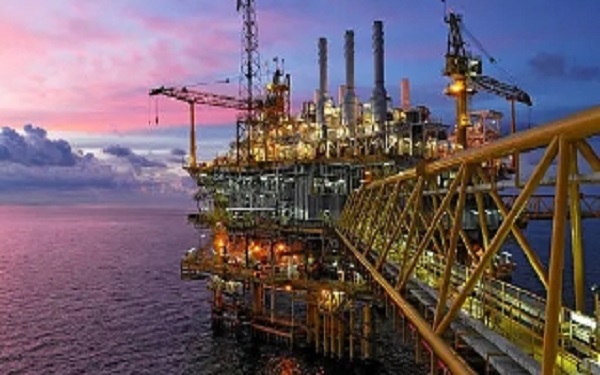
Oil prices have experienced a notable pullback over the past week, with Brent crude recently trading at $88 per barrel, down from $94 per barrel a week earlier. The immediate trigger for this decline is the ongoing negotiations between Iran and Oman over a sharing agreement for the Strait of Hormuz, fueling market expectations that this critical global energy chokepoint may fully reopen.
However, Shell (SHEL)‘s Chief Executive Officer Wael Sawan has offered a distinctly different assessment.
Sawan’s Logic: Beyond Short-Term Disruptions, Long-Term Structural Issues Carry More Weight
Speaking at an industry conference in June, Sawan stated that even if the conflict with Iran were to end, the oil market would still take “close to a year, if not longer” to restore balance. He further projected that oil prices would trend higher over the next 5 to 10 years, with the core reason being that “all the easy oil and gas has been found.”
This assessment points to a structural shift facing the energy industry. Global conventional shallow-water, low-cost reserves are gradually depleting, while remaining recoverable resources are increasingly concentrated in deepwater, polar regions, and complex geological settings, where development costs and technical challenges are substantially higher. In Sawan’s view, only higher prices can make these resources economically viable, which serves as the fundamental driver for a rising oil price floor over the next decade.
Short-Term Factors: Negotiation Expectations Weigh on Prices, But Fundamentals Remain Unchanged
Prior to the conflict, the Strait of Hormuz handled roughly one-fifth of global oil and gas shipments. Since tensions escalated, IEA member countries have released emergency stockpiles, Saudi Arabia and the UAE have increased shipments via pipelines bypassing the strait, and the U.S. military has helped facilitate safe passage — measures that have partially offset the impact of supply disruptions.
The current Iran-Oman negotiations have sent positive signals, and improved market sentiment has contributed to the pullback in oil prices. However, this largely reflects the unwinding of near-term geopolitical risk premiums, which is a different matter from the long-term supply-demand dynamics that Sawan is focused on.
Shell’s Strategic Pivot: Streamlining Non-Core Operations, Sharpening Focus on Upstream Oil and LNG
Based on its long-term price outlook, Shell is reshaping its business portfolio. The company is accelerating the divestment of non-core assets, including its onshore renewable power business in Europe, with its U.S. chemicals assets also potentially on the block. The goal is to concentrate capital and resources on upstream oil and gas operations and liquefied natural gas.
Shell’s target is to deliver 1 million barrels of oil equivalent per day in new production by 2030, fully offsetting natural decline from legacy assets and maintaining liquids production at an average of 1.4 million barrels per day through 2030, while expanding LNG sales volume at a compound annual growth rate of 4% to 5% (with most LNG contracts linked to oil prices).
Recently, Shell has signed multiple agreements with Venezuela to develop its oil and gas resources, made a potential oil discovery offshore Egypt, and is participating in the expansion of LNG Canada. These moves indicate that the company is advancing steadily according to its stated strategy.
Short-Term Volatility vs. Long-Term Trends
Negotiations over the Strait of Hormuz may continue to influence short-term market sentiment, and oil prices could remain under pressure for some time. But Sawan’s perspective spans a 5- to 10-year horizon. If the premise that “low-cost oil and gas resources are dwindling” holds true, the likelihood of a gradual upward shift in the oil price floor over time is relatively high. Shell’s decision to pivot its center of gravity toward upstream oil and gas is a direct response to this long-term trend.