
American Tungsten Corp. (TSXV: TUNG, OTCQB: DEMRF)
Building America’s Defense Critical Metals Supply
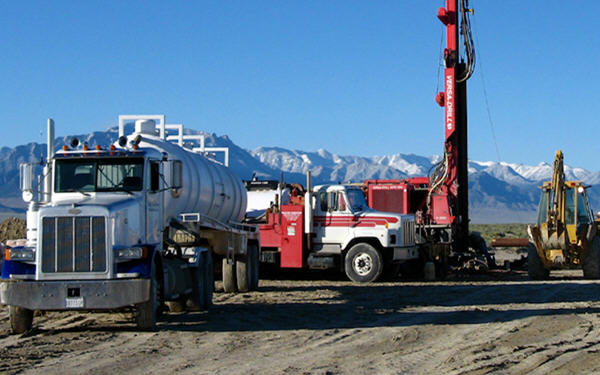
News of a massive tungsten discovery in Nevada, USA, has just drawn global attention from resource markets. However, this critical find—one that should have bolstered America’s strategic minerals sector—has been mired in an awkward predicament of being “virtually untouchable,” due to a land-use restriction imposed by NASA.
A Resource Poised to Reshape the U.S. Tungsten Supply Landscape
According to the latest resource estimate from critical minerals developer 3 Proton Lithium (3PL), the company has identified inferred tungsten resources of approximately 1.78 million tonnes at its Railroad Valley Minerals project in Nevada’s eastern Great Basin Desert. This scale is more than five times larger than the second-largest known tungsten deposit in the U.S., with an in-situ value estimated at roughly $152 billion at current prices.
The strategic significance of this discovery extends far beyond its size. The United States ceased commercial tungsten mining in 2015 and has since become heavily reliant on imports, while China controls approximately 80% of the global tungsten market. Against the backdrop of Middle Eastern conflicts depleting tungsten-intensive weapons stockpiles and tungsten prices surging nearly 600% since February 2025, the Railroad Valley project is seen as a critical lever for rebuilding America’s domestic tungsten supply chain.
The NASA Restriction: One-Third of the Claims Off-Limits
However, roughly one-third of the company’s mining claims happen to overlap with a NASA satellite calibration site that has been in use for decades. The agency utilizes Nevada’s flat, barren desert terrain to receive and verify satellite signals, stating that mining activities would severely interfere with its space missions. In 2023, the Bureau of Land Management, at NASA’s request, formally withdrew approximately 17 square miles from mining and exploration activities.
Kevin Moore, Chairman and CFO of 3PL, noted that the 2023 restriction was imposed without complete geological information. The company has since raised nearly $50 million and is actively lobbying the Trump administration and Congress to reverse the decision.
Caught Between Strategic Demand and Development Hurdles
This standoff comes at a time when the global tungsten market is already under extreme strain. In 2026, the global tungsten supply-demand deficit is projected to reach18,500 tonnes, accounting for approximately 17.6% of total global demand. As the backbone of modern military industry—from Tomahawk cruise missiles to armor-piercing rounds—tungsten is embedded in virtually every facet of advanced weapons systems.
Although the Railroad Valley project has been placed under the federal FAST-41 permitting program to expedite approvals, analysts caution that even if the land-access issue is ultimately resolved, commercial production remains at least five years away. Meanwhile, Washington is reportedly considering up to $1.6 billion in support for a proposed tungsten mine in Kazakhstan as a means to diversify supply risks.
The Price of Strategic Autonomy
This dilemma underscores a structural challenge in U.S. critical minerals strategy. On one hand, the industrial chain gaps resulting from decades of deindustrialization cannot be bridged by resource discoveries alone. On the other hand, the friction between national security imperatives and public interest concerns—including environmental protection and aerospace research—continues to drive up the cost of achieving “strategic autonomy.” Deep in the Nevada desert, the battle over which land use takes priority is becoming a defining test for the future of U.S. critical minerals policy.