
SLAM Exploration Ltd. (TSXV: SXL)
‘Exploring for critical elements and precious metals in New Brunswick, Canada.’
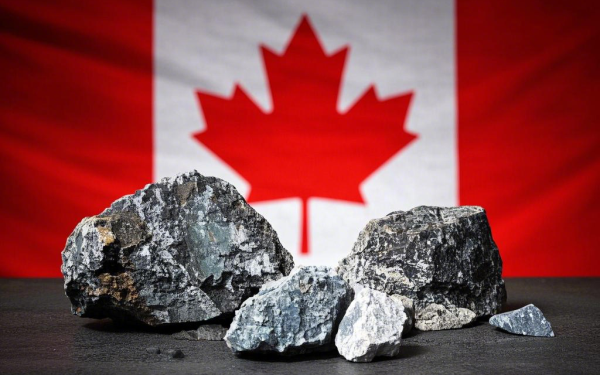
Canada’s federal government has rolled out a five-year strategy to draw in C$1 trillion in new investment, as the inaugural Canada Investment Summit opens in Toronto on September 14–15 to present 167 major projects to global institutional investors. Mining stands as the largest featured sector with 63 projects, putting gold, copper, lithium and other critical minerals at the core of the country’s capital-raising campaign.
Backed by Prime Minister Mark Carney’s administration and co-hosted by the Canada Pension Plan Investment Board and Public Sector Pension Investment Board, the summit’s 66-page prospectus covers mining, clean energy, transport infrastructure, ports and energy networks. Of the 167 total projects, mining takes the biggest share at 63, with clean energy following at 31.
The slate includes a range of TSX-listed mining players. Troilus Mining Corp. (TSX: TLG) intends to invest C$1.43 billion to restart a gold-copper mine in Quebec, designed for a 26-year operating life with first production targeted for 2030. Canagold Resources Ltd. (TSX: CCM) is advancing its New Polaris gold-antimony mine in northwestern British Columbia, which completed a feasibility study last year and is progressing through environmental permitting.
Lithium assets also figure prominently in the lineup. E3 Lithium Ltd. (TSX-V: ETL) and LithiumBank Resources Corp. (TSX-V: LBNK) are each developing brine lithium projects in Alberta, while Critical Elements Lithium Corp. (TSX-V: CRE) is moving forward with a lithium-tantalum project in Quebec. E3’s Clearwater project is on track to reach shovel-ready status in early 2027.
Alongside mining, multi-billion-dollar infrastructure assets are also being promoted, including the C$57 billion expansion of the Port of Churchill, the C$44 billion Wind West offshore wind project in Nova Scotia, and a C$35 billion cross-country crude oil pipeline.
A pre-summit analysis from BMO Global Metals & Mining notes that Canada already boasts a solid mining foundation, ranking as the world’s largest potash producer, second-largest uranium producer and fourth-largest gold producer. Against rising global demand for critical minerals, the bank projects annual growth in Canadian mining development capital expenditure will top 11% over the next two years, with total operating and growth investment by tracked miners reaching C$350 billion over five years.
The report also urges a shift in Canadian mining investment from upstream extraction to downstream processing, with a focus on copper smelting, by-product recovery, battery precursor materials and rare earth separation to build a complete domestic supply chain. BMO recommends separating mine development from supporting infrastructure investment to attract specialized infrastructure funds, lower capital costs and free up miners’ capital for production capacity and downstream expansion. Canada’s pension system, which manages C$4.5 trillion in assets, currently has a low domestic allocation, leaving substantial room for increases.
Domestic financial institutions have already stepped up their commitments. BMO plans to deploy up to C$70 billion over a decade across mining, energy, infrastructure and other sectors, while Sun Life and Power Sustainable have also announced domestic investment plans ranging from billions to tens of billions of dollars.
The trillion-dollar drive unfolds against a distinct geopolitical backdrop. U.S. tariffs on Canadian goods have weakened Canada’s traditional selling point of seamless access to the North American market. The Carney government has instead reframed its pitch around institutional stability, the rule of law, resource endowments and a diversified free trade network — Canada’s 16 free trade agreements cover 51 countries and roughly 1.5 billion consumers, reducing investor reliance on any single market.
The summit brings together around 300 senior executives from global asset management firms, with participating institutions collectively overseeing more than US$120 trillion in assets. Senior leaders from BlackRock and Blackstone are among the high-profile attendees. Canadian officials have stressed that the summit is first and foremost a platform for building long-term relationships, with major project closures expected to emerge gradually over 12 to 18 months.
The real test of the trillion-dollar target will be delivery. The Bank of Canada forecasts potential output growth will slow to just 1.2% in 2026, as trade uncertainty persists. The federal government has set up a Major Projects Office and adopted a “one project, one review” framework to streamline approval timelines, while upholding environmental obligations and Indigenous rights. The success of the investment strategy will ultimately depend on whether projects can move smoothly to construction and deliver competitive long-term assets, turning Canada’s resource advantages into tangible economic value.