
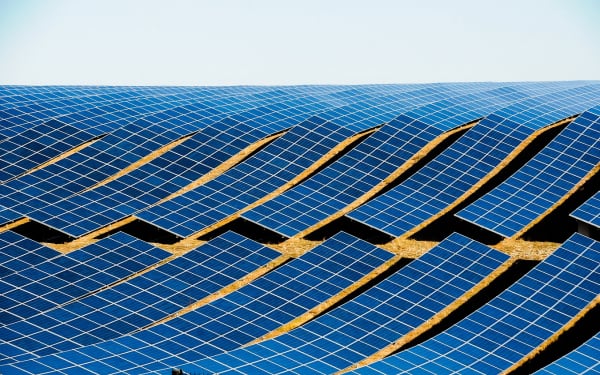
China’s solar power fleet has overtaken coal for the first time in terms of installed capacity, marking a historic milestone in the country’s energy transition. According to the National Energy Administration, solar capacity reached 1,286 gigawatts at the end of July, edging past coal’s 1,285 gigawatts. Utility-scale projects accounted for 704 gigawatts, while distributed solar contributed 582 gigawatts.
The expansion puts China far ahead of any other single market. The solar fleet is larger than the combined capacity of the European Union and exceeds installations in the United States, India and Germany. Solar now represents more than 30 percent of China’s total power generation capacity of 4,080 gigawatts, and Chinese manufacturers supply around 80 percent of the world’s solar modules.
Yet the capacity milestone does not translate directly into generation leadership. Solar output remains constrained by daylight hours and weather conditions. In the first seven months of the year, solar generated 802.4 terawatt-hours, accounting for 13 percent of national electricity consumption. Coal remains the dominant source of actual power supply.
The generation mix is nonetheless shifting. In the first half of the year, wind and solar together accounted for 24.6 percent of electricity output, while coal’s share fell below 50 percent for the first time to 49.7 percent. Coal generation still far exceeds solar output and continues to underpin the stability of the power system.
Coal’s role is being redefined rather than eliminated. As renewable capacity grows, coal plants are moving away from maximizing generation volumes and toward providing flexibility, peak shaving and backup services. The transition is from a baseload power source to a supporting and balancing one.
The milestone follows an earlier inflection point in March 2025, when combined wind and solar capacity first surpassed the coal fleet. This time, solar achieved the feat on its own. Growth in new solar installations has slowed this year compared with 2025, reflecting the shift from fixed feed-in tariffs to market-based pricing, but total capacity continues to expand.
Solar becoming China’s largest power source by installed capacity is a defining moment for the energy transition. Still, coal’s function as the system’s ballast is unlikely to be replaced in the near term. The next phase of China’s power system development will require balancing capacity expansion with actual generation capability and grid flexibility, as the roles of solar and coal become increasingly distinct.