Southern Palladium says it has enough cash and term deposits to keep advancing its Bengwenyama platinum group metals project through the definitive feasibility study phase while also preparing for early mine development. That matters because the market is still waiting for hard operating proof, not just improved study metrics. The company’s third-quarter update, published on Wednesday, October 28, showed a balance sheet that can support technical work, but it also confirmed that no mining production or development activities took place during the September quarter.
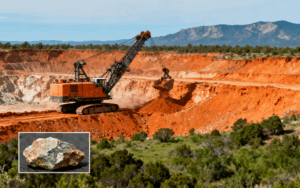
Bengwenyama sits in South Africa’s Bushveld Complex in Limpopo Province, one of the world’s most important PGM districts. The project covers about 5,280 hectares and is being positioned around platinum, palladium, rhodium and chrome exposure. For investors, that means the story is still fundamentally about geology, metallurgy and permitting, not near-term cash generation. The latest report improves visibility on those fronts, but it does not remove the execution risks that come with bringing a project from study work into construction.
The clearest financial takeaway is the company’s liquidity. Southern Palladium reported closing cash of A$20.06 million at 30 September 2026, down from A$23.88 million at 30 June 2026, excluding A$1.13 million held by its 70% subsidiary Miracle Upon Miracle Investments. That reduction is not surprising for a developer moving through technical work, but it does show that cash is being consumed before production has started. Investors should read this as runway for study and preparation work, not as a substitute for project finance.
The company’s own framing is that combined cash and term deposits are supporting continued advancement through the DFS phase and early mine development preparations. In practical terms, that suggests management is trying to keep technical momentum while preserving optionality ahead of larger capital decisions. That is a reasonable approach for a project at this stage, but it also means the next phase will likely depend on permitting progress, contractor readiness and the ability to continue de-risking the mine plan before heavier spending begins.
A major support for the story came earlier in the month, when Southern Palladium released an updated pre-feasibility study on October 13. The study showed a post-tax net present value of US$1,961 million, up 129% from US$857 million, and a post-tax internal rate of return of 39.1%, up from 26.4%. Those are meaningful improvements on paper, and they suggest the project’s economics have strengthened as the technical work has advanced. Still, investors should remember that study numbers are only as reliable as the assumptions behind them.
One of the more important changes in the updated study was a higher peak funding requirement, which rose 18% to US$329 million from US$279 million. That is the main counterweight to the improved headline economics. A larger funding ask does not automatically weaken the project, but it does raise the bar for financing and execution. In a development story, stronger returns are helpful only if the company can fund the build on terms that do not erode those returns too much. That is where permitting, project design and capital discipline become critical.
For a PGM project that also carries chromite credits, metallurgical performance is one of the most important technical variables. Southern Palladium said DFS metallurgical test work estimated full-plant chromite recovery at 85.6%, compared with 30% previously, and a concentrate grade of 42.2% Cr2O3. Those numbers matter because they can influence by-product credits, process design and the overall economics of the flowsheet. Better chromite recovery can improve project value if it proves consistent at scale, but it also needs to be validated through more testing before it becomes bankable operating reality.
The company’s update suggests the flowsheet is still being refined. That is normal at this stage, especially for a project trying to optimize both PGM and chrome recovery. The key question is whether the latest results hold up in larger-scale work and across the full operating envelope. Metallurgical upgrades can move a project forward quickly in a study model, but they only become material if they can be repeated in a way that supports plant design, operating costs and product quality. Investors should watch for more detail on how the recovery assumptions are being tested next.
The next phase is not about resource definition as much as it is about permitting, contractor engagement and final engineering choices. Mining Weekly reported that in the December 2026 quarter the company plans to continue early-works permitting, progress contractor engagement, further flowsheet optimisation and larger-scale Jameson cell testing, and engage prospective smelting and refining counterparties. That list is useful because it shows where the project still needs to de-risk technical and commercial assumptions before a construction decision becomes realistic.
Southern Palladium also has board approval for early box-cut and decline development, but that remains pending waste-management and water-use permits. That is an important red flag as well as a milestone. Even with a granted mining right, a project cannot advance smoothly without the environmental and operational permissions needed for early infrastructure work. This is often where schedules slip in South African mining projects, not because the geology is weak, but because the approval chain takes time and must be satisfied in the right sequence.
One of the strongest developments in the company’s favor is the 30-year mining right granted by South Africa’s Department of Mineral and Petroleum Resources on 7 August 2026. A long-life right is a meaningful milestone because it gives the project a clearer legal foundation and supports the argument for longer-term capital deployment. It also matters for lenders, contractors and potential offtake partners, who generally want certainty over tenure before they commit to a project with a large upfront build.
Even so, a mining right is only one part of the development stack. It does not guarantee financing, construction timing or operating success. For a project like Bengwenyama, the real test is whether the company can turn legal and technical progress into a fully permitted, financeable mine plan. That will require continued work on the flowsheet, water and waste approvals, and commercial discussions with processing counterparties. The project has progressed, but it is still moving from paper value toward physical implementation.
The September quarter did not include production or development activities, which underscores how early the company still is in the build cycle. That is not necessarily negative for a development-stage asset, but it does keep risk elevated. There is a difference between improving project economics and generating operating cash flow, and Southern Palladium remains on the earlier side of that divide. Until construction begins and the company can show that its assumptions translate into real-world progress, the market will likely continue to treat Bengwenyama as a financing and permitting story first.
The positive side of the ledger is that the project appears better defined than it did earlier in the year. The updated study improved the economics, the metallurgical work improved chrome recovery assumptions, and the mining right removed a major tenure uncertainty. The negative side is equally clear: funding needs have increased, permits are still pending for early physical work, and there has been no production. That combination is typical for a junior developer at this stage, but it also means valuation will remain highly sensitive to each new technical and regulatory update.
For retail investors, Southern Palladium is not a cash-flow story yet. It is a project de-risking story. The company has enough cash to keep moving through study work, but it is still spending before any mine output exists. For institutional investors, the important questions are whether the updated economics can survive more detailed engineering, whether the chromite recovery gains hold at scale, and whether the permitting timeline allows the company to convert study success into early works without losing momentum.
The most useful way to read this update is as progress with caveats. Bengwenyama now has a stronger study case, a granted mining right and enough liquidity to keep advancing. It also still faces the usual development hurdles: permits, capital, contractor execution and metallurgical validation. The next quarter should tell investors whether Southern Palladium can move from a promising technical story into a more tangible mine-build process.