
Origen Resources Inc. (CSE:ORGN, FSE:4VXA)
A. RARE EARTHS BEGIN HERE. ORIGINATING NEW OPPORTUNITY IN BRAZIL AND BEYOND. B. Building the Next Rare Earth District – Starting in Brazil
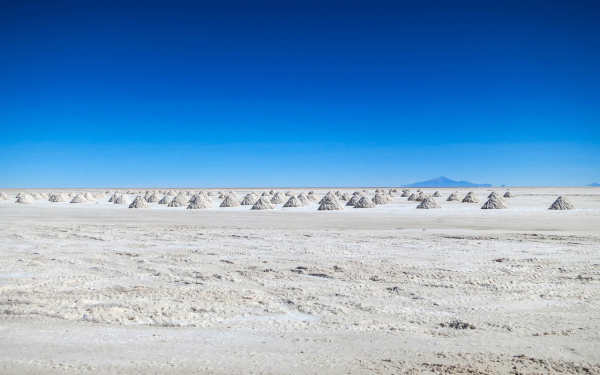
Citigroup has sharply lowered its lithium price outlooks for the next two years, citing slowing battery demand growth, rising trade uncertainty and broader macroeconomic headwinds, even as leading global lithium producers push forward with large-scale capacity expansions anchored to long-term consumption growth.
The bank cut its three-month price targets for lithium carbonate and lithium hydroxide to $12,000 per tonne, down from $20,000 and $17,000 respectively. It also reduced its spodumene concentrate forecast to $1,200 a tonne from $2,000, and trimmed estimates for all three battery-grade lithium materials through the end of 2028.
With supply set to improve in 2027 and uncertainty around next year’s demand running high, downstream buyers will likely defer purchases and maintain lean inventories, the bank noted. Sentiment and market positioning will remain the dominant near-term price drivers, keeping risks skewed firmly to the downside.
The cautious view has spread across the industry. Goldman Sachs forecast last month that the lithium market would shift from deficit to near balance in the current quarter, before moving into surplus over the following two years. Demand concerns have deepened amid planned EU restrictions on Chinese hybrid vehicle exports and China’s phase-out of certain purchase tax incentives. Retail electric vehicle sales in China underperformed seasonal norms through September and October, a period traditionally marked by strong EV and battery cell production.
Price action already reflects the bearish tone. Benchmark Mineral Intelligence data puts lithium carbonate spot prices at around $15,450 per tonne, down more than 20% since early September. Spodumene concentrate has fallen nearly 40% over the same period to $1,385 a tonne. On the Guangzhou Futures Exchange, the most-active lithium carbonate contract has dropped more than 40% since the end of August, closing at 91,160 yuan ($13,710) per tonne on Monday after a modest 1.2% daily gain.
On the domestic supply front, CATL’s Jianxiawo lithium mine in Jiangxi province received local environmental approval on Friday after being shut since last August. The news lifted the battery maker’s Shenzhen-listed shares by as much as 4.2% during Monday trading.
Yet even as analysts flag mounting near-term price pressure, top lithium miners are moving ahead with aggressive expansion plans.
Australia’s PLS Group this month approved a roughly $1.3 billion project to double production capacity at its Pilgangoora mine in Western Australia’s Pilbara region. Weeks earlier, peer Liontown greenlit a roughly $273 million expansion of its Kathleen Valley lithium mine, also in Western Australia. Canada’s Elevra Lithium is advancing plans to nearly double capacity at its Quebec operations.
Lithium producers are well accustomed to price volatility, and base investment decisions on long-term price expectations. Most incremental capacity from the new projects will not come online for several years, and producers remain bullish on demand growth from electric vehicles and large-scale battery energy storage systems. Higher output also reduces unit operating costs, in theory making expanded operations more resilient through market downturns.
Liontown is targeting a more than 50% capacity increase at Kathleen Valley, with first ore from the expansion expected in mid-2027. The company is looking through short-term price fluctuations and investing now to build a more resilient business across the commodity cycle, its chief executive said.
PLS’s chief executive described the recent price pullback as largely sentiment-driven. The company is upbeat on lithium applications across EVs, energy storage, drones, robots and heavy-duty trucks, and projects global lithium demand will triple by 2040. Its Pilgangoora expansion project, known as P2000, is on track for first production in mid-2029, with no plans to slow investment.
The miner added that underinvestment during the previous downturn means significant new supply will be needed to meet long-term demand growth. Current price levels remain double last year’s lows, and fundamentals will ultimately reassert themselves, underpinning confidence in the company’s investment strategy.
Views on the near-term trajectory remain deeply divided. Citi noted investors are almost unanimously bearish on lithium in the near term. UBS warned that persistently weak prices could prompt some producers to reassess or defer capital spending.
For now, only the highest-cost suppliers — such as those selling minimally processed direct-shipping ore — face meaningful risk of output cuts. Sentiment outside China stays relatively positive, with most miners convinced the current pullback is a short-term, sentiment-driven move unsupported by fundamental shifts.