

1911 Gold Corporation (TSXV: AUMB; OTCQX: AUMBF)
1911 Gold is Manitoba’s Gold Standard - Ready, Permitted and High-Grade 1911 Gold is an Emerging Gold Producer, with Significant Cash Flow Generation and District-Scale Growth Potential
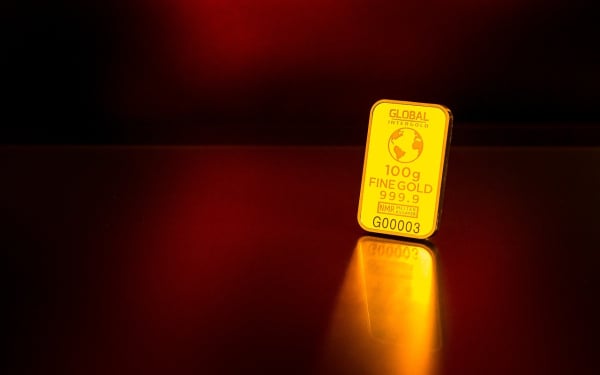
Gold prices remain under sustained pressure, with their near-term trajectory tightly linked to Federal Reserve monetary policy amid headwinds from liquidity-driven selling and a strengthening US dollar. At the same time, steady sovereign purchases led by the People’s Bank of China are building a long-term floor for the metal, setting up a market split between short-term weakness and longer-term structural support. The precious metal traded at $3,593 an ounce as of Thursday afternoon, marking a 20.5 per cent decline over the past six months.
The downturn has reversed a nearly three-year bull run that nearly tripled gold’s value. From its record peak of $5,447 an ounce reached in January, the metal has now retreated by more than one-third.
US inflation data has cemented expectations of tighter monetary policy, the single largest near-term drag on gold prices. US personal consumption expenditures — the Federal Reserve’s preferred measure of underlying inflation — rose at its fastest pace since 2023 last month, lifting market bets on upcoming rate hikes. Rates traders now price a 98 per cent probability of a 25-basis-point rate increase next month.
The prospect of monetary tightening has pushed the US dollar index to a 20-month high. The greenback, which typically moves inversely to gold, has displaced real interest rates as the dominant driver of the metal’s price action. Higher borrowing costs also stand to weigh on technology stocks, a sector already contending with rising funding costs for artificial intelligence expansion and investor doubts over returns on large-scale capital expenditures.
Recent volatility in US equities has deepened gold’s decline, as traders sell the metal to cover losses or unwind leveraged positions amid tightening market liquidity. The correlation was pronounced last week, when the Nasdaq 100 tumbled 10 per cent and gold plunged 9 per cent in lockstep.
Wealth management researchers note that investors frequently sell highly liquid assets like gold to meet margin calls during sharp equity sell-offs. With further Fed rate hikes already priced in for early 2027, gold faces continued downside potential in the near term.
Major global financial institutions have downgraded their gold outlooks, reinforcing the case for near-term downside risks. UBS Group cut its year-end gold price target by 6.3 per cent to $4,500 an ounce, aligning with a similar downgrade from Goldman Sachs earlier this month.
Swiss private bank Julius Baer has cautioned against buying on price dips, describing the strategy as attempting to catch a falling knife. The head of next generation research at the bank observes that fundamental guideposts lose their relevance in flow-driven markets.
On the longer-term horizon, sustained central bank gold purchases are providing a buffer against selling pressure from exchange-traded funds and trend-following investors. The People’s Bank of China increased its gold reserves for the 24th consecutive month in October, bringing total holdings to 78.3 million ounces. Gold accounts for roughly 8 per cent of China’s foreign exchange reserves, well below the global average of 27 per cent, leaving ample room for further accumulation.
Globally, central banks recorded 61 tonnes of net gold purchases in September, the largest monthly net buying total so far this year. The sovereign demand helps offset liquidation from short-term market participants.
Market participants hold that gold prices are gradually forming a bottom and remain constructive over the longer term, underpinned by the ongoing de-dollarisation trend and currency debasement dynamics. Still, expectations of additional US interest rate hikes are likely to keep gold prices constrained in the near term, preserving the divide between immediate headwinds and longer-term supportive fundamentals.