
Muzhu Mining Ltd. (CSE: MUZU)
Creating lasting wealth by developing gold and silver properties with near-term mining potential
While investor sentiment in commodity markets remains subdued, a recent report by Macquarie Group analysts suggests that the global industrial cycle may be at turning point after recent lows, which could signal a bullish phase in demand for industrial commodities.
Macquarie Group, headquartered in Australia, is one of the country’s leading banks providing a full range of investment banking, financial markets services and retail financial services.
Global manufacturing new orders rose 1.2 per cent month-on-month to 49.8, the report said. Contrary to expectations of a downturn due to policy tightening, demand for commodities in the United States showed signs of re-accelerating, signalling a possible soft landing or end to the downturn.
Marcus Garvey, head of commodity strategy at Macquarie, said that since last Friday’s strong jobs report from the US Bureau of Labor Statistics, commodity prices have come under renewed pressure due to rising Treasury yields and a stronger dollar. And indeed, it seems unlikely that end demand will fall sharply anytime soon, suggesting that initial demand for industrial commodities is trending towards gradual growth in the coming months.
The Bloomberg Commodity (BCOM) Spot Price Index has been hovering just above December’s cycle low of 465, but Bank of America believes there is some upside for commodities, particularly aluminium.Garvey notes that this is a great time to invest in commodities, particularly in sectors where market fundamentals are stable or likely to strengthen quickly.
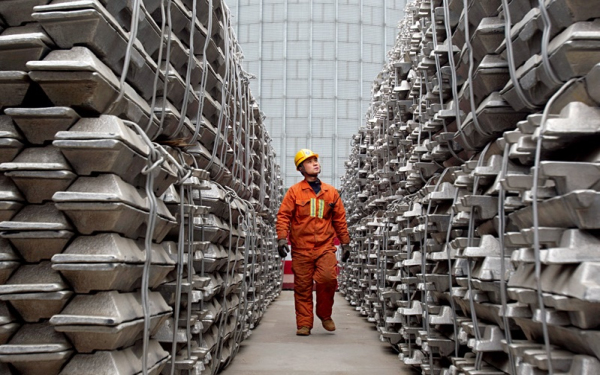
The aluminium market is one of these bright spots, with analysis from BofA Securities highlighting that slower supply growth will lead to shortages in the aluminium market. Supply growth is expected to fall to around 2.4% in 2025 compared to the 4.7% growth rate between 2011 and 2017. At the same time, consumption is expected to grow at an average annual rate of 4% by 2030, further exacerbating the aluminium market deficit.
Analysts note that sanctions against Russia have not yet had a significant impact on aluminium trading on the London Metal Exchange. However, the possibility of escalating sanctions remains a concern and could reshape market dynamics. Europe’s aluminium imports from Russia are set to decrease from 840,000 tonnes in 2020 to 567,000 tonnes in 2023.
And China’s aluminium market has remained tight, reflecting strong domestic and regional demand. Last year, China absorbed nearly 1 million tonnes of Russian aluminium that had been transshipped from Europe due to sanctions. Rusal aluminium still accounts for 90% of LME aluminium stocks, underlining the exchange’s heavy reliance on Russian aluminium in the face of falling inventories.
Both Macquarie and Bank of America analysts emphasised the need for commodity investors to monitor these developments closely. Macquarie suggests that falling commodity prices should be viewed as a buying opportunity, particularly in markets with tight fundamentals like aluminium. Analysts expect demand for industrial commodities to improve in the coming months, mainly driven by the US market.