
Rua Gold Inc. (TSXV: RUA, OTC: NZAUF, WKN: H8E)
An Emerging Gold Explorer with Two Highly Prospective Land Packages in New Zealand’s historical gold fields.
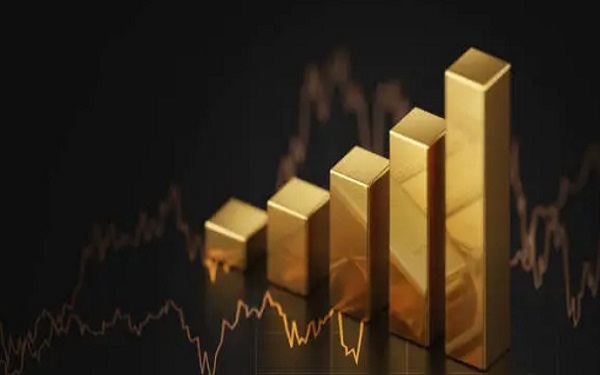
Juan Carlos Artigas, head of research at the World Gold Council, said in an interview with Kitco News this week that the price of gold may be in consolidation around the current $2,350 per ounce, but with the price of gold up about 12 per cent so far this year, gold is undoubtedly one of the best-performing assets in global financial markets.
Artigas points out that gold has yielded gains despite high interest rates and a strong dollar, thanks to strong retail demand in Asia and record purchases by central banks. The new catalyst could be the market’s expectation that Western investors will take the next step in the uptrend.
As for how to attract Western investors to push gold higher, Artigas said the market is waiting for clear guidance from the Federal Reserve on monetary policy. The Fed has been slow to start the rate-cutting cycle, but has hinted that it could cut rates once before the end of the year. According to the CME FedWatch tool, the market sees a near 70 per cent chance of a rate cut in September.
Artigas said that over the past few months, the gold market has begun to see money flowing into gold ETFs in Europe, which should be linked to the ECB’s first rate cut. While the gold market currently lacks a catalyst, the World Gold Council noted that ongoing geopolitical uncertainty, the threat of an economic slowdown, and continued stubborn inflation will continue to create an environment conducive to gold’s rise.
Geopolitical risks are particularly difficult to predict, however, for every 100-point rise in the Geopolitical Risk (GPR) Index, gold rises by 2.5 per cent, the World Gold Council noted in its report. While some of this effect may be short-lived, it could also be a trigger for a deterioration in financial conditions, which could have a more lasting impact.
Meanwhile, the World Gold Council expects central banks to continue buying gold in the second half of the year. Artigas said that while central bank demand may not reach the record levels set in the past two years, it is expected to be higher than the 10-year average of 500 tonnes. Gold demand from central banks can be expected to remain strong throughout 2024.
The World Gold Council’s recent central bank survey reported that 29 per cent of central banks plan to buy gold in the coming year, the highest level since the council launched its survey in 2018.