Canada to Leverage Critical Minerals to Meet NATO’s 5% Military Spending Target
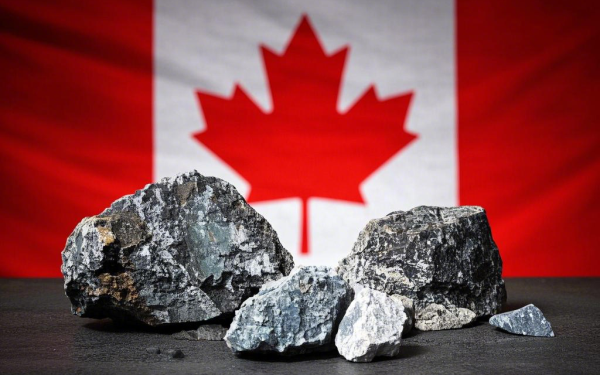
At the annual NATO summit held in the Netherlands, member nations are debating a proposed increase in defense spending from the current 2% of GDP to a new target of 5%. In response, Canadian Prime Minister Mark Carney has announced that Canada will focus on the development of its critical minerals sector and related transportation infrastructure to meet NATO’s spending requirements.
Carney explained that 5% of Canada’s GDP equals approximately CAD $150 billion, while NATO reports that Canadian defense spending in 2024 amounts to CAD $41 billion. To bridge this gap, Canada plans to categorize spending on critical mineral resources—including infrastructure investments like ports and railways for transporting such minerals—under its overall defense expenditure calculation.
Carney emphasized that this strategy not only aligns Canada with its enhanced NATO obligations but also supports domestic economic growth.
The Role of Critical Minerals in Modern Defense and Technology
Critical minerals include key metals such as lithium, cadmium, nickel, and others that are essential to the production of modern technologies, ranging from laptops and mobile phones to advanced defense systems. Last year, NATO released a list of 12 critical minerals vital for defense, identifying materials such as aluminum (described as a “crucial material” for lightweight aircraft missiles), graphite (used in the manufacturing of tanks), and cobalt (key to jet engine and submarine production).
Canada holds a strategic advantage in this sector as one of the few nations globally with reserves of all 34 critical minerals identified on its national critical minerals list. Furthermore, Canada is a top-five global producer of 10 key minerals, including potash, niobium, and cobalt.
Advancing Canada’s Critical Minerals Strategy
In 2022, Canada launched its Critical Minerals Strategy, aimed at establishing a full-value supply chain encompassing exploration, mining, processing, manufacturing, and recycling of critical minerals. Updated for 2024, Canada’s critical minerals list includes six priority minerals considered essential for both economic growth and defense purposes:
- Lithium
- Graphite
- Nickel
- Cobalt
- Copper
- Rare Earth Elements
To support this ambitious initiative, the Canadian government has allocated CAD $1.5 billion through the Critical Minerals Infrastructure Fund (CMIF) to develop infrastructure projects that facilitate critical mineral production and transport. Additionally, exploration spending for critical minerals reached CAD $1.9 billion in the last year—a 7% increase from the previous year.
Canada’s critical minerals sector has made significant progress:
- 56 active mines producing critical minerals.
- 26 processing facilities converting raw minerals into usable materials.
- 151 advanced-stage exploration and development projects.
Moreover, the government incentivizes investment through the Critical Mineral Exploration Tax Credit (CMETC), offering a 30% non-refundable tax credit to investors.
Strategic Importance for NATO and Canada
Critical minerals are increasingly acknowledged as foundational to both green energy technologies and advanced military systems. Recognizing their strategic importance, NATO member states are prioritizing diversified, reliable sources to counter global supply chain disruptions and dependencies on authoritarian regimes. By leveraging its unique resource advantage, Canada is positioning itself as an indispensable partner to NATO, while simultaneously fulfilling its net-zero commitments and advancing economic resilience.
This initiative underscores Canada’s dual approach: strengthening its geopolitical role within NATO while cultivating a cutting-edge, sustainable critical minerals industry that benefits both domestic and allied interests.
Cobalt
Copper
Lithium
Nickel
Rare Earth