
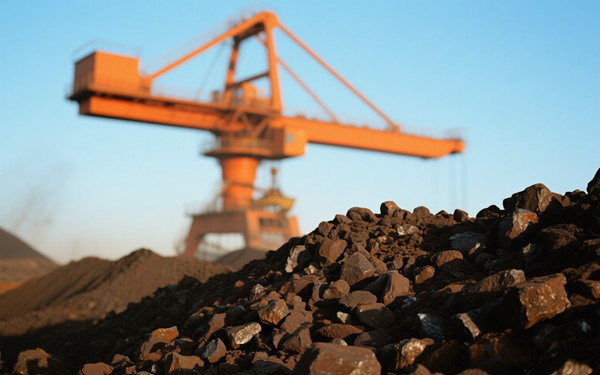
Singapore iron ore futures rose 1.1% to $100.10 per ton, breaking through the triple-digit barrier for the first time since May. Yuan-denominated futures in Dalian climbed concurrently, while Shanghai steel contracts showed mixed performance. The price surge stems from expectations around China’s economic policies and supply-side developments.
Over recent weeks, the steelmaking raw material has rebounded as Chinese officials pledged to tackle excessive competition and outdated capacity while introducing more property-led policy measures, improving sentiment toward economic growth. During an inspection this week, China’s leader emphasized that traditional industries remain vital to the nation and should not be abandoned.
Bolstered by these positive signals, Chinese property stocks surged. The Bloomberg Intelligence gauge of Chinese property stocks jumped 11%, while Goldman Sachs’ basket of China H-share real estate stocks gained 7.4%. Individual developers saw dramatic gains: Logan Group Co. soared 85% in Hong Kong, and Sino-Ocean Group Holding Ltd. skyrocketed 37%, suggesting Beijing may finally be implementing decisive measures to stabilize the economy.
On the supply front, Rio Tinto Group accelerated shipments from Guinea’s massive Simandou project. Exports from Blocks 3 and 4 of the Simfer operation – originally scheduled for next year – will now commence in November, with initial volumes of 500,000 to 1 million tons. The Simandou project, developed by a consortium including Rio Tinto and Winning Consortium across four blocks, holds an estimated total capacity of 120 million tons. Royal Bank of Canada (RBC) analysts projected in an investor note that output will ramp up to 12 million tons by 2026, reaching only 48 million tons by 2028.
However, Citigroup analysts expressed skepticism about the rally’s sustainability, arguing current prices exceed market fundamentals. Analysts including Shreyas Madabushi stated in a research report that steel output would decline gradually rather than through a one-size-fits-all 50-million-ton cut. Earlier, UBS analyst Simon Penn noted in a report that iron ore had gained over 5% in two weeks, recovering one-third of its early-year losses in just the last 10 trading sessions.
Steven Yu, a researcher at Mysteel (quoted by Bloomberg), observed that following high-level officials’ commitments, many industries are experiencing a wave of anti-overcapacity measures driving prices upward. He highlighted that ferrous metal prices had been suppressed during the prior downturn, intensifying the rebound. Iron ore had previously declined for nearly a month since mid-May, losing almost 10%. Concurrently, Mysteel data showed rebar inventories continued falling against seasonal accumulation trends, while hot-rolled coil stocks saw only a slight buildup – indicating stronger-than-expected demand.