ExxonMobil’s Ambition: Oil Giant Bets on Lithium and Revolutionary Graphite Tech
As global electric vehicle sales show strong though uneven growth, the race for better battery technology continues to intensify. Against this backdrop, a traditional oil giant—ExxonMobil (NYSE: XOM)—is unexpectedly emerging as a key player in innovation.
The big question remains: can ExxonMobil leverage its lithium resources and battery technology to stay committed to the EV sector after government subsidies fade? The integration of traditional energy giants into the new energy landscape is reshaping future competition.
Big Oil’s Battery Dreams
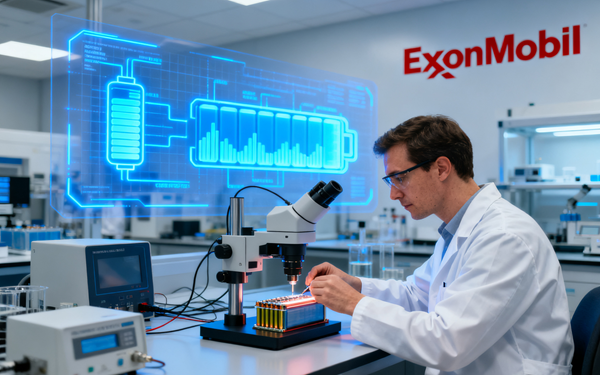
Last week, ExxonMobil announced it has developed a new graphite molecule that it claims can extend EV battery life by up to 30%. In an interview, CEO Darren Woods called it a “revolutionary breakthrough” that significantly enhances battery performance. Several electric vehicle manufacturers are already testing the technology.
The announcement coincided with Exxon’s acquisition of synthetic graphite producer Superior Graphite—a move the company says will support its official entry into the battery anode market. Synthetic graphite, a key material for EV batteries and energy storage systems, is considered a game-changer by Exxon due to its lower production cost, more consistent quality, and greater scalability compared with mined natural graphite.
This is the latest step following Exxon’s entry into lithium mining in 2023. Despite softness in U.S. electric vehicle sales, the company is sticking to its 2022 strategy: developing a lithium project in Arkansas with the goal of becoming a key battery materials supplier by 2030. The first lithium production is scheduled for 2027, with annual output eventually supporting more than one million EVs per year.
Is ExxonMobil Stock a Buy?
Amid declining oil prices, shares of the energy giant have pulled back recently. Still, the company has laid out an ambitious growth blueprint aiming to increase annual earnings by $20 billion and cash flow by $30 billion by 2030. This implies a compound annual growth rate of 10% for earnings and 8% for cash flow over the coming years.
At the same time, Exxon has achieved structural cost savings of $13.5 billion since 2019—more than all other international oil companies combined. It plans to reduce costs by another $18 billion by 2030 compared to 2019 levels, further boosting profitability.
Finally, even with oil priced at around $65 per barrel—close to current levels—Exxon estimates it can generate cumulative excess cash flow of $165 billion by 2030. This robust cash position supports continued shareholder returns: the company returned $18.4 billion in the first half of this year through dividends ($8.6 billion) and share buybacks ($9.8 billion). It is on track to repurchase $20 billion in shares this year. Moreover, Exxon has raised its dividend for 42 consecutive years—the longest streak in the oil industry—a feat achieved by only 4% of S&P 500 companies.
Electric Cars
Graphite
Lithium
Oil & Gas