
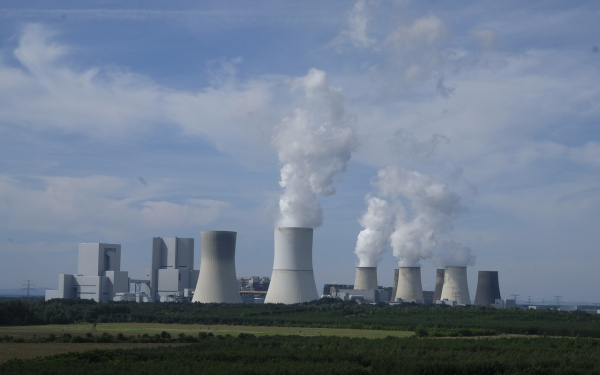
Driven by insatiable global corporate energy demand, the nuclear power industry is experiencing a robust comeback. Data centers are at the forefront of this energy revolution, with tech giants like Microsoft and Meta Platforms turning to nuclear energy suppliers to secure their future power needs. With the Trump administration restarting nuclear initiatives and growing global consensus favoring nuclear power, the sector demonstrates significant growth potential.
In this context, two nuclear energy companies, Cameco (NYSE: CCJ) and Oklo, have captured investor attention. Although both operate within the same industry, their business models and risk profiles are markedly different.
As one of the world’s largest uranium producers, Cameco holds majority stakes in two of the globe’s highest-grade uranium mines: McArthur River and Cigar Lake in Saskatchewan. Additionally, the company owns a 40% interest in the Inkai joint venture in Kazakhstan, with an estimated reserved share of 100.4 million pounds and a mine life extending until 2045.
Through a strategic partnership with Brookfield Renewable Partners, Cameco also holds a 49% stake in Westinghouse, a nuclear reactor technology OEM and global product/service provider to commercial utilities and government agencies, further solidifying its position across the nuclear supply chain. With rising global uranium demand, Cameco is poised for strong earnings growth in the coming years.
In contrast, Oklo is still in its early stages, having generated no revenue and with no commercially available products.
The company is focused on building next-generation nuclear infrastructure. Its Aurora powerhouse product line utilizes liquid metal-cooled sodium fast reactor technology, designed to harness high-energy neutrons from spent nuclear fuel from conventional plants. The Aurora units are designed to produce 15 to 75 megawatts electric (MWe), potentially expanding to 100 MWe and beyond. Currently,
Oklo is in the licensing and reactor construction phase, expecting $65-$80 million in operational expenses with no revenue in 2024. Analysts project no revenue for 2027, $5.2-$18 million in 2028, and profitability unlikely until 2030 at the earliest.
Conclusion: Both companies have benefited from favorable nuclear industry tailwinds, with their stock prices surging year-to-date (Cameco +42%, Oklo +221%), yet both trade at elevated valuations.
For conservative investors, Cameco is more attractive due to its direct exposure to growing uranium demand even though its forward P/E of 50 (based on next year’s earnings) is pricey. For investors with higher risk tolerance, Oklo represents a high-risk, high-reward opportunity, betting on the successful future commercialization of its plans.