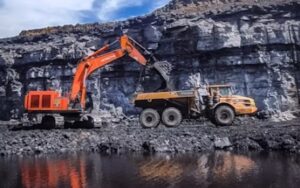
Shanta Gold has added a new B3 cone crusher from Quarry Manufacturing and Supplies to one of its Tanzanian operations. It is a modest headline with meaningful implications. In a market where junior miners are being rewarded for clean execution and cost control, incremental plant debottlenecking can move the earnings needle faster than greenfield dreams. The purchase points to a focus on throughput, reliability, and cost per tonne—fundamentals that matter more than ever amid volatile sentiment and persistent jurisdictional risk in East Africa.
Cone crushers sit at a critical choke point between blasting and milling. If secondary or tertiary crushing is the constraint, mills starve. If they underperform, mills process oversize material at a higher energy cost. A higher-capacity, well-controlled cone can tighten the size distribution going to the mill, reduce recirculating load, and stabilize throughput. The business case is straightforward: more tonnes through the plant at a consistent grind size, with less downtime and a lower unit power draw, reduces all-in sustaining costs per ounce. In a gold circuit, cadence and predictability often trump headline capacity. Crusher stability supports consistent mill load, which supports consistent recovery. The new unit signals Shanta is addressing a bottleneck rather than chasing capacity in isolation.
The economics of a crusher upgrade are typically attractive. Consider a plant running 1,500 tonnes per day at 2.5 grams per tonne, recovering 90 percent of contained gold. A 10 percent throughput lift—achievable if the plant is genuinely crusher-constrained—adds 150 tonnes per day. That equates to roughly 10.8 ounces per day of incremental gold at the same grade and recovery, or about 3,900 ounces per year. At a conservative 1,900 dollars per ounce realized price, the revenue uplift is roughly 7.4 million dollars annually before costs. A new cone crusher, installation, civils, and controls integration can be a sub-2 million dollar project depending on scope. Even after accounting for additional power, wear parts, and maintenance, the payback can be measured in months, not years, provided the bottleneck diagnosis is correct and the plant has downstream capacity to absorb the extra tonnes.
Geology sets the rules. If Shanta’s ore blends include variable hardness, a crusher with robust tramp release, reliable lubrication, and tight closed-side-setting control reduces the risk of stalls and liner damage when the mine hits harder, more competent zones. Bond Work Index and abrasion index matter here. Hard, abrasive ore accelerates liner wear and elevates power draw; softer ore risks packing and poor shape. Modern cones mitigate these with hydraulic adjustment, better chamber designs, and automated control that maintains choke feed and optimum reduction ratios. The benefit shows up not only in tonnes per hour, but also in product size distribution, which is what the mill sees. Every millimeter reduction in F80 going into grinding can translate to meaningful reductions in specific energy in the mill. While exact numbers vary by circuit, engineers routinely target finer crushing to avoid paying for size reduction in the most energy-intensive part of the flowsheet.
QMS competes with the major OEMs by emphasizing robust designs and aftermarket parts availability. For juniors, supplier choice is a balance between upfront capex, long-term support, and lead times. In Tanzania, logistics can add weeks to any spare part delay. That makes inventory planning and local service coverage part of the investment thesis. A cone crusher is only as good as its uptime. Ready access to wear liners, head and shaft components, and hydraulics spares—plus technicians who can reline and recalibrate on schedule—determines realized availability. Buyers also weigh compatibility with existing chutes, screens, and MCCs, as integration costs can erase theoretical savings. If Shanta secured favorable terms or service commitments, that strengthens the case. If not, the risk shifts to the balance sheet via unplanned downtime and elevated working capital tied up in spares.
Crushing circuits are unforgiving to rushed commissioning. Alignment errors, inadequate foundations, poor feed presentation, and mis-sized screens can create chronic vibration, premature bearing failure, and elevated recirculating loads. Commissioning protocols that stage-load the machine, verify power draw against nameplate, and tune the closed-side setting with actual ore are non-negotiable. Power supply is another constraint in Tanzania; many mines operate hybrid systems or rely on on-site generation. A mid-range cone can draw 200 to 400 kilowatts under load. If the electrical system lacks headroom, trips cascade through the plant. The safety dimension is also real: modern cones improve worker safety with hydraulic clearing and isolation features, but only if interlocks are wired correctly and lockout-tagout is enforced. These are operational fundamentals that determine whether the upgrade delivers the modeled uplift or becomes a maintenance headache.
The investment occurs in a jurisdiction that has tightened scrutiny on the mining sector. Tanzania’s aggressive fine against Acacia Mining for alleged under-reporting—190 billion dollars including penalties, per prior government committee findings—remains a cautionary example of how quickly regulatory posture can swing. While circumstances and corporate relationships differ across operators, the signal to investors is clear: compliance, transparency, and government relations are not soft issues in the project risk register. Procurement choices that favor traceable supply chains, local content, and safety and environmental improvements can indirectly support permitting and stakeholder relations. The flip side is financial planning needs to incorporate taxation changes, royalty audits, and potential FX constraints. Capital invested in a crusher is comparatively small, but the cash flows it unlocks are exposed to these jurisdictional factors.
Recent reporting has shown stronger quarterly results across junior gold names despite market choppiness, driven by higher realized prices and stricter cost control. This backdrop rewards mines that deliver tangible unit-cost improvements. Crushing and screening upgrades are among the few levers that can deliver near-term, quantifiable benefits without major permitting hurdles. If the crusher expansion aligns with a broader debottlenecking program—screen decks refreshed, conveyors right-sized, mill liners optimized—Shanta can translate higher plant stability into a lower all-in sustaining cost per ounce. The risk is spending capex to chase theoretical capacity that the rest of the plant cannot absorb. Investors should watch for evidence the upgrade is integrated with mine scheduling, blending strategies, and mill constraints, not just a one-off equipment swap.
Junior mining remains highly fragmented, with many sub-scale operators carrying full corporate overheads. Fragmentation dilutes procurement leverage, raises the cost of capital, and makes it harder to sustain in-house technical depth. That reality makes small, high-IRR capital projects all the more important. A crusher that removes a bottleneck compounds returns by lifting throughput with little new headcount or G&A. Still, fragmentation also means some juniors settle for short-term fixes because they lack scale to re-engineer flowsheets. The better operators use incremental upgrades as stepping stones within a multi-year plan: match crusher product to mill capacity, then revisit blasting patterns to feed a more consistent size distribution, then optimize leach kinetics. The arc is deliberate, not opportunistic, and it is how small companies build durable operating margins in the absence of consolidation.
The market does not need grand pronouncements to judge this move. It needs evidence of plant throughput rising, variability falling, and downtime shrinking. Look for disclosed metrics such as tonnes milled, mill utilization, and product P80 before and after install. Track cash costs and AISC for confirmation that more tonnes are translating into better unit economics, not just higher wear spend and power bills. Watch working capital for signs of spares buildup and the reliability of the local supply chain. On the external front, monitor policy signals from Dodoma and tax or royalty environments that could clip the benefit of operational wins. In a sector where Q3 results have rewarded fundamental performance, a well-executed crusher upgrade is exactly the kind of small, disciplined step that can compound into meaningful value—if it is grounded in the geology, integrated into the flowsheet, and managed with rigor.