Canada Signals Potential Approval for US Government Stakes in Canadian Mining Companies
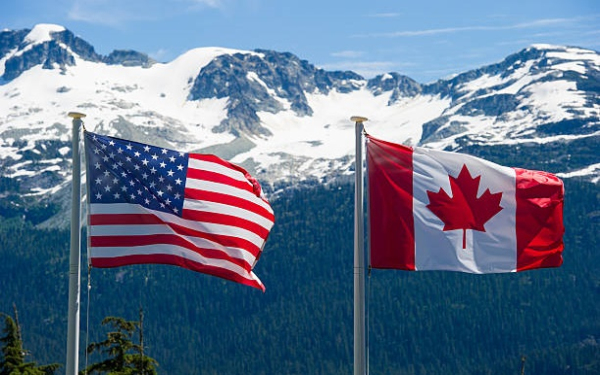
Canada’s Energy Minister Tim Hodgson recently indicated that Canada is unlikely to oppose the U.S. government’s acquisition of stakes in two Vancouver-based mining companies, describing the move as “capitalism in action.” This statement paves the way for strategic U.S. investments in Canada’s critical minerals sector.
Last week, the Trump administration announced a US$35.6 million investment in critical minerals projects in Alaska, which includes acquiring a 10% stake in Trilogy Metals. Additionally, the U.S. recently agreed to purchase a share in Lithium Americas Corp., which is developing the Thacker Pass lithium project in Nevada—the largest of its kind in the United States.
Although Canada’s Investment Act includes specific provisions for acquisitions by state-owned enterprises, and the Minister of Industry has emphasized that each case will be reviewed individually, Hodgson clarified that these transactions represent “small minority investments” in companies whose assets are located within the United States. “The fact that an ally of ours chooses to make an equity investment in a Canadian company whose sole assets are in the United States does not appear to concern us at this time,” he stated during a press conference in London.
A Pragmatic Shift After Political Friction
Earlier this year, Trump’s tariffs and controversial remarks sparked significant discontent in Canada, contributing to the Liberal Party’s election victory. During the campaign, Prime Minister Mark Carney repeatedly warned that Trump was attempting to “break Canada in order to control the country.”
However, after winning the election, the Carney government has gradually softened its stance, not only lifting several retaliatory tariffs against the U.S. but also holding two meetings with Trump at the White House. In addressing the term “ally,” Hodgson emphasized, “Our two countries have been allies for many years. While we have had disagreements and trade frictions, we are confident we can overcome the current challenges and restore the long-standing stable bilateral relationship.”
Energy Cooperation and a Vision for North American Security
During his visit to the U.S., Carney revived discussions on the Keystone XL pipeline project. Hodgson revealed, “If the United States is willing to explore the establishment of a shared North American energy security system and align it with other negotiation topics, we are open to that.” Hodgson, a former investment banker at Goldman Sachs, added, “Even if this means sharing some of our oil resources, we are not fixated on any particular transportation route.”
Currently, Canadian negotiators continue to lobby in Washington for the removal of U.S. tariffs on steel and aluminum. This week, Stellantis relocated part of its Canadian production to the United States, further highlighting the impact of trade barriers on supply chains.
Hodgson reiterated that if foreign investments do not align with Canada’s “net benefit” principle, the government will intervene as permitted by law. Analysis suggests that Canada is seeking a balance between safeguarding economic sovereignty and attracting strategic investment: on one hand, recognizing the role of U.S. capital in promoting mining development, while on the other, retaining review powers under the Investment Act.
As global competition for critical minerals intensifies, Canada is adopting a pragmatic approach to manage strategic investments from its ally. Despite ongoing tensions, shared interests in energy and mineral cooperation are becoming a foundation for repairing Canada-U.S. relations.
Energy Metals
Mining
Rare Earth
Trump